 Odita Sunday


THURSDAY, 05 NOVEMBER 2026
DEMOCRATS SEIZE US CONGRESS AS MIDTERM VOTERS DELIVER A SHARP VERDICT
American voters have reshaped Washington. In the 3 November midterm elections, Democrats won control of both the House of Representatives and the Senate, ending Republican control of Congress and handing President Donald Trump a major political defeat. The results became clear as votes were counted on 4 November, with some close contests still awaiting final decisions.
The shift reached places long regarded as Republican strongholds. Democrats won a Senate seat in Texas, while gains in states including Kansas and South Carolina underlined the scale of the change. Across the country, voters voiced concerns about living costs, the war involving Iran and whether Congress was doing enough to scrutinise the White House.
For many American families, the election was about the price of groceries, the cost of housing and uncertainty about the future. For Nigerians living in the United States, it was also about the policies that shape work, study, family migration, and the security of communities they now call home.
The new Congress will take office in January 2027. Democratic control could complicate the president’s legislative plans, intensify investigations of his administration, and change the direction of debates on immigration, international trade and foreign affairs. Nigeria will need to watch those decisions closely: changes in Washington can affect investment, visas, diplomatic cooperation, and global energy markets.
The result does not settle America’s political arguments. It opens a new chapter in which the president and Congress must find ways to govern across a deep divide.
NIGERIA’S STATE POLICE BILL MOVES CLOSER TO BECOMING LAW
A major change to Nigeria’s security system is approaching the president’s desk after state legislatures backed a constitutional amendment that would allow state police forces. The National Assembly initially confirmed approval from 28 states, more than the required 24; reports on 4 November put the number of approving states at 30.
Supporters believe locally managed police forces could respond more quickly to kidnappings, violent attacks and the everyday threats that have disrupted life in many communities. The proposal would also change a longstanding system in which policing is centrally controlled.
Yet the questions are serious. Who will oversee state officers? How will they be funded? What will prevent governors from using them against political opponents? Families who want to feel safe also need guarantees that the people carrying weapons in their communities will be accountable to the law, not to party interests.
The constitutional process is not complete until the necessary federal steps, including presidential assent, are concluded.
ELECTIONS: POLICE PROMISE READINESS AS VOTER REGISTER QUESTIONS GROW
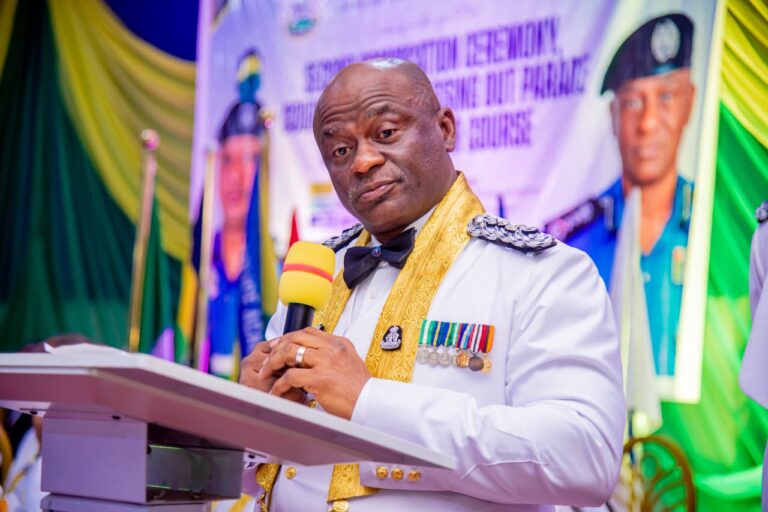
Nigeria’s police leadership says preparations are under way to secure the 2027 general elections, including training and coordination with other security agencies. Inspector-General Olatunji Disu has stressed the need to protect voters and make polling accessible to people with disabilities.
At the same time, concerns over the integrity of the voter register have intensified. Former education minister Obiageli Ezekwesili has called for independent oversight of the clean-up after electoral officials disclosed suspicious entries involving possible AI-generated photographs and other irregularities.
The disputed records are part of a preliminary register, and investigations must distinguish fraudulent entries from genuine voters. But the concern is bigger than a database. Nigerians want confidence that they will not be wrongly excluded, that ballots will be protected and that election results will reflect the public’s choice.
The months ahead will test whether institutions can respond with openness rather than defensiveness.
TINUBU REVISES FOREIGN BORROWING REQUEST AS DEBT QUESTIONS PERSIST
President Bola Tinubu has reduced the federal government’s proposed external borrowing request for 2026 to about $7.707 billion and asked the Senate to consider the revised plan. The funds are intended to help finance the budget deficit.
Borrowing can support infrastructure and public services, but the numbers matter to households already managing high living costs. Nigerians will want to know which projects will be financed, when benefits will be delivered and how future repayments will affect spending on health, education, and security.
The debate is not simply about whether to borrow. It is about the quality of spending, transparency in contracts and whether public money produces lasting improvements.
NIGERIA CALLS FOR RUSSIAN INVESTMENT AND PRACTICAL TECHNOLOGY TRANSFER
Nigeria is urging Russia to move beyond diplomatic promises and support concrete investment, industrial partnerships and technology transfer across Africa. Minister of State for Foreign Affairs Sola Enikanolaiye made the case at a Russia–Africa gathering in Moscow, finding opportunities in energy, agriculture, manufacturing, infrastructure, and the digital economy.
The appeal reflects a familiar challenge: African economies need more than access to imported products. They need local skills, factories, research capacity, and jobs that allow young people to build futures at home.
Any partnership will be judged by its results. Investments that strengthen local businesses and share technical ability could bring benefits; agreements that stay only on paper will do little for families waiting for better opportunities.
IRAN CONFLICT AND US POLITICAL SHIFT KEEP GLOBAL MARKETS WATCHFUL
The confrontation involving Iran continues to unsettle the world’s energy and shipping routes. Diplomatic contacts have not resolved the central disputes, and the Strait of Hormuz remains a focus of concern for traders, shipping companies, and governments.
The US midterm result has added another layer of uncertainty. American voters’ frustration with the conflict featured prominently in the election, while the incoming Democratic-controlled Congress may press for closer scrutiny of the administration’s decisions.
For Nigeria, the effects are complicated. Oil-market volatility can influence government revenue, but disruption also raises the cost of freight, insurance and imported goods. Families feel those pressures in the prices they pay, long before international negotiations reach a conclusion.
WORLD MARKETS REACT TO THE US ELECTION UPHEAVAL
Global investors are weighing what divided government in Washington could mean for spending, trade policy, and regulation. Shares and the US dollar fluctuated as markets digested the scale of the Democratic victory and the possibility of tougher oversight of the technology sector.
Those movements matter outside the United States. Exchange rates, international borrowing costs and investor confidence can affect economies such as Nigeria’s, particularly when businesses need foreign currency for equipment, fuel, or raw materials.
For Nigerian exporters and entrepreneurs, the most useful outcome would be greater predictability. Businesses make better decisions when trade rules are clear and economic policy is stable.
NIGERIAN DIASPORA WATCHES WASHINGTON’S NEXT CHAPTER
The midterm results will be followed closely by Nigerians who live, work and study in America. Some are raising children who know the United States as home; others support relatives in Nigeria or run businesses that connect both countries.
The immediate election result does not itself change visa rules or immigration law. But the balance of power in Congress can influence future debates over legal migration, education, employment and foreign assistance.
For families divided by an ocean, political decisions are rarely distant. They can determine whether a student can pursue an opportunity, whether a small business can expand and how easily loved ones can plan their lives across borders.
About the Author