 Odita Sunday



International Aid slide Put Africa’s Health Financing Transition Under Pressure

By. Feisal Mohammed
The question is no longer simply how much money goes into healthcare, but whether available resources can sustainably deliver accessible, equitable and quality health services. Can African countries turn declining external assistance into an opportunity to build more resilient, self-reliant health systems?
Behind these figures are essential health services that millions of people depend on, including HIV treatment, tuberculosis control, malaria prevention, immunisation, maternal and child health, disease surveillance and emergency preparedness.
The implications go beyond funding gaps. They raise fundamental questions about the sustainability of health programmes, access to essential medicines, healthcare workforce capacity and the resilience of health systems.
Africa’s health systems are approaching a critical financing crossroads.
“Africa must rethink how it finances healthcare”
What is changing?
OECD projects bilateral ODA to sub-Saharan Africa falling 11.6% in 2026 and bilateral health ODA declining 29–46% between 2024 and 2026.
What is coming next?
Monitor donor disbursements, national budget reallocations and transition plans for essential health programmes during 2026–2027.
What does it mean?
HIV, TB, malaria, immunisation, maternal health, surveillance and workforce programmes may face pressure where external support is significant; impacts will differ by country.
What solutions are available?
Cost essential services, protect primary healthcare allocations, improve procurement and public financial management, mobilise domestic revenue and plan donor transitions transparently.
Who is offering them?
OECD, national ministries of health and finance, bilateral donors, multilateral health funds and implementing partners.
The longevity contraction in international development assistance is expected to place additional pressure on African health systems in 2026, as governments and health programmes adjust to changing priorities among major donor countries. New projections from the Organisation for Economic Co-operation and Development (OECD) indicate that official development assistance from Development Assistance Committee members could fall by 6.9% in 2026, following a decline in 2025.
The OECD projects that bilateral assistance to sub-Saharan Africa will decrease by 11.6% in 2026, marking a third consecutive year of decline and bringing aid to its lowest level since the early 2000s. Health is among the most exposed sectors. The organisation estimates that bilateral development assistance for health and population services could fall by between 29% and 46% from 2024 to 2026, equivalent to a reduction of US$5 billion to US$8 billion.
Why the global shift matters to African health services
International assistance has helped finance essential services across the continent, including HIV prevention and treatment, tuberculosis control, malaria programmes, immunisation, maternal and child health, disease surveillance, laboratory systems and emergency preparedness. In countries where external support accounts for a substantial share of programme expenditure, reductions can affect commodities, outreach, staffing, technical assistance and the ability to maintain services.
The consequences are not automatic or identical across countries. Some governments have increased domestic allocations, while others face debt-servicing costs, limited tax revenue, competing public expenditure demands and high out-of-pocket health spending. The OECD projections are estimates, not a statement that every country or programme will experience the same reduction. The actual effect will depend on donor decisions, funding channels, national budgets and the timing of transition arrangements.
Domestic financing becomes more urgent
For African ministries of health and finance, the challenge is to identify which services are most vulnerable and establish credible plans to sustain them. This includes costing essential interventions, protecting primary healthcare budgets, improving public financial management, reducing waste in procurement and strengthening domestic resource mobilisation. Pooled procurement, regional manufacturing and better supply-chain management may also help countries use limited resources more efficiently.
Replacing external financing cannot be achieved through a single budget announcement. Governments need predictable multi-year allocations, transparent purchasing arrangements and stronger coordination between health and finance ministries. Civil society and affected communities should be involved in decisions about which services must be protected first.
Responsible transition is as important as new funding
Donor agencies and implementing partners also have a role. Abrupt exits can disrupt services and transfer unfunded responsibilities to governments and local organisations. Transition plans should disclose which costs are ending, which assets and staff need to be absorbed, and what support will remain during the handover.
For health workers and communities, the central question is whether treatment, prevention and diagnostic services remain accessible as funding arrangements change. The coming year will test whether African countries and development partners can move from emergency dependence towards resilient, nationally led financing without widening gaps in access.
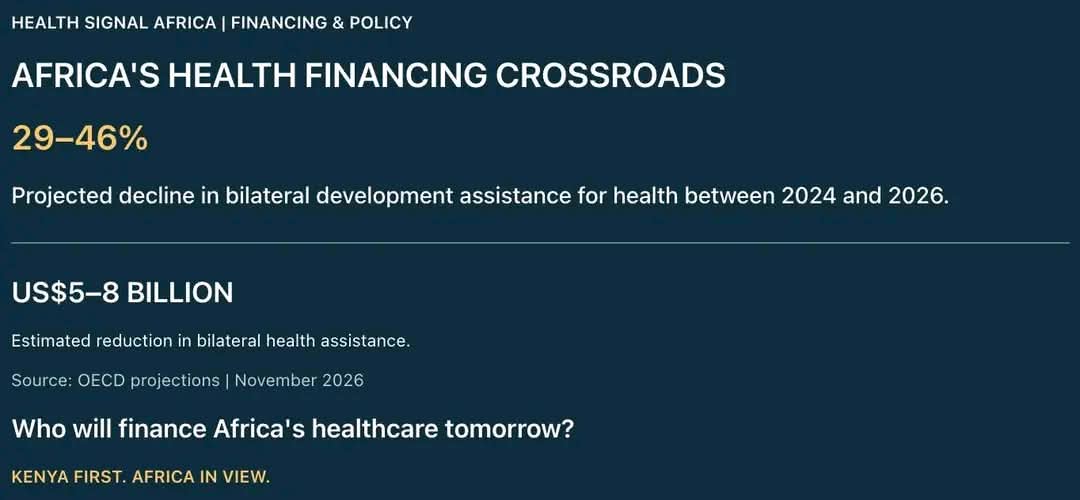
Verdt: OECD, ODA Projections for 2026 and the Near-Term; OECD analysis of aid for health, 29 June 2026.
About the Author