
 Odita Sunday




NIS Reports Faster Visa Processing, Says E-Visa Applications Now Processed Within 48 Hours

By Odita Sunday
The Nigeria Immigration Service (NIS) has reported significant improvements in visa and residency administration, disclosing that eligible foreign nationals can now receive decisions on their visa applications within 48 hours under its electronic visa system.
The Comptroller-General of the Nigeria Immigration Service, KN. Nandap, pcc, mmis, fsmn, disclosed this on Tuesday, November 17, 2026, during a one-day stakeholders’ sensitisation workshop on the Nigeria Visa and Residency Reforms held at the Service Headquarters in Abuja.
Speaking at the workshop, themed “Assessing the Implementation of the Nigeria Visa and Residency Reforms: Stakeholders’ Engagement and Strategies for Improved Service Delivery,” Nandap said the reforms were introduced to eliminate the challenges associated with manual immigration processes, reduce delays, improve transparency and strengthen national security.
Represented by the Deputy Comptroller General in charge of Visa and Residency, Franca Nwanneka, he explained that the reforms were also designed to make immigration services more accessible to legitimate travellers, investors, tourists and businesses while maintaining effective security checks.

Highlighting the achievements recorded so far, the Comptroller-General identified the introduction of the Nigeria e-Visa, Electronic Temporary Work Permit (e-TWP) and electronic Comprehensive Expatriate Residence Permit and Automated Card (e-CERPAC) as major milestones in the Service’s modernisation drive.
According to him, the Nigeria e-Visa became operational on May 1, 2025, providing eligible foreign nationals with an online platform to apply for visas without undergoing the lengthy procedures associated with the previous system.
He said the electronic platform had improved transparency, reduced unnecessary human interference and strengthened the Service’s capacity to monitor visa applications and approvals.
Nandap also highlighted the introduction of the F9A and F9B visa categories for adult and minor Nigerians returning to the country with foreign passports, respectively, describing the development as an important step towards addressing the needs of Nigerians in the diaspora.
On the Electronic Temporary Work Permit, the NIS chief said the platform became operational on August 1, 2025, replacing manual plprocedures with an electronic system for submitting, processing and approving applications.
He noted that the reform had simplified the process for companies and organisations seeking to engage foreign technical experts in Nigeria.

The introduction of biometric capturing machines, he added, had further strengthened identity verification and security checks for foreign nationals applying for temporary work permits.
He also explained that the inclusion of insurance requirements and the integration of the platform with the Service’s border management system through the Landing and Exit Card facility would improve the monitoring of foreign nationals and ensure compliance with the conditions of their stay.
On expatriate residence administration, Nandap said the e-CERPAC system, which became effective on August 1, 2025, had improved the processing of residence permit applications, renewals, status regularisation and other related services.
He identified the introduction of the Investors Residence Permit as another important development aimed at supporting the Federal Government’s efforts to attract foreign investment into the country.
According to him, the electronic system has also strengthened the collection, storage and management of expatriate information, while its integration with the border management system would make it easier to verify the residency status of foreign nationals at Nigeria’s entry and exit points.
However, the Comptroller-General acknowledged that the implementation of the reforms had not been without challenges, particularly payment difficulties, technical issues and concerns surrounding the use of the online portal.
He assured stakeholders that the Service was prepared to listen to their complaints and consider recommendations that would improve service delivery.
Nandap stressed that the success of the reforms required collective responsibility, urging relevant Ministries, Departments and Agencies, the Ministry of Foreign Affairs, Nigerian Missions abroad, security agencies, private sector operators, international organisations and employers of expatriates to support the initiative.
He maintained that sustained collaboration was necessary to ensure that the reforms delivered efficient immigration services without compromising national security.
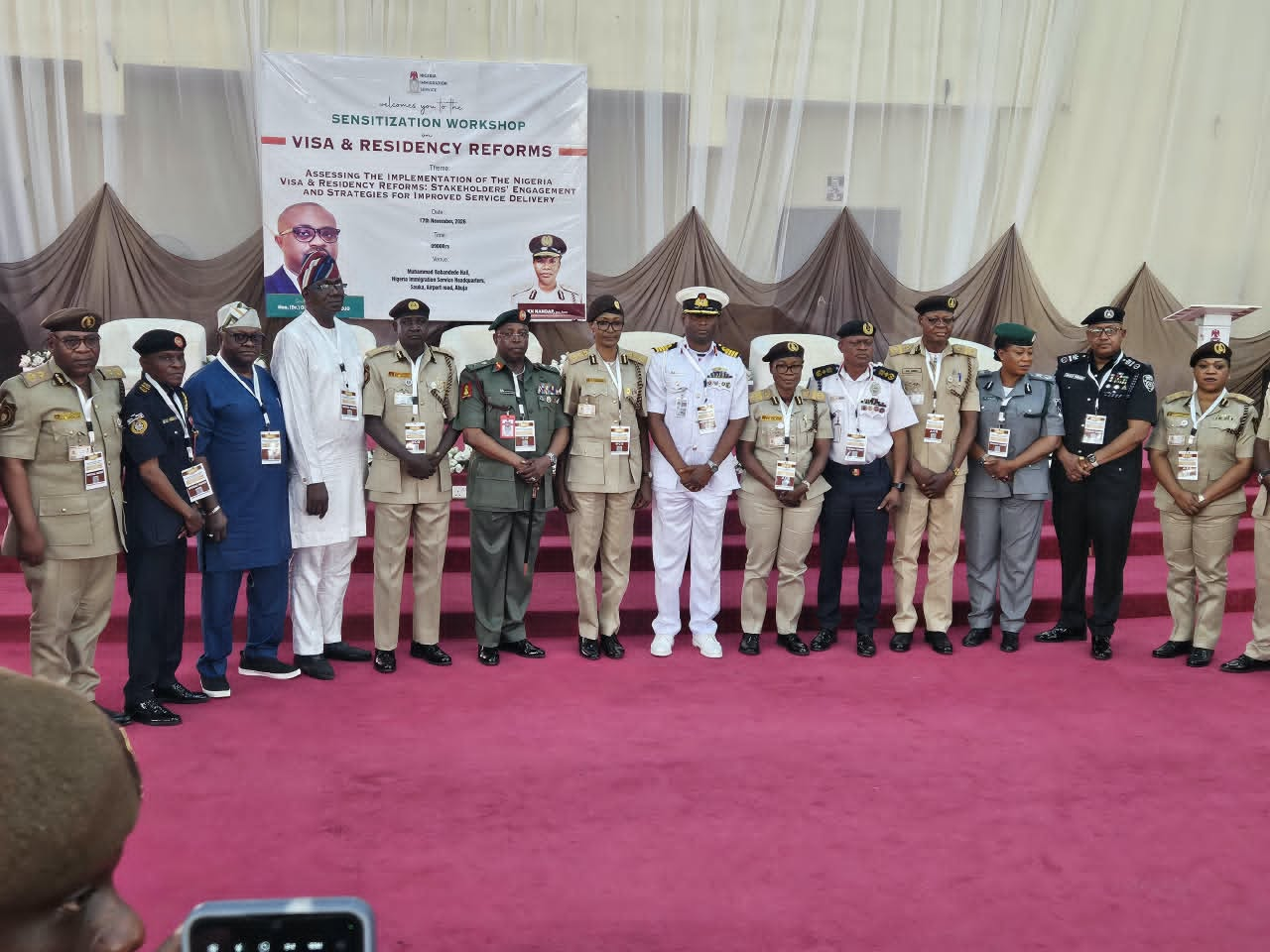
While expressing satisfaction with the progress recorded over the past year, the NIS chief acknowledged the need to identify shortcomings and address areas requiring further improvement.
He reaffirmed the Service’s commitment to technology-driven immigration administration, improved service delivery and stronger stakeholder engagement.
Nandap subsequently declared the one-day stakeholders’ sensitisation workshop open, urging participants to make meaningful contributions towards strengthening the implementation of the Nigeria Visa and Residency Reforms.
About the Author