 Odita Sunday




Open Borders, Open Graves: Why Atiku’s Reopening Promise Gambles With Nigerian Lives

By Oskar Nwauda, PhD.
Atiku Abubakar’s casual pledge to fling Nigeria’s borders open is not a policy proposal. By focusing only on farmers, traders and transporters, Atiku treats the border as a purely commercial question. It is not. Nigeria’s borders are not trade gateways awaiting deregulation; they are active threat vectors. Atiku’s pledge is therefore a reckless, dangerous indulgence from a man who either does not understand the country he wants to lead or does not care. To campaign for the presidency while treating national security as a mere inconvenience to be swept aside for the sake of a campaign slogan is a damning indictment of his judgment.
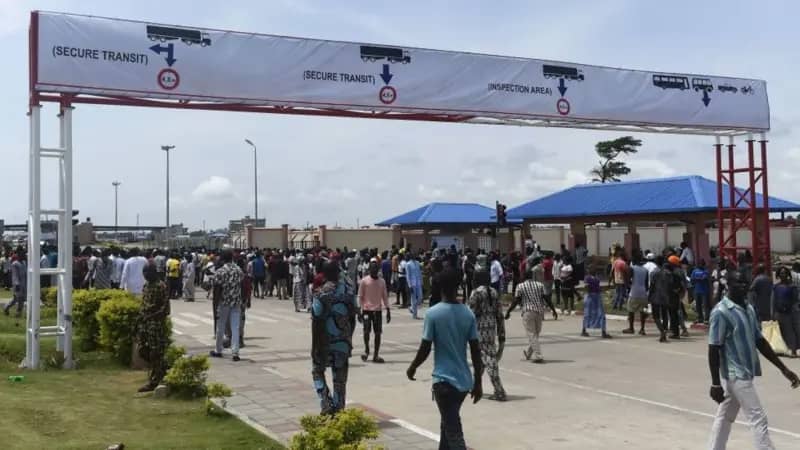
The premise is already a lie. Atiku speaks of “reopening” borders as if they are sealed shut. The Federal Government has stated plainly that Nigeria’s land borders have been open since March 2024, with further crossings opened in Kebbi State in February 2026. The Minister of Interior has said directly: “Nigerian borders are not closed and so cannot be reopened.” What Atiku is actually promising, whether he admits it or not, is to relax controls on those borders. He has offered no detail on which controls he would strip away, why, or what safeguards would replace them. That is not leadership. It is an empty, dangerous gesture dressed up as economic policy.
The contradiction is damning. For years, the official diagnosis of Nigeria’s insecurity has been consistent: foreign fighters, Sahelian bandits and arms flows crossing porous frontiers especially along the Benin and Niger corridors. One cannot credibly blame porous borders for Boko Haram’s resilience, for the Zamfara banditry epidemic, for the influx of mercenaries after Gaddafi’s fall, and then turn around and advocate loosening the very same gates as if that were an economic growth strategy. Either the borders are a security liability or they are a dormant economic asset. The evidence from the last decade points decisively toward the former – security liability. Atiku, a former Vice-President, knows this. And yet he promises to loosen the very controls that stand between Nigerian communities and the violence bleeding southward.
The security reality is not an abstract debating point; its costs are measured in the number of people killed. The Presidency has cited the Global Terrorism Index 2026: approximately 41 per cent of terrorist attacks occur within 50 kilometres of an international border, and about 64 per cent within 100 kilometres. Nigeria’s northern borderlands are not a theoretical risk zone; they are the frontline of a networked, transnational insurgency that feeds on precisely the kind of porosity Atiku wants to deepen. The Sahel has collapsed into a jihadist corridor, and criminal networks exploit border crossings because security forces cannot simply chase them across sovereign lines. Atiku would strip away the remaining safeguards and expose these communities to even greater danger — all to score a campaign point.
Atiku’s plan repeats the same security error that made President Muhammadu Buhari’s visa-on-arrival declaration so dangerous. On December 11, 2019, at the Aswan Forum for Sustainable Peace and Development in Egypt, Buhari announced that Nigeria would implement a visa-on-arrival policy for all African passport holders from January 2020. That policy was rightly criticised at the time: it created a legal front door for dangerous movements, at the very time when the greater need was for Nigeria’s own intelligence services to intensify stopping terrorist financing and weapons flows from across the Sahel. The Christian Association of Nigeria, security analysts and opposition figures across the board condemned it, and they were right. Atiku’s border plan belongs in the same category: a feel-good liberal gesture that ignores the terrain on which it would be implemented. Reopening land borders wholesale risks replicating that mistake at scale: land borders are even less controllable than airports, with thousands of unmanned crossing points.
This is not an economic vision. It is a confession of intellectual bankruptcy. Atiku claims reopening borders will create opportunities for farmers, traders, and transporters. But legitimate trade does not require surrendering the border to criminality. Although we may not like him, even Reno Omokri has warned that reopening the borders while restoring fuel subsidy would unleash “the greatest ever smuggling of petroleum products” and give “terrorists and bandits a leeway to flood Nigeria with light weapons and ammunition.” The Customs Comptroller-General has himself acknowledged that reopened trade routes “could be exploited by criminal networks if adequate safeguards are not maintained.” Atiku offers no safeguards. He offers a populist slogan.
There is also a question of sequencing that Atiku ignores. Sound economic liberalization presumes the state can enforce the rules it liberalized. Nigeria cannot currently police what crosses its borders — rice smuggling, fuel diversion, small arms, human trafficking — so “opening up” does not create regulated commerce; it creates a wider unregulated one. The beneficiaries will not be legitimate farmers and traders; they will be the smuggling networks that already dominate those corridors. The Minister of Interior has pointed out that border management is not a binary choice between total closure and unrestricted movement; it requires security, documentation, customs compliance, and controlled facilitation of trade. Atiku’s refusal to engage with that complexity — to explain how he would protect border communities while facilitating trade — reveals a man who has demonstrated that he will say anything to be elected, regardless of the consequences.
None of this means Nigeria should be permanently sealed. It means the honest policy sequence is: secure and surveil the borders first, formalize trade routes with infrastructure and customs capacity, then liberalize — with bilateral agreements that include reciprocal enforcement commitments from Benin and Niger.
To demand “real leaders who will and can protect Nigeria” is the right instinct. And the first test of such leadership is the refusal to treat national security as an obstacle to be waved away with a promise. Atiku has failed that test categorically. His border policy is not a plan for prosperity. It is an invitation to further chaos — the proposal mistakes deregulation for development, and gambles with national security in a country still burying victims of cross-border terrorism.
About the Author