
 Odita Sunday



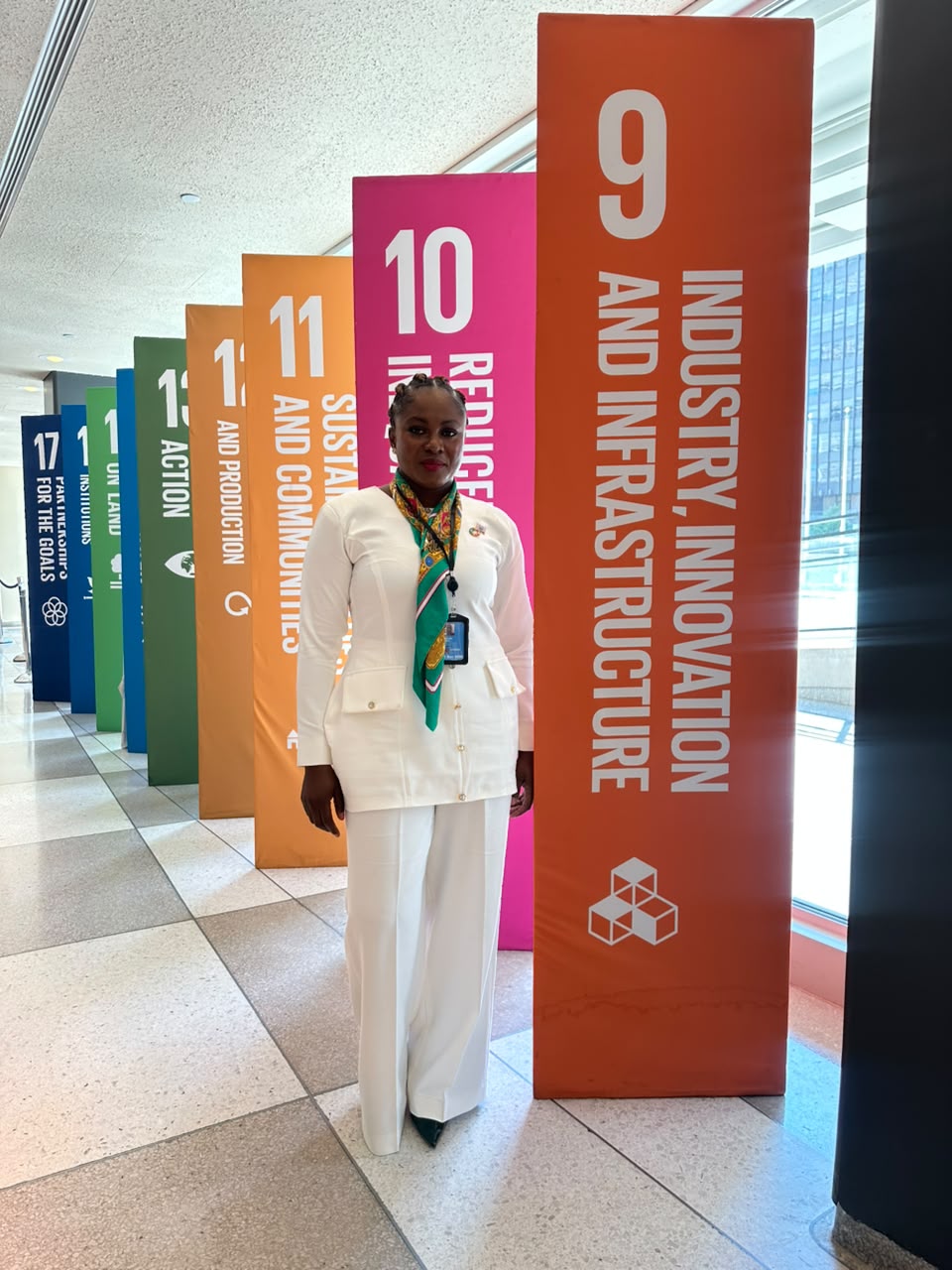
Reflections from HLPF 2026’s review of SDG 7 (energy) and SDG 9 (industry, innovation and infrastructure)
By: Ebaide Omiunu
At the 2026 UN High-Level Political Forum on Sustainable Development in New York, the hard numbers behind SDG 7 were laid bare. The latest Tracking SDG 7: Energy Progress Report 2026 shows 655 million people still live without electricity and about 2 billion people rely on polluting fuels for cooking, with more than half of those without power in Sub-Saharan Africa. Without a drastic course correction, 1.8 billion people could still be cooking over charcoal, wood, kerosene, or coal by 2030.
These are not just global statistics; they describe real lives. They show up in villages where children cannot study after dark, health centres that cannot reliably power cold chains, and households where women and girls spend hours each day gathering fuel and inhaling smoke. Speakers from Liberia, Palau, and the Alliance of Small Island States reminded the room that some of the least polluting countries are also the most exposed to climate impacts and energy shocks, with the least fiscal space to respond.
What struck me in these discussions was not only the scale of the challenge, but the clarity about its nature. Energy experts from the World Bank, Sustainable Energy for All, and several UN regional commissions converged on a simple message: technology is no longer the main constraint. We know how to deploy solar mini-grids, off-grid systems, clean cooking solutions, and even electric cooking in the right contexts. The real bottlenecks are political, financial, and institutional.
It is the same pattern I flagged after Day 1’s review of SDG 6: the sector everyone agrees is central to development is consistently the one starved of financing. Nowhere is that clearer than in renewable energy. Africa holds an estimated 60 per cent of the world’s solar potential, yet attracts only around 2 per cent of global solar investment. That is not a resource problem, and it is not really a technology problem either. It is a confidence problem in policy stability, in regulatory certainty, in the systems that make capital feel safe enough to move.
The SDG 7 gap is specific. It is driven by affordability, high cost of capital, weak grids and planning, and it is concentrated in rural African communities, small island developing states, and countries affected by conflict. Yet much of the global conversation still assumes a generic “user.” If we are serious about saving SDG 7, energy policy and finance must be redesigned from the vantage point of those communities, not layered on top of them as an afterthought.
One of the most telling lines during the SDG 7 policy briefing was that finance needs to follow the access gap, not only the easiest transactions. Today, most international clean energy finance still flows to countries and projects that look safe on paper. Public finance for clean energy in developing countries remains far below what is needed, and has declined for the least developed countries specifically even as Africa’s renewable potential sits largely untapped.
For rural communities, this means that technically viable projects often stall before they start. Changing that requires more than new instruments; it requires a different design logic. Instead of asking “where can we place capital most easily?”, we need to ask “where is energy access most transformative, and how do we structure projects to make those places bankable?” That means clustering demand around schools, clinics, and markets, aligning energy investments with agriculture and small industries, and providing guarantees and concessional finance where commercial returns alone are not enough.
The in-depth review of SDG 9 on industry, innovation, and infrastructure offered a useful lens on why this matters beyond energy itself. UNIDO and UN DESA described SDG 9 as the “production engine” of the 2030 Agenda, noting that infrastructure, industry, and innovation underpin jobs, productivity, and structural transformation. Globally, manufacturing value added has grown, but medium- and high-technology manufacturing still represents only a modest share of output in Sub-Saharan Africa, roughly 16 per cent, compared with around 48 per cent in Europe and North America. Logistics costs in low- and middle-income countries can be several times higher than in richer economies, raising the price of basic goods and making regional trade harder.
These facts matter for SDG 7. When freight and logistics systems are weak, solar components, clean cooking devices, and efficient equipment remain expensive and hard to maintain. When local manufacturing and repair capacity is low, rural energy systems are vulnerable to breakdowns and long downtimes. In other words, energy access, industrial policy, and transport cannot be planned in separate silos. A just energy transition in Africa will require integrated thinking: co-locating small industries with reliable power and good logistics, linking energy corridors with trade corridors, and aligning national energy plans with broader industrial strategies like Agenda 2063 and the Fourth Industrial Development Decade for Africa.
A third piece of the puzzle emerged from the session on the 10-Year Framework of Programmes on Sustainable Consumption and Production. The progress report showed that sustainable public procurement, credible ecolabels, and interoperable product information systems are already reshaping markets in sectors like construction, ICT, food systems, and tourism. When governments commit to buying efficient, low-carbon products and services, they do more than reduce emissions; they create predictable demand that local businesses can build around.
For developing countries, sustainable consumption and production was framed as a catalyst for productivity and inclusive growth, not just an environmental agenda. This has direct relevance for SDG 7. If public institutions from schools to hospitals procure clean cooking solutions and efficient equipment, they can help create economies of scale that bring down costs for households. If energy-intensive sectors must meet sustainability criteria to access contracts, clean energy starts to become part of the competitive landscape rather than an optional extra.
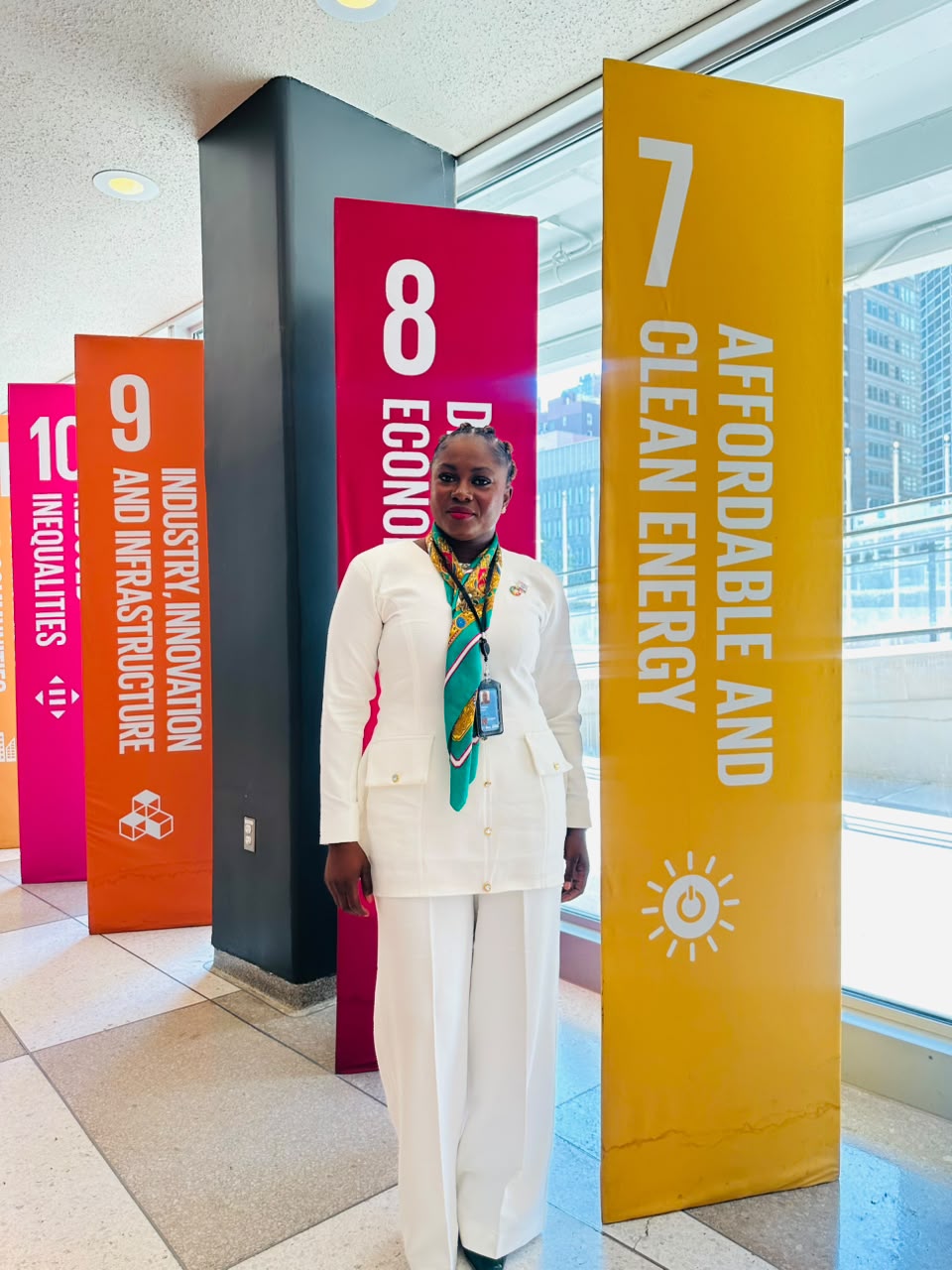
Finally, there was a hopeful but demanding message from youth and civil society. The SDG 7 youth constituency argued strongly that young people should not only be consulted but trusted as delivery partners: they are already designing mini-grid solutions, gathering data, and building social enterprises around clean cooking and off-grid power. Community representatives from structurally marginalised groups reminded the room that sustainable development cannot be achieved while entire communities remain excluded from decision-making and benefit-sharing.
Treating local knowledge, youth networks, and volunteer structures as core implementation infrastructure, supported by good data systems and fair compensation would make SDG 7 delivery more adaptive and accountable. It would also move us away from anonymous “beneficiaries” and towards real people whose circumstances and constraints we actually understand.
The HLPF theme this year was “transformative, equitable, innovative and coordinated actions for the 2030 Agenda.” For SDG 7, those words will remain slogans unless we re-anchor policy and finance where the gap is widest: in rural African communities, small island states, and countries in special situations. The credibility of the SDGs now depends on whether we can move from declarations to deliberate designs that starts with those communities and builds energy, industrial, and consumption-and-production strategies around their realities.
We already know who will be left behind if we do not change course. The real test is whether we are willing to make them the starting point.
Ebaide Queen Omiunu is a Nigerian lawyer, SDGs advocate of over a decade, and climate-justice advocate serving as Executive Director of The Ebaidebheki Initiative (TEI).
About the Author