 Odita Sunday

WHEN REFORMS BECOME PUNISHMENT: THE TRAGEDY OF A NATION THAT IMPOVERISHES ITS PEOPLE
Nigeria Cannot Be Rebuilt on Hunger, Corruption, Insecurity and Political Deception
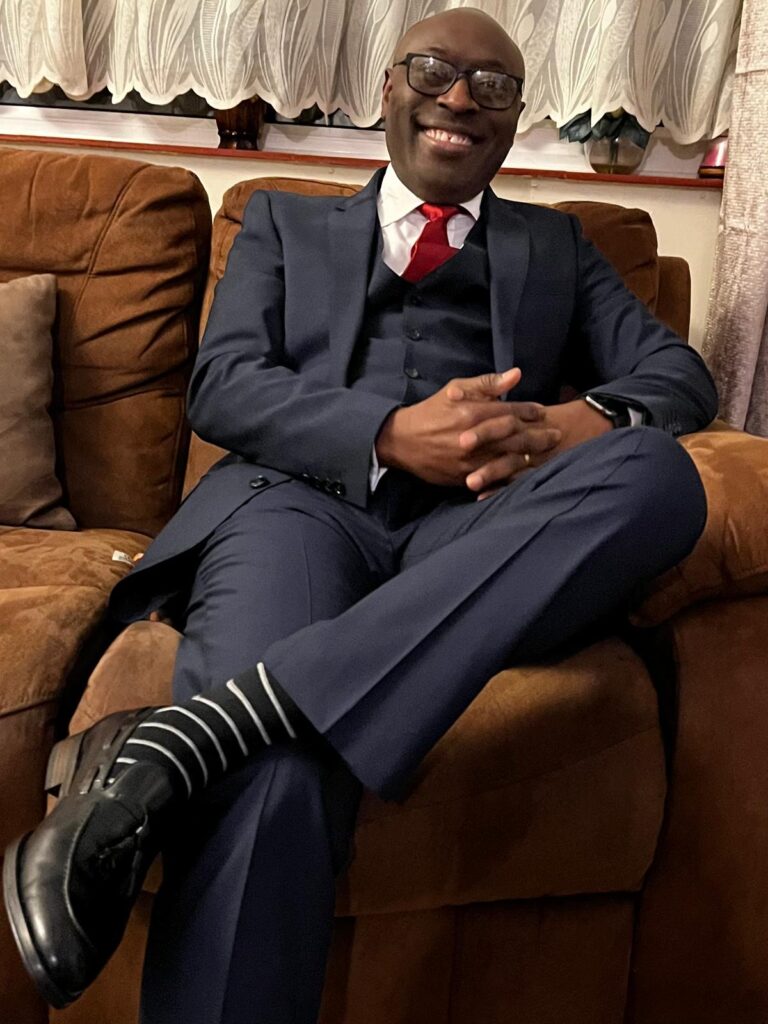
By Chris Okobah, PhD
A government cannot claim to be saving the economy when the people for whom that economy exists can barely afford to remain alive.
President Bola Ahmed Tinubu came to power surrounded by the language of reform, economic transformation and renewed hope. His political promoters repeatedly advanced the narrative that he had built Lagos and possessed the extraordinary administrative capacity to rebuild Nigeria.
But let us interrogate that claim.
Lagos was Nigeria’s commercial capital long before Bola Tinubu became its governor. It was a major centre of commerce, industry and international trade decades before his political emergence. While successive administrations contributed to its development, attributing the creation or transformation of Lagos to one individual is, in my considered opinion, a gross distortion of its economic and political history.
Nevertheless, Nigerians were promised a reformer. They were promised prosperity. They were promised renewed hope.
More than three years later, millions of Nigerians are still asking a devastating question: Where is the hope, and when will these reforms begin to reflect positively in our lives?
On May 29, 2023, during his inauguration, President Tinubu announced that the petrol subsidy was gone.
Those words marked the beginning of an extraordinary economic transformation whose consequences continue to reverberate through Nigerian households.
The price of petroleum products increased sharply, and the consequences spread across almost every sector of the economy.
Petroleum is not merely another commodity in Nigeria. It is inseparable from transportation, agriculture, manufacturing, electricity generation, food distribution and the cost of delivering essential services.
When petrol becomes expensive, transportation becomes expensive. When transportation becomes expensive, food becomes expensive. When food becomes expensive, survival itself becomes a struggle.
Then came the foreign exchange reforms and the depreciation of the naira.
In a country heavily dependent on imported machinery, industrial inputs, pharmaceuticals and numerous consumer goods, the weakening of the currency imposed another burden on businesses and households.
Importers required substantially more naira to obtain foreign currency. Businesses faced increased operating costs. Import duties and other charges further compounded the pressure on many imported products.
The purchasing power of ordinary Nigerians deteriorated.
I am not suggesting that Nigeria did not require economic reforms. Indeed, our country has desperately needed structural and institutional reforms for decades.
But reforms without adequate protection for vulnerable citizens can become instruments of economic punishment.
A responsible government must calculate not only what its reforms will save the treasury but also what those reforms will cost the people.
What happens to the widow who survives on petty trading? What happens to the pensioner whose income cannot buy essential medicine? What happens to the father whose entire salary can barely transport him to work?
These are not insignificant questions. They are the human realities that should inform economic policymaking.
The World Bank has acknowledged progress in Nigeria’s macroeconomic stability while observing that household incomes have not fully recovered and poverty remains high.
That distinction is fundamental.
A stronger balance sheet is not the same as a stronger household.
Economic growth that cannot put food on the tables of citizens is not yet the economic transformation Nigerians were promised.
The government introduced cash-transfer programmes intended to cushion the hardship imposed by its economic policies.
In principle, there is nothing wrong with targeted financial assistance to vulnerable households.
However, what concerns me profoundly is the transparency, adequacy and accountability of these interventions.
We continue to hear announcements about millions of beneficiaries and billions of naira distributed.
Yet many Nigerians cannot identify beneficiaries within their immediate communities.
I acknowledge that some households have received transfers. But the existence of beneficiaries does not eliminate the need to establish whether the programmes are transparent, sufficiently targeted and free from manipulation.
Who received the money? How were the beneficiaries selected? What mechanisms prevent fictitious names, inflated figures and diversion of public funds?
Why should the distribution of public assistance not be subjected to independent verification and credible audits?
The continuing sight of desperate Nigerians begging on our streets is not, by itself, proof that cash transfers were stolen. It is, however, powerful evidence that poverty remains widespread and that the assistance provided has not adequately addressed the hardship.
We must stop treating poverty alleviation as political charity.
Public funds are not personal gifts from politicians. They belong to Nigerians.
Let me recount an incident brought to my attention from my community in Delta State.
According to accounts of those involved, politicians associated with the ruling party assembled approximately 400 people for a financial empowerment exercise.
I was informed that roughly 150 people received ₦50,000 each.
However, it was subsequently alleged that approximately 500 people had benefited from the distribution.
Some courageous young people reportedly challenged the discrepancy and questioned how the number of declared beneficiaries could exceed the number of individuals actually paid.
What allegedly followed is even more disturbing.
Rather than providing a transparent explanation, the young people who questioned the figures reportedly found themselves facing police intervention, criminal charges and detention.
I was further informed that some encountered bail conditions requiring sureties of substantial standing, including senior civil servants with landed property.
These were financially vulnerable people who could barely afford legal representation, let alone satisfy onerous bail requirements.
I call for an independent investigation into these allegations, the distribution records, the arrests and the bail conditions.
If the allegations are established, those responsible must be held accountable.
Consider the moral implications.
Public money is supposedly distributed to alleviate poverty. Citizens question the figures. Instead of receiving an explanation, they allegedly become the subjects of criminal proceedings.
What sort of democracy punishes the poor for demanding accountability over funds intended to assist them?
Where is the protection of constitutional rights?
Where is the independence of law enforcement?
Where is the justice?
The police exist to protect citizens and enforce the law impartially, not to shield politically connected individuals from legitimate scrutiny.
The judiciary exists to administer justice, not to transform poverty into an additional punishment.
We must investigate and correct any situation in which political influence appears to determine who receives protection and who suffers prosecution.
Consider the suffering of ordinary Nigerian workers.
The national minimum wage is ₦70,000 per month.
Suppose a worker spends ₦3,000 daily travelling to and from work.
For 20 working days, transportation alone consumes ₦60,000.
That leaves only ₦10,000 from a ₦70,000 salary.
How does that worker pay rent?
How does that worker buy food?
How does that worker purchase medicine?
How does that worker provide school fees, uniforms and textbooks for the children?
Even someone earning ₦100,000 would have only ₦40,000 remaining after the same transportation expenditure.
There are Nigerians who leave their homes at six o’clock in the morning and return at seven o’clock in the evening without eating a proper meal.
Not because they are fasting.
Not because they are lazy.
Not because they do not want food.
But because eating lunch might consume the money they need to return to work the following day.
What a heartbreaking contradiction: a citizen who works to escape poverty but cannot afford the cost of going to work.
Meanwhile, some political leaders appear on television celebrating economic achievements and telling Nigerians that conditions are improving.
Improving for whom?
For the mother who cannot afford a bag of rice?
For the father whose landlord threatens eviction because he cannot pay rent?
For the university graduate who cannot secure employment?
For the pensioner who must choose between medicine and food?
A government cannot measure the success of its economic reforms exclusively by foreign reserves, revenue collections, stock market performance or favourable assessments from international financial institutions.
These indicators are important, but they are insufficient.
The ultimate measure of national prosperity is the standard of living of the people.
Perhaps the most dangerous development in Nigeria is the growing perception that corruption carries little consequence for politically connected offenders.
When allegations of massive public fund diversion produce headlines but few credible convictions, the public begins to lose faith in justice.
When powerful individuals display unexplained wealth while ordinary workers struggle to survive, corruption begins to appear socially acceptable.
When public office becomes an opportunity for personal enrichment rather than public service, democracy loses its moral foundation.
And when political loyalty determines accountability, the rule of law becomes a casualty.
Corruption is not the exclusive preserve of any political party. It has infected successive administrations and institutions. But those presently entrusted with power carry the immediate responsibility to confront it.
Nigeria cannot continue along a path where the alleged theft of public resources attracts less urgency than the complaints of citizens demanding explanations.
We must establish credible systems of investigation, independent prosecution, asset recovery and appropriate punishment.
The money stolen from the public treasury is never merely money.
It represents the hospital that was never built.
The school that collapsed.
The road that remained impassable.
The electricity that was never supplied.
The police equipment that was never purchased.
The child who died because emergency medical care was unavailable.
Corruption is not merely an economic offence. Its consequences can be measured in destroyed opportunities, avoidable suffering and lost human lives.
There is another tragedy that breaks my heart even more profoundly than economic hardship.
It is the continuing insecurity that has destroyed families, displaced communities, widowed women and orphaned children.
Across Nigeria, innocent citizens have been kidnapped, murdered or driven from their homes by terrorists and other armed criminals.
Some children have endured prolonged captivity.
Think about the psychological torture suffered by their parents.
Imagine a mother waking every morning without knowing whether her abducted child is alive.
Imagine a father who hears a vehicle approaching at night and rushes outside, desperately hoping that someone has brought his child home.
Imagine the terror of a child held hostage, wondering whether another sunrise will bring freedom or death.
Now I ask those occupying positions of authority:
What if those children were your children?
Would you sleep peacefully?
Would you continue political celebrations?
Would you spend enormous resources on election campaigns while your children remained at the mercy of kidnappers?
The kidnapping of the Chibok schoolgirls in 2014 became a defining national scandal and contributed to public dissatisfaction with President Goodluck Jonathan’s handling of insecurity before the 2015 election.
Yet mass abductions and other forms of violent insecurity have persisted under subsequent administrations.
We must reject the dangerous tendency to condemn insecurity only when a political opponent occupies the presidency.
The value of a Nigerian child’s life must never depend on which political party controls the government.
Every kidnapped child deserves urgent rescue efforts.
Every displaced family deserves protection and a realistic path to rebuilding its life.
Every criminal organisation terrorising communities must face determined and lawful action by the state.
A government that cannot protect the lives of its citizens has failed in one of its most fundamental responsibilities.
As political preparations intensify, huge resources are again being devoted to campaigns, political mobilisation and vehicles.
But where are the roads these vehicles are supposed to travel?
Look at the condition of critical highways in different parts of the country.
The Benin–Asaba corridor has become a source of frustration for travellers confronted by damaged sections, congestion and difficult travel conditions.
Journeys that should be relatively straightforward can become exhausting ordeals.
Consider the suffering of those travelling between Asaba and Abuja, or those navigating security concerns along the Abuja–Kaduna corridor.
For many Nigerians, road travel has become an exercise in anxiety.
The traveller fears accidents, vehicle breakdowns, deteriorating road conditions, armed attacks and kidnapping.
Yet many political leaders travel by air, insulated from the daily experiences of those they govern.
They may never experience the indignity of being stranded for hours on a damaged highway.
They may never have to make the terrible decision between paying for fuel and buying food for their children.
They may never understand the desperation of a trader whose goods perish because transportation has become unreliable.
Before purchasing more vehicles for political campaigns, why not ensure that Nigerians have safe roads on which to travel?
Before commissioning another billboard, why not commission a functioning hospital?
Before distributing another bag of rice bearing a politician’s photograph, why not establish policies that enable families to purchase their own rice with dignity?
Nigeria does not need an endless culture of handouts.
Nigeria needs economic opportunity, productive employment, security, functioning infrastructure and accountable leadership.
We cannot repair Nigeria by merely replacing one set of politicians with another while preserving the same destructive institutions.
We need a fundamental change in the philosophy of governance.
First, economic reforms must be accompanied by credible social protection. Government must identify the most vulnerable citizens, verify beneficiaries, publish auditable expenditure records and ensure that assistance reaches its intended recipients.
Second, the federal and state governments must prioritise productive employment, affordable transportation, reliable electricity and support for agriculture and small businesses.
Third, corruption investigations must lead to credible prosecutions where evidence warrants them. Public officials should not enjoy practical immunity merely because of their political connections.
Fourth, the police and other security institutions must operate independently of partisan pressure. Citizens who raise legitimate concerns must never be subjected to intimidation or unlawful detention.
Fifth, the judiciary must remain the sanctuary of the oppressed, not an additional instrument of oppression.
Sixth, government must make the protection of lives and property a non-negotiable priority, with measurable results in rescuing kidnapped citizens and dismantling violent criminal networks.
Finally, Nigerians must insist that political leadership be judged by tangible improvements in living standards rather than propaganda, ceremonial projects or promises that are endlessly recycled.
Poverty is not proof of criminality. Millions of poor Nigerians remain extraordinarily honest and hardworking despite their suffering.
Nevertheless, prolonged economic desperation can create conditions that criminal networks exploit.
An impoverished and hopeless population is also more vulnerable to political manipulation, vote buying and recruitment into violence.
A government that genuinely wants to fight crime must also fight the hopelessness, unemployment and social deprivation that make communities vulnerable to exploitation.
Sometimes I wonder how we arrived at this point.
How did a country so richly endowed with human and natural resources become a place where millions struggle to afford the necessities of life?
How did political office become, in the eyes of so many citizens, a gateway to extraordinary personal wealth rather than a solemn obligation of public service?
How did we become a society in which the suffering of ordinary citizens is too often reduced to political statistics?
I see the elderly struggling.
I see young graduates losing hope.
I see mothers begging for assistance.
I see fathers unable to provide for their families.
I see communities living in fear.
I see children whose futures are being compromised before their lives have properly begun.
And my heart bleeds.
Not because I hate Nigeria.
My heart bleeds because I love Nigeria and refuse to accept that this is the best country we can build.
I do not believe that suffering should be normalised. I do not believe that citizens should be grateful merely because their government gives them a fraction of the resources that already belong to them.
I do not believe that political loyalty should silence our consciences.
We must stop celebrating leaders simply because they belong to our political party, ethnic group or religious community.
A hungry APC supporter is no less hungry than a hungry PDP or ADC supporter.
An abducted Christian child suffers the same terror as an abducted Muslim child.
A collapsing hospital does not distinguish between northerners and southerners.
Poverty has no political party.
Hunger has no religion.
Insecurity respects no ethnicity.
Death does not demand a party membership card.
We are Nigerians before we are members of political parties.
To President Bola Ahmed Tinubu and every person entrusted with public authority, I ask a simple question:
What is the purpose of economic reform if ordinary Nigerians cannot survive its consequences?
What is the value of increased government revenue if communities remain without basic infrastructure?
What is the value of political power if the people who confer that power are abandoned to hunger and insecurity?
And what legacy can any leader claim when the next generation inherits a country burdened by poverty, unemployment, institutional corruption and fear?
Nigeria deserves reforms that liberate its people, not reforms whose benefits remain remote from their daily lives.
Nigeria deserves leaders who feel the pain of ordinary citizens, not leaders who dismiss their suffering from the comfort of official residences.
Nigeria deserves justice that protects the weak and holds the powerful accountable.
Above all, Nigeria deserves a government that understands that human dignity is more important than political survival.
As we approach another election, Nigerians must reflect deeply on the kind of leadership they want.
We must scrutinise promises, demand verifiable results and exercise our democratic rights freely and peacefully.
Our votes must no longer become instruments through which we prolong our own suffering.
We cannot continue voting on the basis of ethnicity, religion, inducements and blind political loyalty, only to spend the next four years lamenting the consequences of our choices.
The Nigeria we leave to our children will depend partly on the courage with which we confront today’s failures.
We must not surrender our country
About the Author