 Odita Sunday




By Ewere Okonta, PhD
08037383019
eobnewsmedia@gmail.com
eob.org.ng
Long before modern banking institutions became widespread in Nigeria, the people of Agbor had developed a home-grown financial system that enabled them to meet their economic, social and cultural needs. It was a system built on trust, cooperation, discipline, collective responsibility and a deep understanding of the power of working together. The people simply called it ‘Meeting’.
Interestingly, despite the introduction and expansion of commercial banks, microfinance banks, cooperative societies and other formal financial institutions, the traditional meeting system has not only survived in Agbor but has continued to flourish. In fact, it has become such an integral part of the town’s economic life that one could argue, without much exaggeration, that a significant part of Agbor’s grassroots economy revolves around meetings.
Agbor people are predominantly industrious, enterprising and commercially minded. They understand that economic progress does not always depend on how much money an individual has in the bank but also on the ability to mobilise resources, build relationships and pursue common interests. This understanding is perhaps one of the reasons the meeting system has endured across generations.
In Agbor, there is practically a meeting for everything. There are meetings for purchasing motorcycles, motor vehicles, household furniture, foodstuffs, land and other valuable assets. There are meetings organised by Car owners, Okada riders, traders, teachers, farmers and vulcanizers. There are church-based meetings and even associations for parents whose children live and work outside the country.
Indeed, you can hardly live in Agbor without belonging to one meeting or another. If you are not in a meeting for money, you may belong to one for household needs, business purposes, social support or community development. And if you are not in any meeting at all, somebody may probably want to know why you are not taking advantage of one of the town’s most enduring economic traditions.
Take a walk through Baleke Street, Odozi Street, Iregwa Street, Mariere Street and Gbenoba Street. These are among the commercial nerve centres of Agbor, where business activities thrive and the meeting system plays a significant role in facilitating transactions and financing economic activities.
Cross over to the other side of town, and the story is not different. Abraka Road, Convent Street, Garage, Hausa Street, Ubaja Street and other commercial locations have their own vibrant economic networks, with meetings serving as an important instrument for mobilising funds, facilitating purchases and sustaining businesses.
What makes the Agbor meeting system particularly interesting is its organisation. It is not simply a gathering of people who contribute money whenever they feel like doing so. It is a structured arrangement with defined purposes, agreed procedures, leadership, financial responsibilities and rules governing members’ conduct.
Generally, the system operates in three major forms.
The first is the rotational contribution system. Under this arrangement, members contribute an agreed amount of money at stipulated intervals, usually weekly or monthly. The money is handed to members in turns according to their order of registration or an agreed arrangement. Once the first person receives the pooled contribution, the next person takes their turn until everybody has benefited.
This arrangement is particularly useful for people who earn modest incomes but have specific financial commitments. Rather than waiting for years to accumulate enough money to meet a particular need, they can access a substantial amount through collective contributions. It is a simple but effective way of turning small individual savings into a meaningful financial resource.
The second is the savings and lending system. Here, members contribute money regularly, but instead of distributing the entire fund in rotation, the accumulated money is made available for members to borrow. Such loans are usually granted at an agreed interest rate and must be repaid within a specified period, often before or by December.
This arrangement provides members with access to credit without necessarily going through the lengthy procedures associated with conventional financial institutions. It also creates an opportunity for people to finance businesses, meet pressing family obligations and undertake other economic activities.
The third is the commodity or asset-based meeting system. This is perhaps one of the most interesting aspects of the Agbor meeting culture. The contributions are tied to the acquisition of a particular item or asset. It could be a motorcycle, a vehicle, a bag of rice, furniture or any other agreed commodity.
Members contribute according to the established arrangement, and when it is their turn, the beneficiary uses the pooled funds to purchase the agreed item. In this way, people who might otherwise find it difficult to purchase certain household or business assets outright can acquire them through collective financial commitment.
Beyond these three arrangements, what is particularly remarkable is the level of organisation that characterises many of these meetings. They usually have executives responsible for managing their affairs, collecting contributions, keeping records, approving loans and ensuring that members comply with agreed rules.
Some have oral constitutions, while others maintain written constitutions and clearly defined regulations. They establish procedures for admission, contributions, borrowing, repayment, sanctions and dispute resolution. Members are expected to understand and abide by these rules because the survival of the arrangement depends largely on mutual trust and collective discipline.
One cannot help but admire the ingenuity behind this indigenous financial arrangement. In many respects, these meetings have evolved into informal financial institutions that perform functions traditionally associated with banks and cooperative societies.
Perhaps this is one area where the modern banking system needs to understudy the Agbor people. The ability of some of these meetings to mobilise funds, monitor members’ financial commitments and recover loans through established social relationships offers useful lessons in grassroots credit management.
Of course, the system is not without its challenges. There may be disagreements, defaults, mismanagement, dishonesty or the occasional collapse of a meeting. These are realities that any financial arrangement must confront. However, the fact that the system has survived for generations and continues to attract participation speaks volumes about its usefulness and social acceptance.
More importantly, the benefits of the meeting system extend beyond the immediate financial interests of its members. Many of these associations provide welfare support when members experience bereavement, illness, weddings, childbirth and other important family events. They create social networks through which people support one another in moments of joy and difficulty.
In a society where access to affordable credit remains a major challenge for small business owners, artisans, traders and low-income earners, such indigenous arrangements can make a meaningful difference. They help people acquire productive assets, expand businesses, finance household needs and improve their general standard of living.
There is also a cultural dimension to this practice. The meeting system reflects some of the enduring values of the Agbor people: communal living, solidarity, trust, reciprocity and the belief that people can achieve more when they work together. It demonstrates that economic development is not necessarily driven by large financial institutions alone; it can also emerge from ordinary people who understand the importance of pooling their resources.
The Agbor meeting system is, therefore, more than a financial arrangement. It is an economic institution, a social support mechanism and a reflection of the people’s collective ingenuity.
Perhaps other communities can learn from this experience. With proper organisation, transparent record-keeping, accountability and appropriate safeguards, indigenous savings and credit arrangements can complement the formal banking system, particularly in communities where conventional financial services remain inaccessible or inadequate.
One thing is certain: the Agbor people have demonstrated that a community does not always need to wait for government, commercial banks or external intervention before developing practical solutions to its economic challenges.
Sometimes, the solution is already within the community. Sometimes, all it takes is a group of people who trust one another, agree on a common purpose and commit themselves to achieving it.
And in Agbor, that solution has a familiar name: MEETING!
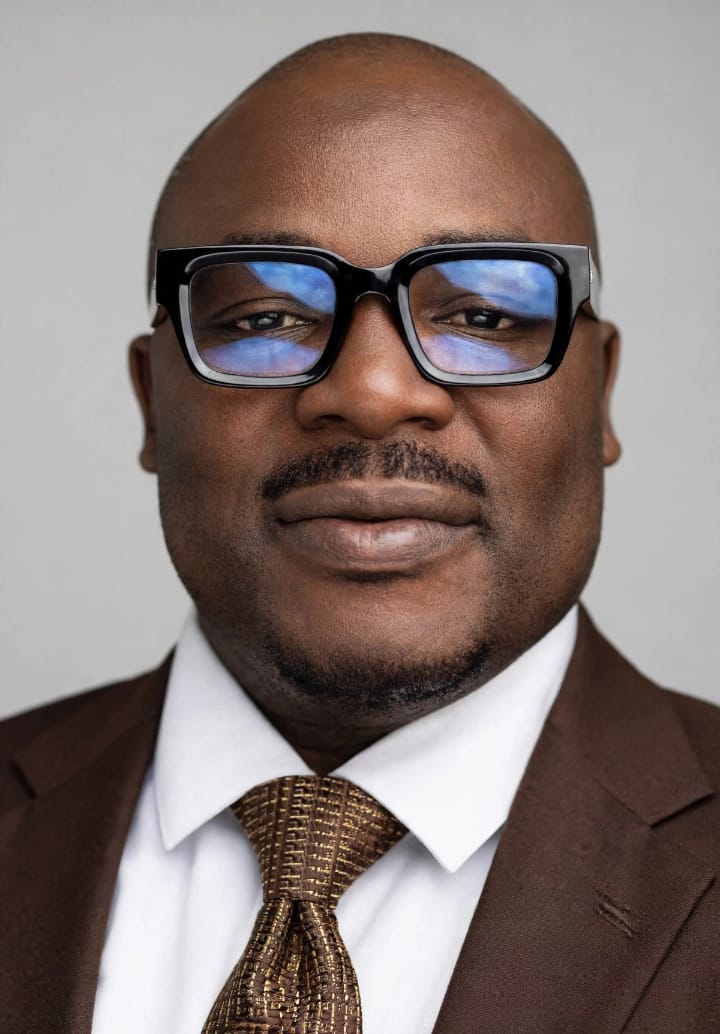
Dr Ewere Okonta is the CEO of EOB Media, a family-values advocate, teacher and writer. He writes from the Department of Business Administration, University of Delta, Agbor
#Agbor #EOB #meeting
About the Author