 Odita Sunday

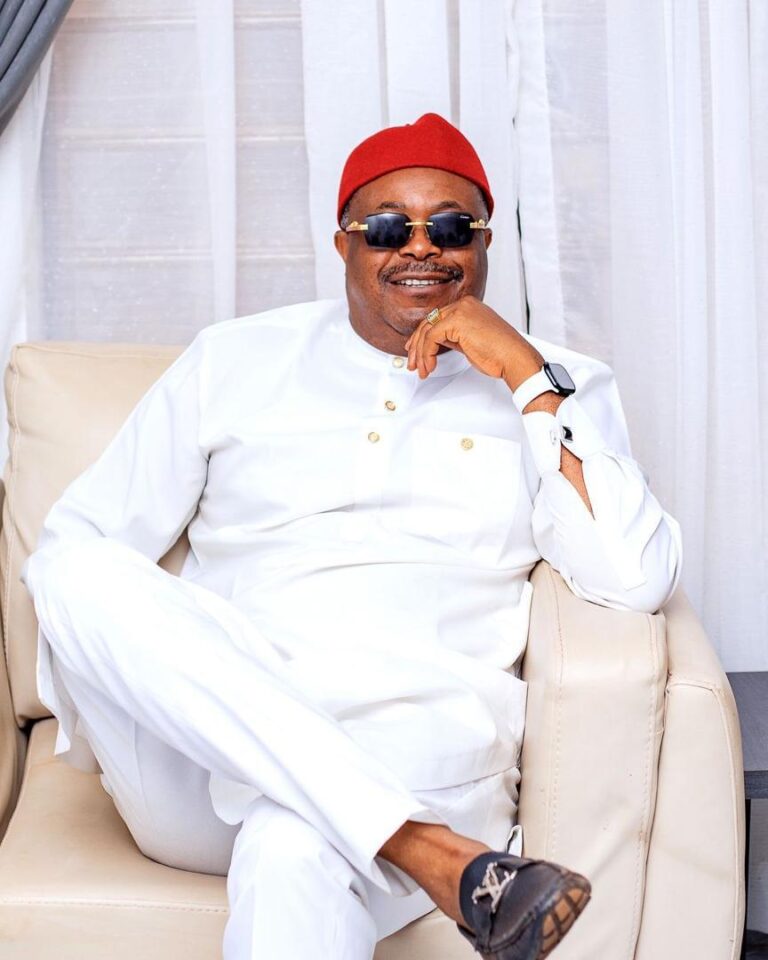
Hon. Chukwudi Laurence Izegbu: Silent Hero in Rural Advancement Advocacy
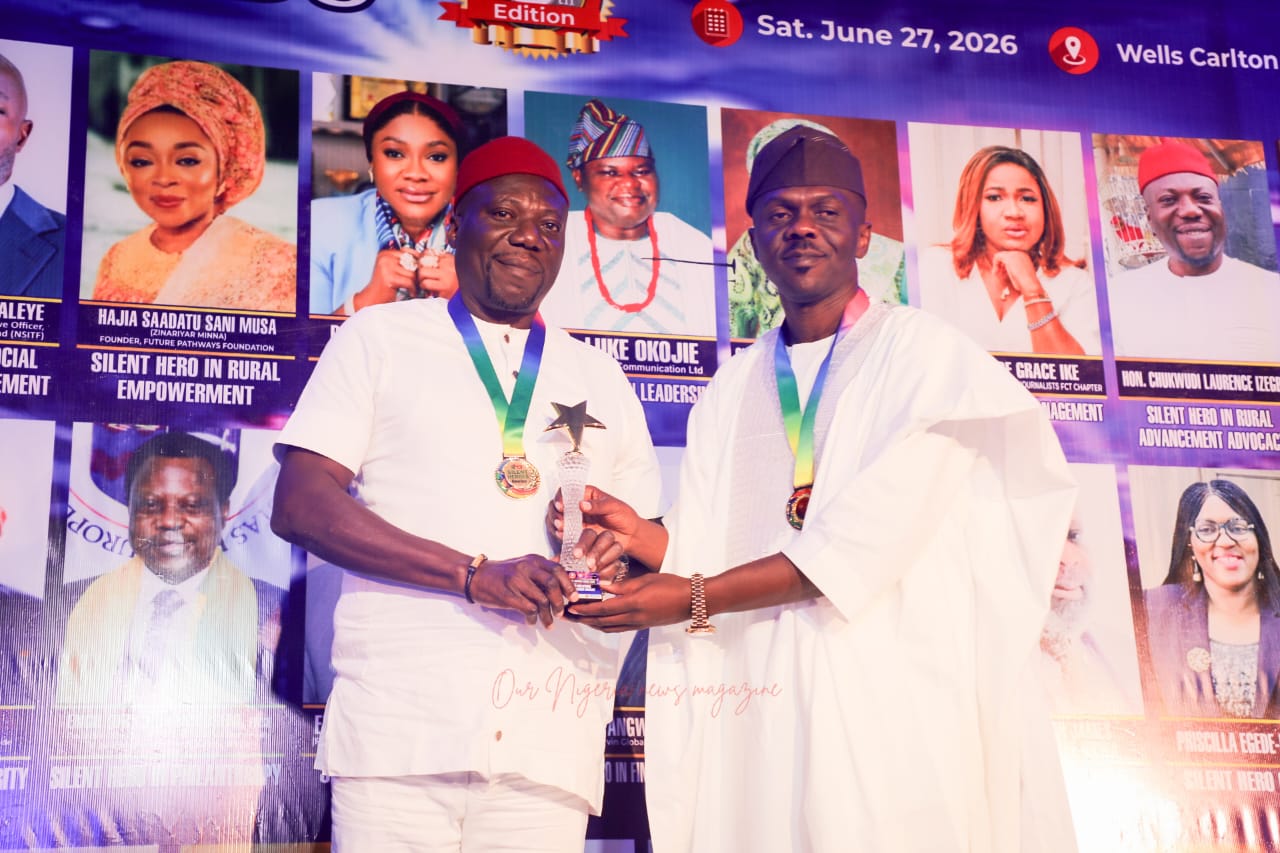
By Odita Sunday
Development, within the Nigerian context, travels along a familiar road. It begins in the state capital, circles ministerial districts, decorates urban flyovers and conference halls, then weakens before it reaches the villages where most citizens still live and work. Rural communities remain the quiet margins of public policy: invoked during elections, photographed during commissioning ceremonies, then abandoned to the long arithmetic of poor roads, weak markets and institutional neglect. However, every so often, within the machinery of state, a figure emerges who treats the countryside not as an electoral obligation but as the true frontier of economic transformation. One such figure is Hon. Chukwudi Laurence Izegbu, who has spent much of his public life attempting precisely that in Delta State.
Izegbu is not a flamboyant politician. His name rarely dominates television panels or the theatrical combat of Nigeria’s daily political quarrels. His work has unfolded largely beyond the glamour of Abuja and Lagos, in the oil-bearing communities, agrarian settlements and semi-urban towns of Delta North, where the promises of Nigeria’s resource wealth often appear most elusive.
The paradox of the Niger Delta has long been plain enough. The region fuels much of the Nigerian economy, yet many host communities remain trapped in environmental degradation, unemployment and weak infrastructure. Oil pipelines cut through villages where schools decay and basic transport remains unreliable. International contractors arrive with expatriate expertise and imported supply chains, while local labourers watch from the margins of projects executed on their own soil. It is this contradiction that has animated much of Izegbu’s career.
His intellectual formation offers some explanation. Unlike many Nigerian political operatives who arrive in governance through patronage networks alone, Izegbu’s training was unusually specialised. At the University of Plymouth in Britain, he studied Petroleum Management, immersing himself in the economics and governance structures of the extractive industry. Further professional certifications in strategic management, analytical writing and policy development sharpened a technocratic instinct that would later define his approach to public service. The training mattered because it exposed him to a central truth often obscured in Nigerian politics: resource extraction is not merely an engineering exercise but a political one, shaping labour markets, local economies and social stability.
This perspective became especially visible during his tenure as Senior Special Assistant on Local Content Policy and Development to Senator Ifeanyi Okowa, the former governor of Delta State. In Nigeria, “local content” policies are frequently discussed in narrow commercial terms. They are designed, at least in theory, to ensure that Nigerian firms and workers participate in major industrial projects rather than watching foreign companies capture all the benefits. In practice, however, such policies have often benefited urban contractors and politically connected intermediaries more than ordinary communities.
Izegbu sought to reinterpret the idea. For him, local content was not merely about replacing foreign contractors with Nigerian elites. It was about shifting economic participation towards rural host communities themselves. If oil was extracted from villages and creeks, then the people in those places ought to become active participants in the wealth chain. The concept sounds obvious; in Nigeria’s governance culture, it remains quietly radical.
Under the Okowa administration, Delta State strengthened its local content framework through legislation aimed at compelling greater indigenous participation in industrial projects. Izegbu became one of the operational faces of that policy. His role required more than ceremonial advocacy. It involved negotiations with multinational corporations, scrutiny of procurement structures and persistent pressure on contractors accustomed to importing labour and materials from outside host communities.
His intervention during the rehabilitation of the Warri refinery in 2022 illustrated the point. The project, managed partly by the South Korean engineering giant DAEWOO Engineering & Construction, was one of several attempts to revive Nigeria’s chronically underperforming refining sector. As with many large-scale industrial contracts, there was a risk that the economic benefits would remain concentrated among foreign technical staff and urban subcontractors while local communities absorbed the disruption without meaningful participation.
Izegbu challenged that pattern directly. He insisted that indigenous contractors, artisans and skilled workers from Delta State be integrated into the project’s operational chain. Local raw materials, where available, were to be prioritised. To critics, such interventions can appear parochial or bureaucratically inconvenient. Yet in regions where unemployment fuels militancy, criminality and social unrest, they are also instruments of stability. Economic exclusion in resource-producing communities has long been one of the hidden engines of conflict in the Niger Delta.
What distinguished Izegbu’s approach was that he framed rural inclusion not as charity but as economic rationality. Villages and semi-urban towns, he argued, possess labour capacity, artisanal knowledge and entrepreneurial potential that remain systematically underused. The problem is not the absence of talent but the absence of institutional access. By compelling multinational firms to engage local suppliers and workers, government could create a more distributed development model rather than one perpetually concentrated in metropolitan enclaves.
This philosophy extended beyond oil. In Delta North, particularly around his ancestral community of Onicha-Ugbo, he became associated with advocacy for smallholder farmers and community-based economic initiatives. He spoke frequently about the need to break the dominance of exploitative middlemen who consume much of farmers’ earnings before produce reaches urban markets.
His support for digital agricultural platforms reflected this concern. Nigeria’s rural economy still suffers from primitive logistics, poor market access and weak financing mechanisms. Technology, when properly adapted, can narrow these gaps. Izegbu showed interest in software-driven systems capable of connecting farmers directly with buyers, financiers and supply networks. In a political environment often captivated by slogans about innovation, his emphasis remained unusually grounded: technology mattered only if it improved the material conditions of ordinary producers.
At the same time, he aligned himself with community welfare efforts, including educational support initiatives for indigent children and orphans in Onicha-Ugbo. Such interventions rarely attract national headlines. Yet they reveal something essential about the logic of his politics. Izegbu appears to understand development less as monumental state performance than as the cumulative strengthening of local institutions: schools that function, transport systems that survive, cooperatives that endure and artisans who find work close to home.
Hon. Chukwudi Laurence Izegbu represents a particular strain of Nigerian public service: technocratic, locally rooted and sceptical of development concentrated solely in urban centres. His career suggests that rural advancement is not merely a humanitarian obligation but a strategic necessity. A nation that neglects its villages eventually inherits their frustrations in the form of migration pressures, insecurity and economic stagnation.
The old model of governance in Nigeria treated rural communities as passive recipients of state generosity. Izegbu’s approach, implicit throughout his career, is different. Villages are not developmental afterthoughts. They are productive spaces capable of generating labour, enterprise and social stability if integrated into the wider economy with seriousness and dignity.
About the Author