 Odita Sunday

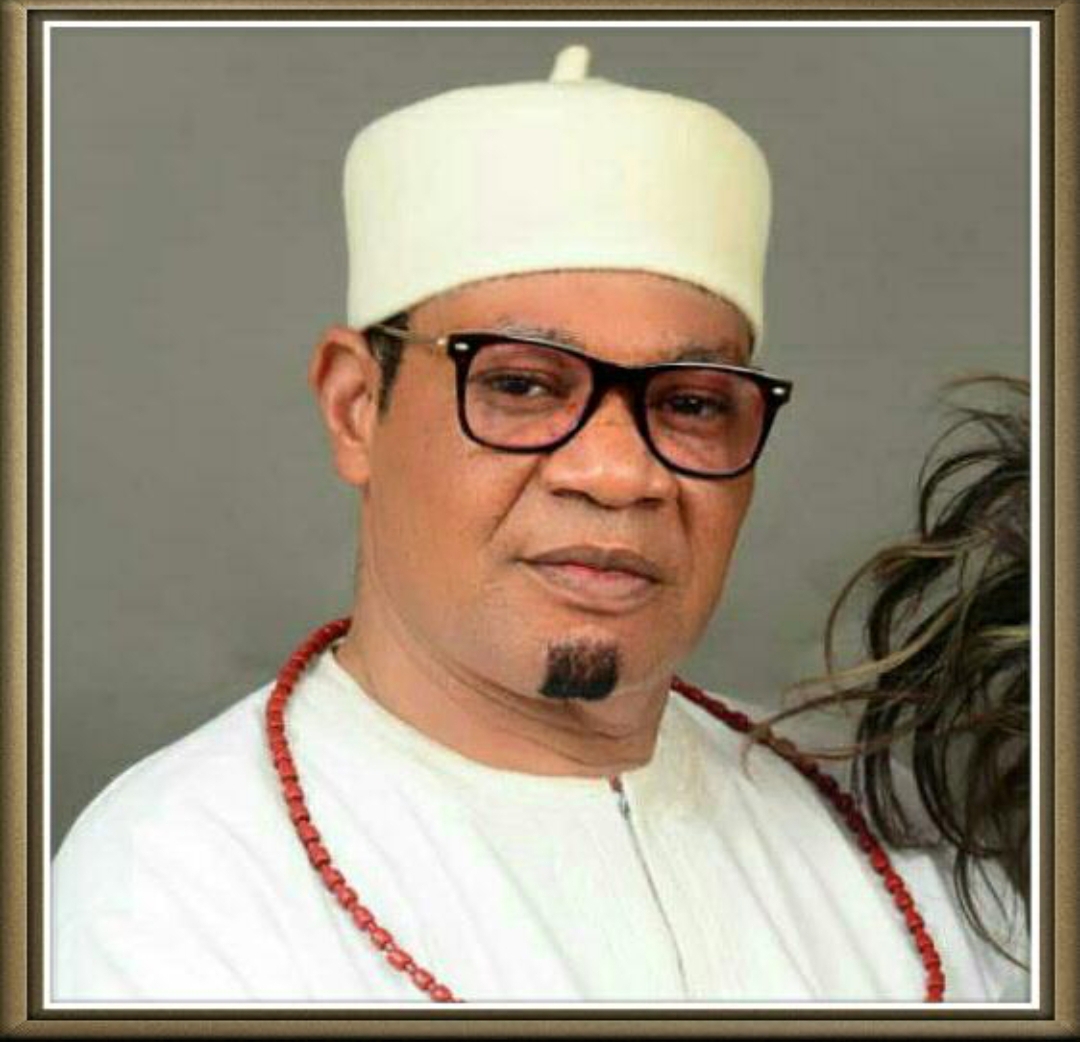
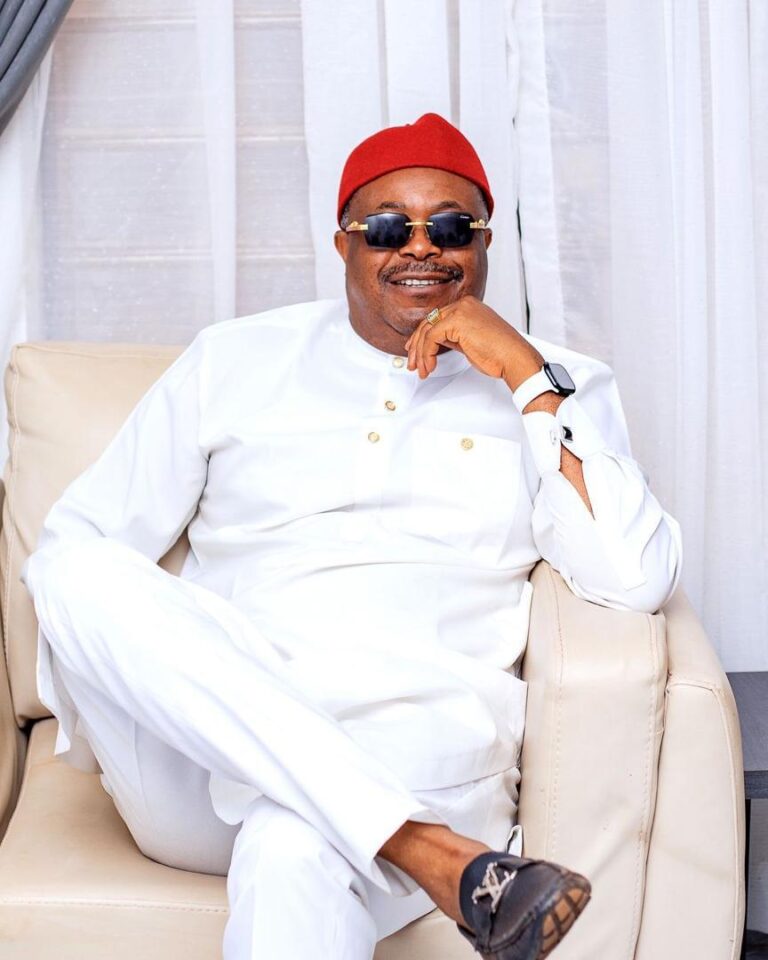
HRH (Dr) Vincent Onuora Iwobi, the Eze Agunechemba of Shasha Kingdom, Vice-Chairman of the Supreme Council of Igbo Traditional Rulers in Lagos and Obi Anioma of Ogwashi-Uku, Delta State, occupies an unusual place in Nigeria’s public life. Celebrated in an earlier era as one of the most recognisable and mellifluous voices in eastern radio broadcasting through Anambra Broadcasting Service and Enugu State Broadcasting Service (ESBS), he has since evolved into something rarer: a traditional ruler shaped as much by communication as by custom. His career resists the familiar categories of “media professional” or “custodian of tradition”. Instead, it exists in the increasingly narrow space between them, where authority is sustained not merely by lineage but by public trust, institutional dexterity, and the capacity to calm fragile communities strained by the pressures of urban politics, migration, and economic uncertainty.
Born in the Anioma cultural belt of Delta State, within the historical Ogwashi-Uku Kingdom, Dr Iwobi studied the arts and communication disciplines before deepening his training in media practice and organisational management, including professional exposure in the United Kingdom.
For decades, Dr Iwobi worked within Nigeria’s broadcasting ecosystem at a time when radio and television were not merely channels of entertainment but instruments of civic instruction. At the ESBS, where he cut his professional teeth, he developed a reputation for disciplined production, clear-sighted reporting, and a rare ability to translate complex political developments into language accessible to ordinary audiences. Broadcasting in that era required more than technical skill; it demanded judgement about what could be said, how it should be said, and what might inflame already tense social conditions.
His later work with Channels Television placed him within Nigeria’s more competitive private broadcast space, where editorial independence and speed increasingly defined credibility. There, he brought an older sensibility into a newer media order: that accuracy is not a luxury but a stabilising force in a country where rumour can travel faster than fact and where misreporting can deepen ethnic or political fissures. Colleagues from this period describe a producer who insisted on verification even under pressure to publish quickly, a habit that would later define his leadership style in traditional governance.
His transition from newsroom to traditional institution was evolutionary; his emergence as a first-class chief within the Ogwashi-Uku Kingdom merely formalised responsibilities he had long exercised informally: mediation, cultural stewardship, and community coordination. In Anioma political culture, such titles are not decorative honours; they are operational roles requiring engagement with land disputes, youth mobilisation, customary adjudication, and the preservation of historical identity in the face of rapid urbanisation and migration.
As a traditional leader, Dr Iwobi has been particularly attentive to the tension between continuity and adaptation. Ogwashi-Uku, like many Nigerian kingdoms, sits at the intersection of rural tradition and modern economic pressure. Younger populations migrate to cities, agricultural practices shift, and cultural authority risks becoming symbolic rather than functional. His response has been to treat tradition not as a static inheritance but as a governance system that must demonstrate relevance. This has included advocacy for youth mentorship, support for local agricultural improvement, and efforts to strengthen community-based dispute resolution mechanisms that reduce reliance on overstretched formal courts.
His influence extends beyond his ancestral domain into one of Nigeria’s most densely populated and economically consequential environments: Lagos. There, he serves as Eze Ndi Igbo of Shasha, a role that places him at the centre of one of the largest Igbo diaspora communities in West Africa. Lagos is not merely a city of migrants; it is a laboratory of cohabitation, where ethnic identity, commerce, and political competition intersect daily. Traditional rulers in this context function less as ceremonial heads than as informal governors of social order.
Within this space, Dr Iwobi has operated as a stabiliser. His leadership of the Igbo community in Shasha has involved continuous negotiation with Yoruba traditional authorities, market leaders, and local government structures. These relationships are essential to maintaining peace in commercial districts where livelihoods depend on uninterrupted trade and where disputes can escalate quickly if not contained through trusted intermediaries.
One of his more practical contributions has been the encouragement of structured economic cooperation initiatives within the community, aimed at reducing competition-driven tensions and improving access to vocational training and microeconomic support. Such programmes are not always publicly visible, but their impact is measured in the absence of recurring conflict in areas that have historically been vulnerable to periodic unrest.
His role as Deputy Chairman of the Supreme Council of Ndi Igbo in Lagos State extends this mediating function to a broader institutional level. Here, he participates in coordinating diaspora governance across multiple localities, balancing internal community expectations with external political realities. It is a position that requires restraint as much as influence: the ability to articulate communal concerns without inflaming wider tensions, and to defend community interests without undermining civic cohesion.
That balancing act became particularly visible during the politically charged period surrounding Nigeria’s 2023 general elections. Lagos, already sensitive due to its demographic diversity and economic centrality, experienced heightened ethnic rhetoric and sporadic incidents of violence. In this atmosphere, reports emerged of clashes at polling centres and the detention of community figures, including a senior Igbo leader.
Drawing on his background in broadcast journalism, Dr Iwobi engaged in coordinated public communication, issuing carefully calibrated statements that emphasised constitutional rights, due process, and the economic interdependence of Lagos residents. At the same time, he participated in direct consultations with state authorities, including security officials, advocating for de-escalation, fair treatment of detainees, and the protection of vulnerable communities. His approach reflected a media-trained understanding of narrative control: that crises are not only managed through force or policy, but through the framing of information and the prevention of retaliatory cycles.
This blend of cultural authority and communicative discipline distinguishes his leadership from more conventional models of traditional rulership. Where some traditional institutions rely primarily on heritage and symbolism, Dr Iwobi’s authority is reinforced by operational engagement and mediated communication. His broadcasting background has proved particularly valuable in this respect. Years spent in radio and television taught him not only how narratives are constructed but how they are received, distorted, and amplified.
His leadership style is often described as consultative rather than hierarchical. While he retains the formal dignity associated with his royal status, he is known for engaging directly with younger community members and encouraging dialogue across generational lines. This is not merely generational outreach; it is an attempt to ensure continuity of authority in environments where cultural adherence is no longer automatic.
If his work has a unifying theme, it is the management of cohesion: between ethnic groups, between generations, and between the inherited authority of tradition and the contested legitimacy of modern governance. In that sense, he is less a symbolic crown-holder than a working intermediary in a society that continues to depend, often quietly, on figures capable of holding its fractures together.
About the Author