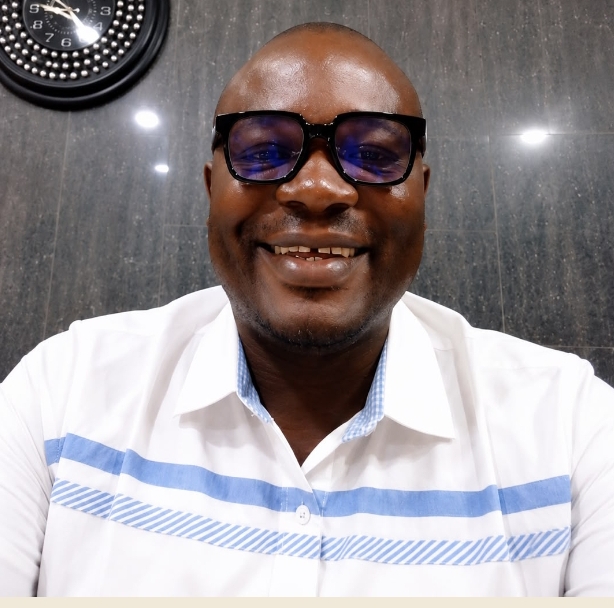
 Odita Sunday
As 2027 approaches, we are again consumed by arguments about rotation—North or South, East or West.
But what about competence? Character? Corruption? Security? Electricity? Hospitals? Schools? Roads? Justice?
What about rescuing Nigeria?
Our problem is no longer simply who occupies Aso Rock. Our problem is whether Nigeria itself can continue to survive poverty, corruption, institutional decay and the growing hopelessness of its people.
If zoning is about equity, then equity must be discussed honestly. Since the return to democracy in 1999, the South-East has produced neither President nor Vice-President.
But even zoning cannot be the beginning and end of the conversation.
What use is the geographical origin of a President to a Nigerian bleeding beside a road when no ambulance comes? What does zoning mean to a mother who cannot feed her children, a graduate without work, or a family destroyed because a hospital lacks basic equipment?
And then comes an even more disturbing question: how seriously are we fighting corruption?
Former Kogi Governor Yahaya Bello, while standing trial in major EFCC cases involving allegations of fraud and money laundering, nevertheless emerged as the APC senatorial candidate for Kogi Central. He has denied wrongdoing and remains entitled to the presumption of innocence.
In Delta, former Governor Ifeanyi Okowa—who remains the subject of an EFCC investigation into alleged financial misappropriation during his administration—secured the APC ticket for Delta North Senate. His daughter, Marilyn Okowa-Daramola, also secured the party’s ticket for the Ika North-East State Constituency. Claims that another APC candidate is his brother-in-law have been publicly made by critics, but that alleged family relationship has also been expressly denied by Okowa’s aide.
Are we really serious?
When people facing unresolved corruption allegations continue to obtain powerful political tickets, what message are we sending to the young Nigerian who still believes that integrity should matter?
When political opportunities repeatedly circulate among powerful individuals and their relatives, citizens are entitled to ask:
Is this democracy—or is politics gradually becoming an inheritance?
Meanwhile, ordinary Nigerians are sinking.
The IMF itself reported in June 2026 that poverty had reached 63 percent under the national poverty line, while an estimated 27 million Nigerians faced food insecurity in late 2025—even as it acknowledged improvements in some macroeconomic indicators.
That is the Nigeria we should be discussing.
Nigeria does not merely need a rotation from North to South.
We need a rotation from corruption to accountability, from incompetence to competence, from poverty to opportunity, from broken institutions to functioning institutions, and from despair to hope.
A country works when the ambulance comes.
When the hospital can save you.
When electricity stays on.
When the police protect you.
When the judiciary delivers justice.
When corruption has consequences.
When a poor child has the same opportunity to dream as the child of a governor.
So the question before 2027 should not merely be:
Who deserves the presidency?
It should be:
What kind of country are we trying to save?
Because zoning cannot feed the hungry.
Political slogans cannot build institutions.
A bag of rice cannot replace economic opportunity.
And democracy must never become the private inheritance of Nigeria’s political elite.
Nigeria deserves more. Nigeria deserves a country that actually works.
Chris Okobah, PhD
Award-Winning Author
Please share if you believe Nigeria can and must do better.
About the Author