
 Odita Sunday


North Central Insecurity: Defence Minister, Ex-Intelligence Chief Seek Unified Security Response
By Odita Sunday
The Federal Government has been urged to overhaul its approach to insecurity in the North Central by moving from fragmented, reactive operations to a unified, intelligence-led security system that integrates security agencies, state governments, traditional institutions and local communities.
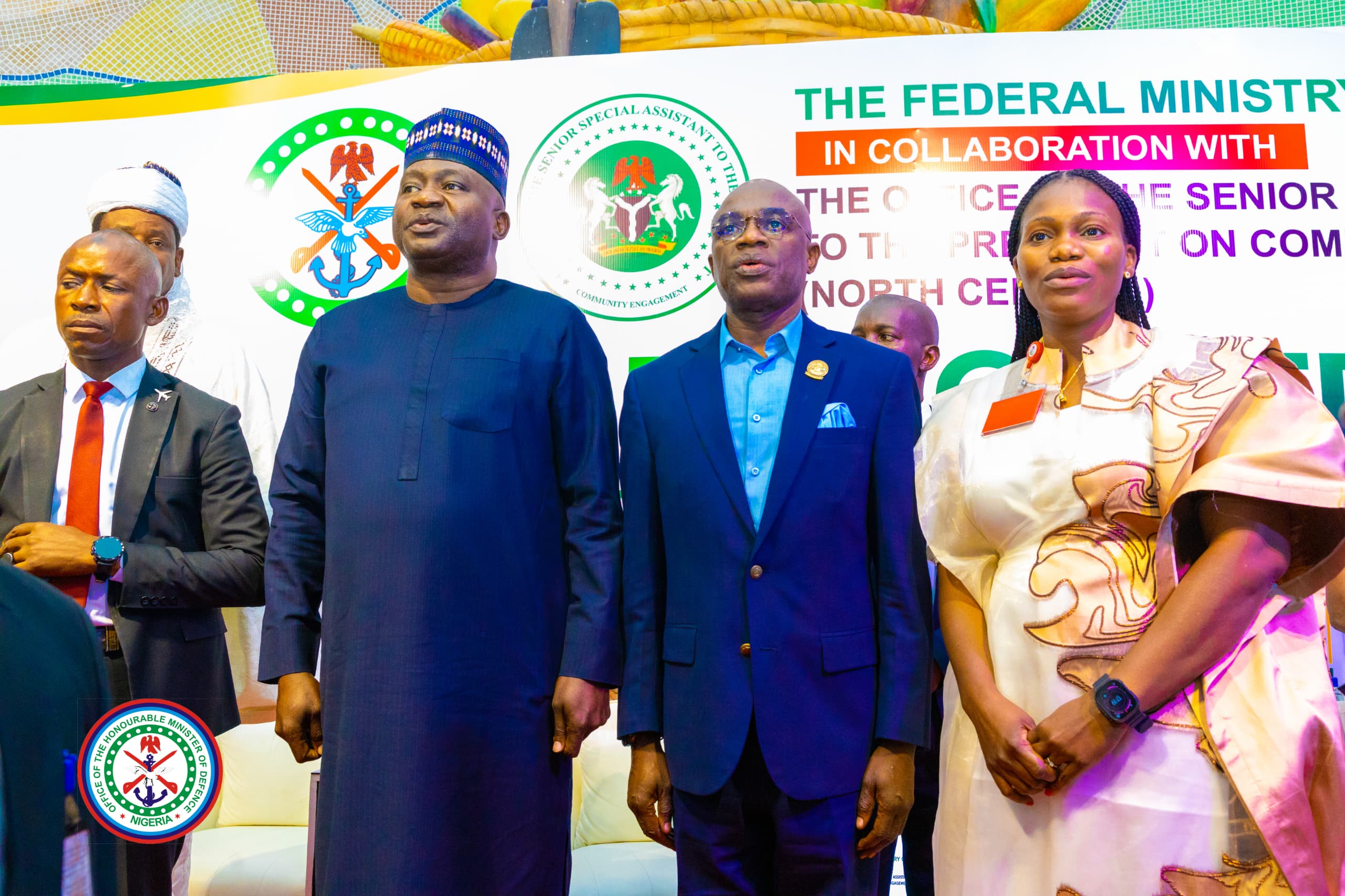
The call was made on Monday at the 2026 North Central Regional Security Summit in Makurdi, Benue State, where the Minister of Defence, His Excellency General Christopher Gwabin Musa (Retired), OFR, said the region’s security challenges could not be resolved through military action alone, while former Chief of Defence Intelligence, Air Vice Marshal Monday Riku Morgan (Rtd), proposed a new regional security architecture anchored on intelligence fusion, community participation and rapid response.

The summit, themed “Collaborative Approaches to Strengthening Security and Regional Stability,” brought stakeholders together to examine the persistent security challenges confronting the North Central and develop practical responses tailored to the region.
In his opening remarks, General Christopher Gwabin Musa (Retired), said recurring communal conflicts, farmer-herder disputes, banditry, kidnapping, proliferation of illicit arms and other forms of criminality continued to threaten lives and livelihoods across parts of the region.
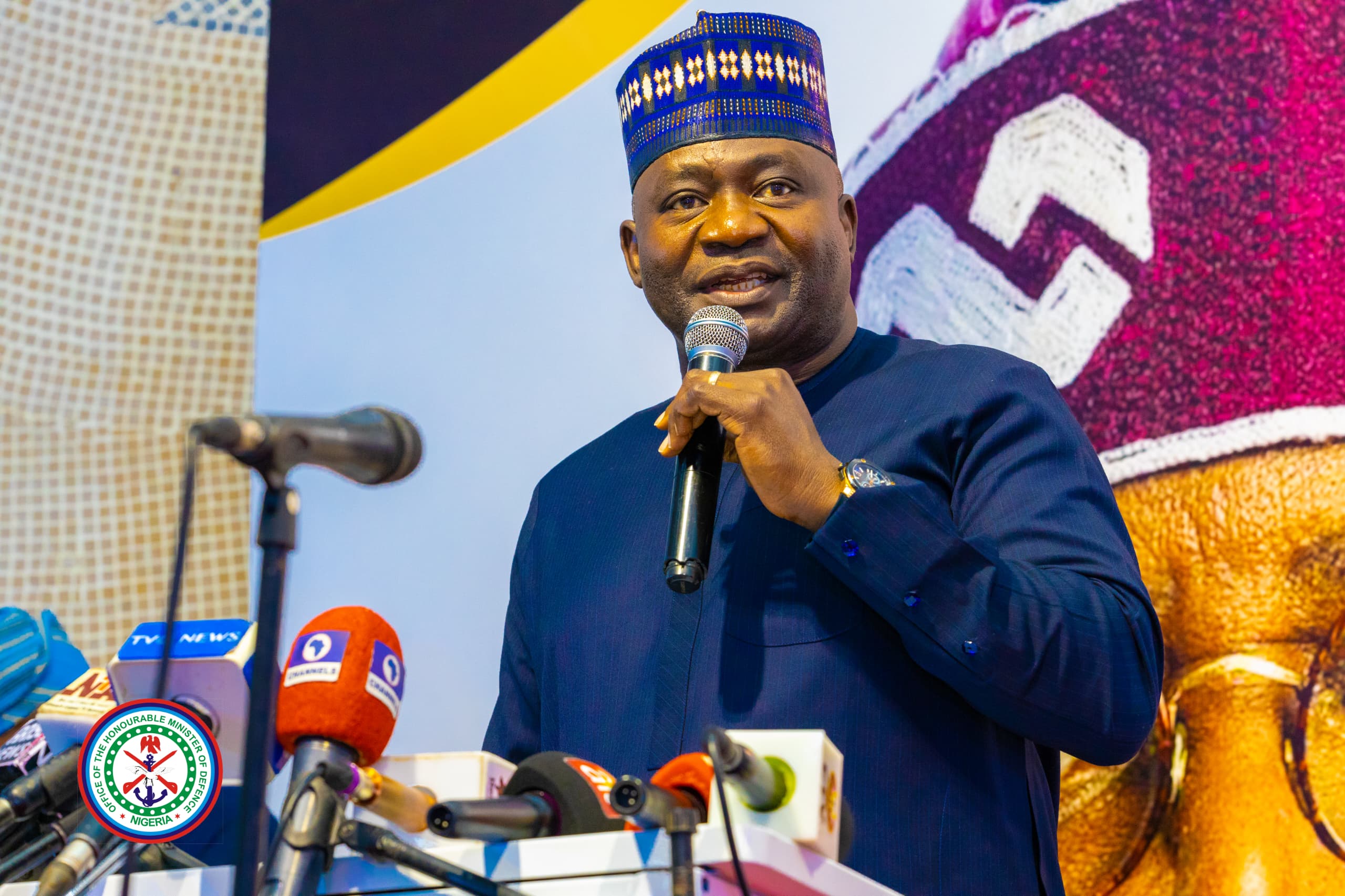
He described the North Central as strategically important to Nigeria because it connects different parts of the country and remains critical to agriculture, food security, commerce and national cohesion.
According to him, insecurity in the region has consequences far beyond its geographical boundaries, while peace and stability in the area would produce benefits for the entire country.

“These challenges are complex and they cannot be resolved by military action alone,” Musa said.
The Defence Minister stressed that although the Armed Forces and other security agencies had a critical responsibility to protect lives, restore security and create the conditions for normal life to return, lasting stability also required timely intelligence, effective coordination, conflict prevention, meaningful engagement with communities, responsible governance and economic opportunities.
He said the government’s objective must therefore go beyond responding to threats as they arise to addressing the conditions that allow insecurity to take root and persist.
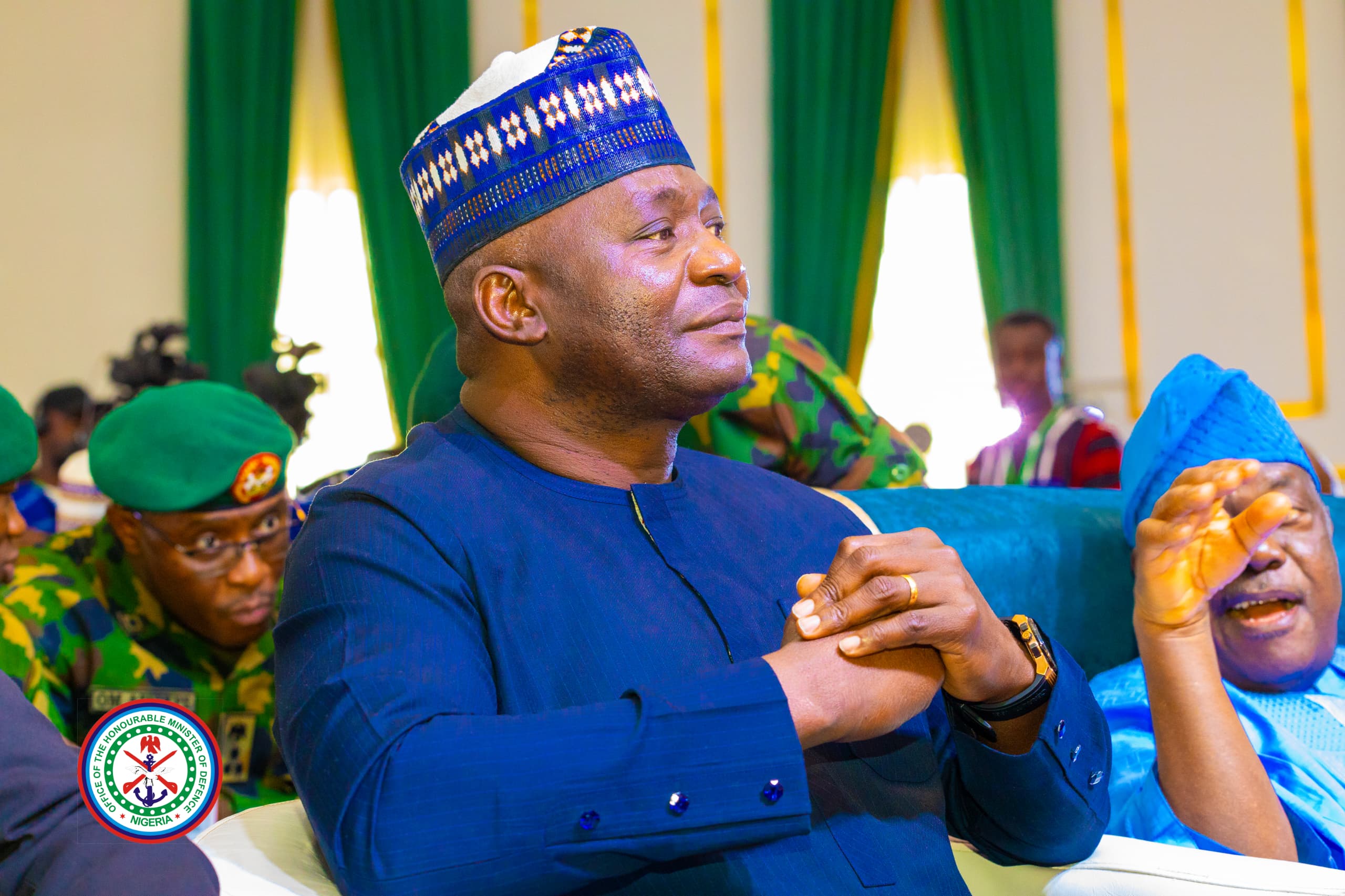
Musa linked the approach to the Renewed Hope Agenda of His Excellency, President Bola Ahmed Tinubu, GCFR, saying the Federal Government remained committed to strengthening the capacity and welfare of security personnel, improving intelligence and inter-agency cooperation and addressing wider conditions that undermine peace and development.
“Security and development are inseparable,” he said, noting that farmers could not cultivate with confidence when access to their farmlands was threatened, while traders could not sustain businesses where movement was unsafe.
“Our ultimate measure of success must therefore be the restoration of confidence, the return of legitimate economic activity and the ability of citizens to live their lives without fear,” Musa said.
Building on the Defence Minister’s call for greater collaboration, Air Vice Marshal Monday Riku Morgan (Rtd) argued that the central problem confronting the region was not necessarily a shortage of security institutions but the fragmentation of their responses.
Delivering the keynote address, titled “Collaborative Approaches to Strengthening Security in North-Central Nigeria: Towards a People-Centred, Intelligence-Led and Sustainable Security Architecture,” Morgan said Nigeria already had the Armed Forces, Police, intelligence agencies, civil defence, state institutions and traditional structures required to confront insecurity.

He said the challenge was ensuring that these institutions were sufficiently connected to operate as one security system.
“The challenge is not principally the absence of security institutions. It is the fragmentation of the security response,” Morgan said.
According to him, intelligence could originate from a farmer, traditional ruler, local vigilante, forest ranger, police officer or intelligence operative, but would have little value if it failed to reach the appropriate command structure and result in timely action.
“If that information does not rapidly enter a common intelligence system, reach the appropriate command structure, and translate into timely action, intelligence becomes merely information and information that does not produce action cannot protect lives,” he said.
Morgan consequently proposed the establishment of a North-Central Integrated Security and Resilience Model (NCISRM) to create a more coordinated and sustainable response to insecurity.
At the centre of the proposal is a Regional Security Fusion Centre, to be located centrally within the North Central and linked to the Office of the National Security Adviser and the National Counter Terrorism Centre.
The centre, he said, should integrate intelligence from defence and security agencies, state security structures, local governments, forest and community rangers, credible community sources and technological surveillance to produce “one threat picture, one regional assessment.”
He also proposed State Security Coordination Centres in each state to provide 24-hour situational awareness and ensure that security coordination does not occur only after attacks.
Morgan said the proposed architecture should also establish integrated local security networks connecting security agencies with traditional institutions, local government, community leaders, farmers, pastoralists, credible civil society organisations and trained community observers.
He stressed that the arrangement should not constitute vigilante justice but should provide a structured mechanism for early warning and lawful information sharing.
Morgan said communities should be incorporated into the security architecture because residents often possess information about suspicious movements, criminal routes and activities in forests and rural areas before such information reaches distant security headquarters.
“The citizen must become a sensor in the security network, not simply a casualty statistic,” he said.
He also called for forests and rural spaces to be brought into the security intelligence network, arguing that such areas should no longer remain “intelligence black holes.”
According to him, Nigeria’s emerging forest-security initiative should be connected to the proposed regional fusion architecture, with personnel serving as the eyes and ears of the state in difficult terrain while specialised military and police units handle high-risk operations.
The former Chief of Defence Intelligence further proposed the incorporation of retired military, intelligence, police and security professionals into the regional security framework.
He said retired professionals could contribute to intelligence analysis, strategic planning, training, mentoring, emergency preparedness, community-security programmes, simulation exercises, early-warning systems and lessons-learned processes.
Morgan proposed that they could form a Regional Security Advisory and Training Reserve, stressing that they would complement rather than replace serving personnel.
Morgan said Nigeria could draw lessons from the security models of Israel and the United Kingdom but should not copy either system wholesale.
He said Israel demonstrated the importance of integrating intelligence, military capabilities, emergency structures and communities, while the British model showed how different institutions could retain their distinct responsibilities while operating within a coordinated national framework.
He proposed a hybrid Nigerian model combining intelligence integration and local resilience with institutional coordination and community intelligence.
“The Nigerian lesson is: our solution must be built around our geography, our communities, our constitutional structure and our own security realities,” he said.
Morgan recommended that the North Central move from agency-centric security to system-centric security; from reaction to prevention; from isolated intelligence to intelligence fusion; and from government-only security to government-community partnership.
The former intelligence chief also recommended the establishment of a North Central Security Endowment Fund, jointly financed by the Federal Government and the North Central Governors.
He said the fund should operate under transparent governance and sustainable financing to meet the financial requirements of implementing the proposed security architecture.
Morgan said the region needed to abandon a security cycle in which authorities wait for an attack, deploy troops, fight, withdraw and then wait for another attack.
Instead, he advocated a system built around information, analysis, early warning, prevention, disruption, response, recovery and learning.
He proposed adding a fifth “P” – Partner to the existing framework of Prevent, Pursue, Protect and Prepare.
Musa, who urged participants to use the summit to identify what was not working, where coordination was failing and how information could be shared more effectively, said the outcome of the gathering must go beyond restating familiar security challenges.
He called for recommendations with clear responsibilities, realistic measures and mechanisms for implementation and follow-through.

Morgan similarly argued that the ultimate objective should not be to deploy soldiers in every village but to establish a system capable of moving intelligence rapidly from communities to commanders and ensuring that the appropriate security capability reaches threatened communities before attacks occur.
The Defence Minister urged policymakers, security professionals, state and local authorities, traditional leaders and communities to work together towards practical and sustainable solutions.
“What we achieve here must ultimately contribute to a safer, more prosperous and more united Nigeria,” Musa said.
For Morgan, such a collaborative architecture could secure the North Central while potentially serving as a prototype for a broader security framework for Nigeria.
About the Author