
 Odita Sunday

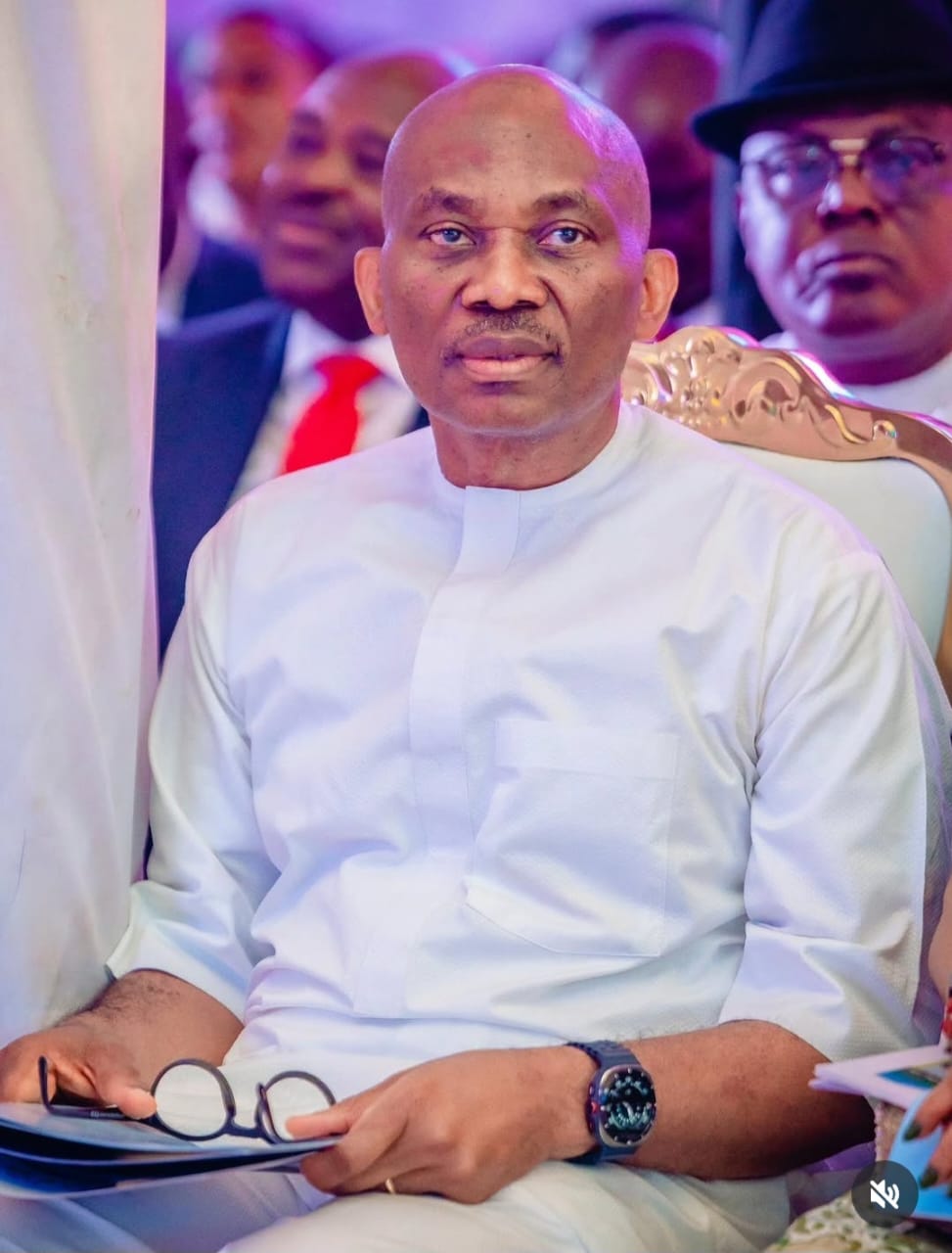
The political identity of Rt. Hon. Ndudi Godwin Elumelu (OON) is defined by a “passion for service to the people”, a guiding principle that has shaped both his legislative posture and his constituency work.
Born on February 23, 1965, in Jos, Plateau State, into the respected Elumelu family of Onicha-Ukwu in Delta State, his early life moved between the cultural pluralism of northern Nigeria and the more tightly woven communal structures of the south. That dual exposure, often understated in political biographies, would later echo in his approach to representation: attentive to difference, but anchored in the idea of shared civic obligation.
After obtaining his West African School Certificate in 1986 from the Lagos State School of Arts and Science, he proceeded to Yaba College of Technology, where he earned a National Diploma in Business Administration in 1989. The training was preparatory for a career that would soon demand fluency in systems, figures, and institutional discipline.
He deepened that foundation at Edo State University (now Ambrose Alli University), Ekpoma, graduating in 1993 with a degree in Accounting, before completing a Master of Business Administration in 2000. These academic steps, particularly in accounting and strategic management, would later prove essential in navigating the financial intricacies of legislative oversight. Further sharpening his managerial acuity, he attended executive programmes at Harvard Business School, an experience that expanded his exposure to global governance practices and large-scale organisational thinking.
Before entering politics, Elumelu built a substantial career in corporate finance and insurance—fields that rewarded precision and punished improvisation. In Lagos’s competitive financial sector, he served in credit, marketing, and treasury roles at Inter Capital Limited and Gulf Bank, developing expertise in risk evaluation and commercial structuring. His subsequent transition into insurance leadership at TransGlobal Insurance Brokers marked a decisive ascent. There, he rose to become Chairman and Chief Executive Officer, steering the firm through expansion and reinforcing his reputation as a manager of systems rather than merely transactions. By the time he left the private sector, he had acquired not just professional stature but an instinct for institutional accountability that would later define his public service.
His entry into politics in 2007 as Representative for Aniocha-Oshimili Federal Constituency under the Peoples Democratic Party was less a rupture than a continuation of that trajectory. From the outset, he approached legislative work as a technical and moral obligation. His early assignment as Chairman of the House Committee on Power placed him at the centre of one of Nigeria’s most persistent governance failures. The national electricity sector, heavily funded yet chronically underperforming, required scrutiny that went beyond rhetoric. Under his leadership, the committee conducted extensive investigations, including public hearings and site inspections, exposing systemic gaps in procurement, execution, and regulatory enforcement. It was not merely an inquiry; it was an exercise in institutional exposure, one that helped redefine the expectations of legislative oversight at the time.
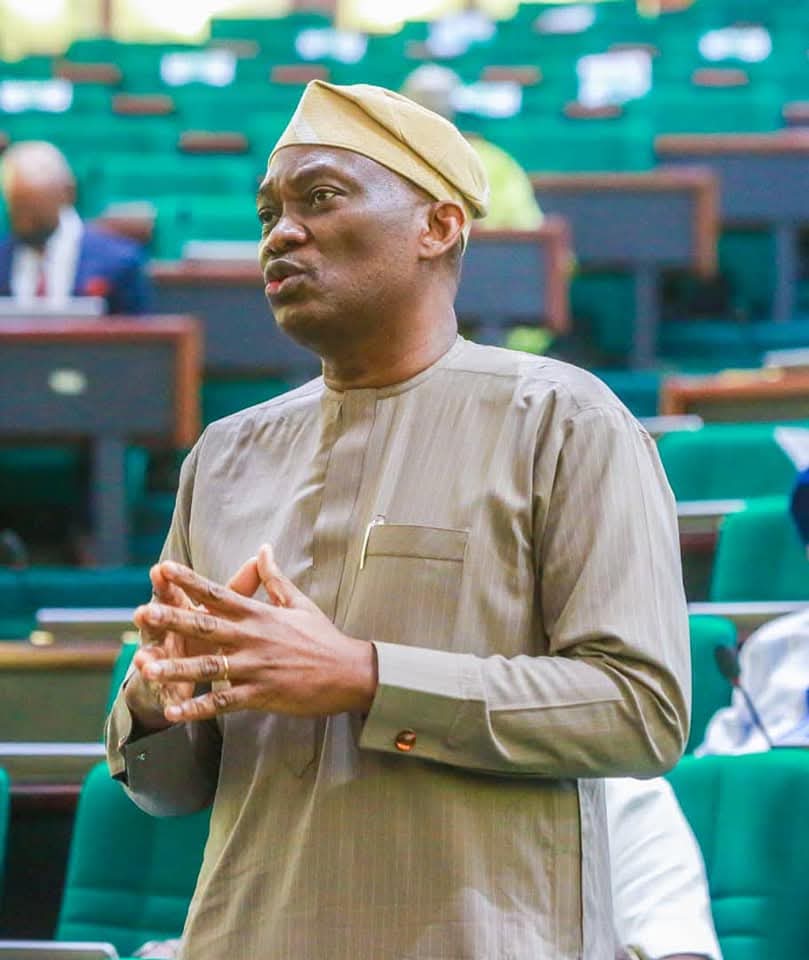
In the Seventh Assembly, his focus shifted to public health, where he chaired the House Committee on Health. Here, the language of accountability took on a more human texture. He worked on strengthening regulatory frameworks, improving funding structures for primary healthcare, and aligning health policy with practical delivery systems. If the power sector inquiry was about infrastructure failure, health oversight was about human consequence—and Elumelu’s legislative style, attentive and methodical, adapted accordingly.
By the Ninth Assembly, his colleagues elevated him to Minority Leader, a position that demanded not only political discipline but also a capacity for balance. In a period marked by intense national debate over security, electoral reforms, and fiscal policy, he led the opposition caucus with an emphasis on structured engagement rather than obstruction. His leadership was characterised by a preference for institutional dialogue—insisting that dissent, properly exercised, could still serve the architecture of governance.
Yet it is in constituency development that his political philosophy becomes most visible. Across Aniocha North, Aniocha South, Oshimili North, and Oshimili South, his interventions have taken a distinctly material form: vocational equipment for artisans, solar-powered street lighting for rural communities, boreholes to improve water access, and scholarships for students navigating economic constraints. These were not isolated gestures but part of a sustained framework of empowerment aimed at converting representation into tangible public utility. In place of episodic outreach, his model leaned towards continuity—an attempt to make the constituency feel permanently attended to, rather than intermittently visited.
His supporters often describe this approach as a “passion for service,” though the phrase, in his case, carries less sentimentality than structure. It is expressed in systems: consultation mechanisms that remain active outside election cycles, constituency programmes that track beneficiaries beyond initial distribution, and a consistent insistence that representation must be measured in outcomes rather than appearances. Even international recognition—such as awards for constituency development and his national honour as Officer of the Order of the Niger (OON)—has tended to reinforce rather than redefine this orientation.
In more recent years, his political journey has reflected the fluidity of Nigeria’s party landscape. Ahead of the 2027 electoral cycle, he emerged as the candidate for the Aniocha-Oshimili Federal Constituency under the All Progressives Congress, marking another turn in a career already defined by institutional adaptability. His campaign rhetoric has remained consistent with his long-standing themes: infrastructure, accountability, and human development, framed not as promises but as continuations of prior work.

What distinguishes Elumelu’s public life is not ideological novelty but administrative endurance. In a political environment often shaped by rapid shifts and short-term calculations, his career suggests a different tempo—one that privileges sustained engagement over episodic visibility. His interventions, whether in legislative committees or constituency programmes, reflect a belief that governance is less about decisive moments than about accumulated practice.
There is a temptation in political biography to search for dramatic arcs or sudden transformations. Elumelu’s story resists that impulse. It unfolds instead as a steady layering of roles—accountant, executive, legislator, and opposition leader—each informing the next without erasing what came before. The result is a portrait of public service grounded in continuity rather than rupture, in method rather than improvisation.
In the end, his “passion for service to the people” is neither slogan nor abstraction. It is visible in the slow accretion of infrastructure in rural wards, in the procedural discipline of committee oversight, and in the insistence that representation must remain accountable long after the votes have been counted. If Nigerian democracy is still a work in progress, then figures such as Elumelu occupy a particular space within it: not as revolutionaries, but as custodians of process. And in a system often tested by volatility, that form of custodianship may be its most durable achievement.
About the Author