
 Odita Sunday



THE HOME STRETCH HAS NO ADDRESS: WHY SDG 11 WILL NOT SURVIVE WITHOUT A FINANCING RESET
By Ebaide Omiunu
At this year’s High-Level Political Forum, the panel on SDG 11 opened with a video briefing that should have unsettled every delegate in the room: the world now counts 1.16 billion slum dwellers one in four urban residents and, absent accelerated investment, that number is projected to exceed 1.2 billion by 2030. There was real progress to report too: public transport access rose from 53.2% to 61.5% between 2020 and 2025, and for the first time in 25 years, urban land consumption growth and population growth are moving almost in step. But only 17% of urban land is allocated to streets and public open space, against a 30-45% target meaning fewer residents than ever are within reach of a park or a patch of green. The panel’s moderator, Robert de Graaff of the International Science Council, framed the honest state of play: cities have become the site where every other SDG must ultimately be delivered, but the money to do that delivering has not followed.
That gap between the rhetoric of “cities as laboratories of solutions” and the budget reality underneath it was the real subject of the session, even when the agenda said otherwise.
Housing is not a sector. It’s the precondition.
UN-Habitat’s Anna Claudia Rosbach was blunt about the scale of what she called a global housing crisis: it is no longer a Global South problem alone, and more than half the world’s population now spends over 30% of income on housing, an unsustainable share, especially where formal housing markets serve as little as 5-10% of households. Her point was structural, not sentimental: without an address, there is no job application, no school registration, no stable base from which a child does homework or a small business survives its first year. As she put it, more national urban policies exist today than ever before and less money funds them than before. Housing, in other words, is not one SDG among seventeen, it is the substrate the other sixteen are built on.
Lagos is the preview, not the exception
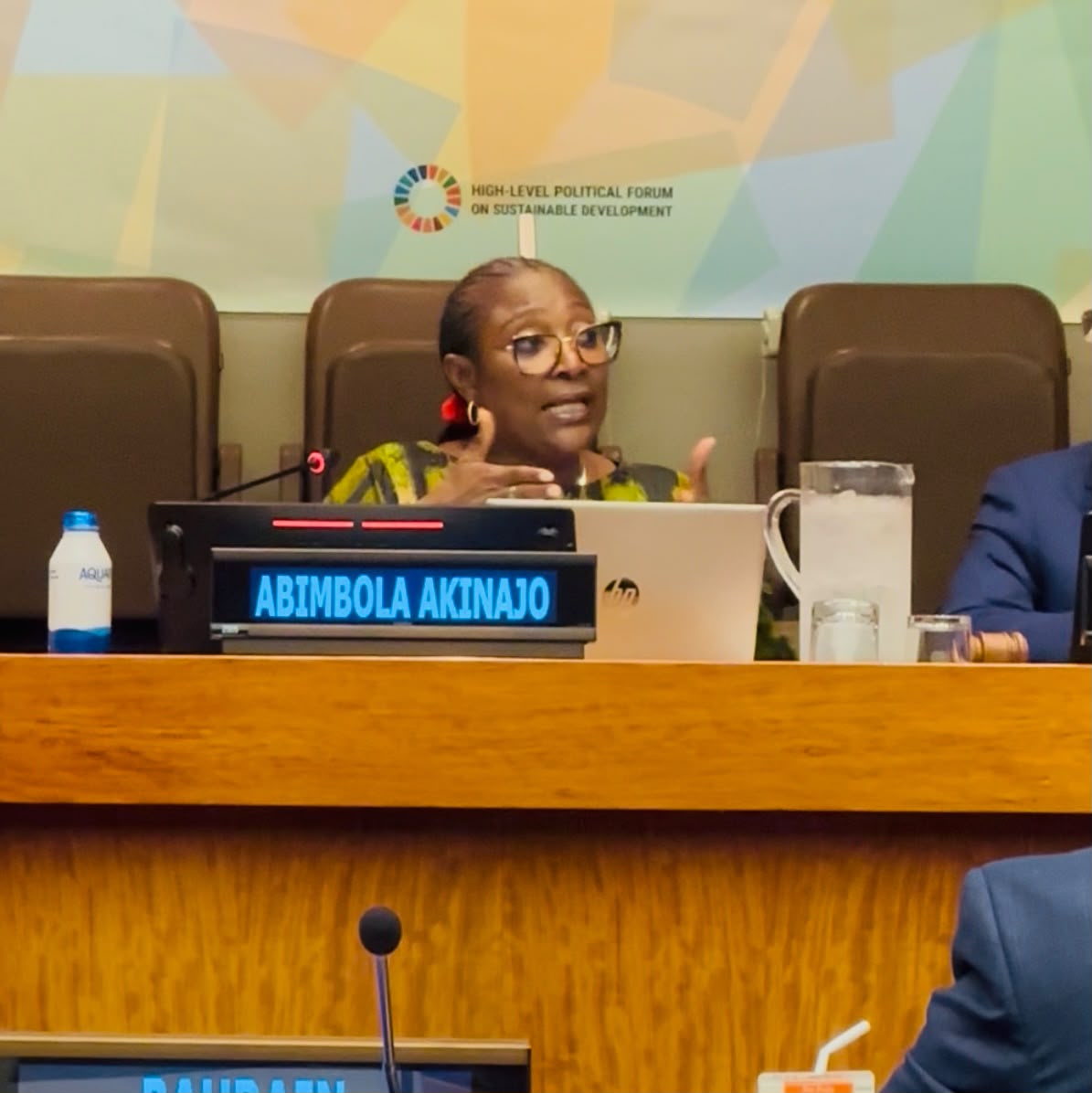
Abimbola Akinajo, who runs the Lagos Metropolitan Area Transport Authority, gave the numbers that matter most for African policymakers watching this debate from home: Lagos manages roughly 30 million trips a day, moves a majority of its residents through informal minibus systems responsible for over a third of the city’s transport emissions, and is absorbing 2,000-3,000 new migrants daily on its way from 22 million people today to a projected 50 million by 2050. The city has already identified more than 200 slum areas. Her prescription was not more policy documents, Nigeria and its peers already have those but formalizing informal transit into real mass-transit capacity, building upward instead of outward, and investing in rural infrastructure so migration to cities is a choice rather than the only option.
Not a knowledge gap, an institutional and financing one
The delegate speaking for India’s Group of Friends on Science for Action made the sharpest diagnostic point of the day: the science needed to build livable, resilient cities already exists and is being proven in real urban environments; what is missing is the institutional capacity to plan and govern across interconnected urban systems, and the financing to embed that knowledge into decision-making at scale. Poland’s delegation made the financing case in blunter terms still sustained investment in urban data infrastructure “is not a cost, it is a prerequisite” for achieving the SDGs.
The floor statements that followed showed exactly how uneven that financing landscape is. Finland described how its Housing First principle, built on cooperation between the state, municipalities, and civil society, has driven down homelessness, with a government target to eliminate long-term homelessness by 2027, a model funded and delivered by a state with fiscal space to do it. Cuba’s delegate, by contrast, described how a decades-long financial and commercial blockade continues to restrict access to construction materials, energy infrastructure, and the financing needed for resilient housing, a stark illustration that for many countries, the barrier to SDG 11 is not ambition or planning capacity but access to capital itself.
What this means for Africa’s final sprint
For African governments and their development partners, the SDG 11 conversation cannot stop at target-setting. Cote d’Ivoire’s delegation was explicit in calling for greater funding, technology transfer, and international partnership to accelerate implementation, a call echoed, in different words, by nearly every developing-country statement in the room. The continent is being asked to absorb two billion new urban residents over the coming decades, a housing, transport, and land-use challenge with no historical precedent using financing architecture built for a different era. If HLPF 2026 has a single message for African delegations, it is this: cities are where the SDGs will be won or lost, and the money has to be redirected there before the rhetoric of the “final sprint” runs out of runway.
Ebaide Omiunu is Executive Director of The Ebaidebheki Initiative and a delegate at HLPF 2026.
About the Author