 Odita Sunday


By Odita Sunday
When Olatunji Rilwan Disu was formally invested as Nigeria’s 23rd indigenous Inspector-General of Police on February 24th 2026, the mood at Louis Edet House in Abuja carried more than ceremonial weight. Beyond the bastion of Force Headquarters, the ripple spread across commands nationwide and throughout Nigeria; expectations ran high.
Disu was no obscure figure in the broad theatre of Nigeria’s law enforcement; his name carried weight. From the Rapid Response Squad (RRS) to the Intelligence Response Team (IRT), his record was etched across some of the force’s most consequential units. His operational footprints in key theatres such as Lagos and Rivers burnished that reputation further. Long before his elevation, he had already attracted public regard as a credible—and, in many eyes, worthy—candidate for Inspector-General.
His appointment followed the abrupt resignation of Kayode Egbetokun, leaving behind an institution burdened by public mistrust and a deteriorating security environment. Disu, widely known by the disarmingly informal nickname “The Good Guy”, inherited not merely an office but a problem: how to steady a police force operating within a landscape defined by banditry, economic strain and long-standing scepticism from the citizens it serves.
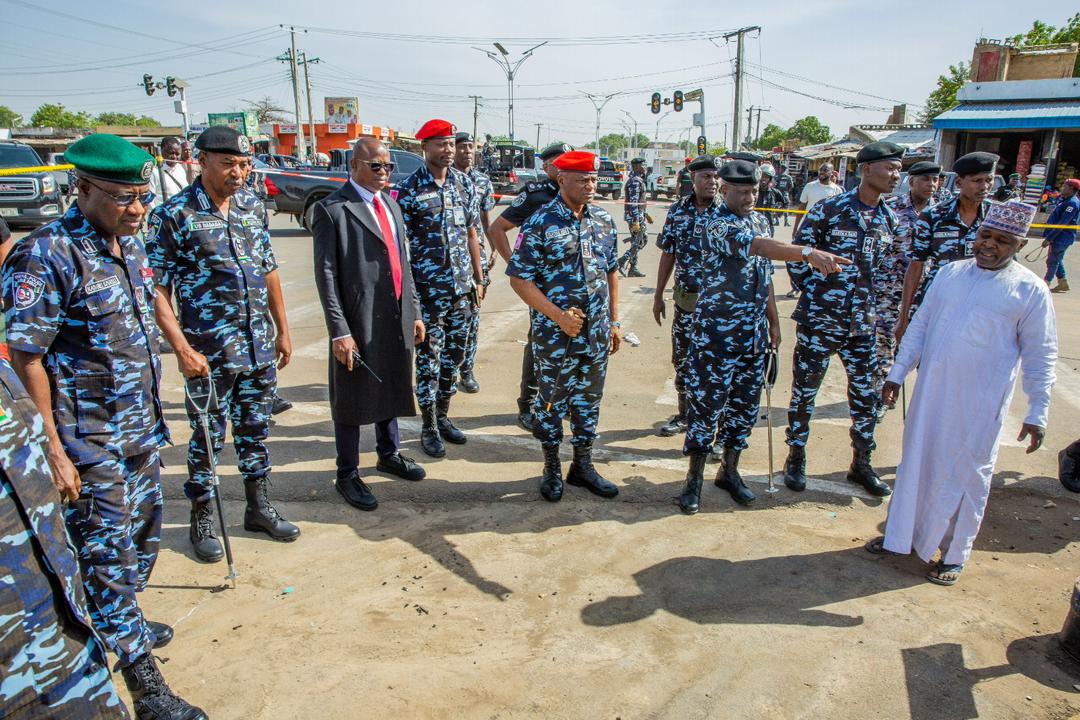
Today, sixty days into his tenure, there are early signs that the tone, at least, is changing. His approach has been brisk, deliberate and, in parts, quietly disruptive. Rather than managing decline, he has set about redefining the terms of engagement between the police and the public.
His reputation did not arrive with him; it preceded him. In six years as head of Lagos State’s Rapid Response Squad, Disu had already built a record of turning a unit once associated with excess into one noted for restraint and responsiveness. That experience now serves as a template.
Almost immediately upon taking office, he signalled his intention to scale what has become known as the “Lagos model” across the federation. In his inaugural remarks, he declared an end to impunity within the ranks. Such statements are common currency in official speeches, but his administration has attempted to give them substance. Within weeks, a nationwide programme focused on de-escalation and emotional intelligence was rolled out. The aim is straightforward, if ambitious: to pivot from coercion to consent as the organising principle of policing. Early reports from cities such as Kano, Port Harcourt and Lagos suggest a modest but noticeable shift, particularly at checkpoints where confrontations have historically been routine. Officers are being told, in clear terms, that professionalism is not aspirational but required.
Structural reform has accompanied this change in tone. On April 20th 2026, on the cusp of his second month in office, Disu authorised a significant overhaul of the Police Monitoring Unit. The reform is rooted in a simple calculation: without internal discipline, external trust is unattainable. The unit has been streamlined to prioritise real-time oversight and intelligence-led inspections, replacing slower, reactive processes. The appointment of Deputy Commissioner of Police Aliyu Abubakar, an officer with extensive investigative experience in both the Federal Capital Territory and Rivers State, underscores the seriousness of the effort. The redesigned framework is intended to detect misconduct before it metastasises into scandal. In doing so, it seeks to address one of the force’s most persistent liabilities: the perception that wrongdoing within its ranks is tolerated until exposed. True to its word, on April 21st 2026, the Nigeria Police Force announced the commencement of disciplinary proceedings against 67 senior officers, from the rank of Assistant Superintendent of Police, accused of misconduct.
Disu’s personal background also shapes his priorities. Holding an Advanced Diploma in Forensic Investigation and Criminal Intelligence, he is among the more technologically attuned occupants of the office. This has translated into a push to modernise investigative capacity. Digital command-and-control centres are being activated across all 36 states, enabling real-time tracking of patrol units and faster coordination. At the same time, the integration of police criminal databases with the National Identification Number (NIN) system marks a notable step towards data-driven policing. Officers in the field can now conduct near-instant background checks, a change that reduces both delay and uncertainty in routine operations.
The force’s digital presence has also been sharpened. Social media channels and online complaint desks have been restructured, with response times reportedly compressed from days to hours. The effect, if sustained, is to create a more immediate line of accountability between citizens and the command structure.
Yet reform, in Disu’s calculus, is not confined to systems and strategy. It extends to the condition of the officers themselves. He appears to grasp that a demoralised constabulary is unlikely to deliver credible public service. To that end, his early weeks have included intervention in the long-delayed payment of insurance benefits to families of fallen officers, with efforts made to clear backlogs that have lingered for years.
In parallel, he has secured a N15 billion infrastructure grant from the federal government, earmarked for the refurbishment of barracks and training colleges. Beyond mere administrative routine, these measures are intended to restore a measure of dignity to a profession that has, over time, lost much of its standing. Better living conditions and improved training environments are expected to feed, indirectly, into better conduct on duty.
Operationally, there has also been a shift in emphasis. Faced with persistent threats from banditry and insurgency, Disu has moved away from static deployments towards intelligence-led interventions. Drawing on his tenure at the Intelligence Response Team, he has promoted targeted strike operations over broad sweeps that often disrupt communities without delivering lasting results. In parts of the North-East and North-West, recent actions have focused on dismantling leadership structures within criminal groups rather than engaging in prolonged operations with uncertain outcomes. The approach is designed to be both more efficient and less damaging to civilian life, though its long-term effectiveness remains to be tested.
Not all of his proposals have met with unqualified approval. His 60-month roadmap for the introduction of state policing, submitted to the National Assembly on March 26th, has drawn criticism from those who argue that Nigeria’s security challenges demand swifter decentralisation. Disu’s response—the 75-page framework titled “A Comprehensive Framework for the Establishment, Governance and Coordination of Federal and State Police”, which outlines the proposed operational structure for state policing and how it would function alongside the federal system—has been characteristically cautious. He has argued that premature implementation, absent a solid legal and operational framework, risks creating instruments of local coercion rather than accountable security institutions. His rationale was plain: a rushed transition to state policing without a robust legal and operational framework could lead to the creation of “state-sponsored militias.” His preference is to build professional standards within the existing structure before embarking on structural change. It is a slower path, but one he appears willing to defend.
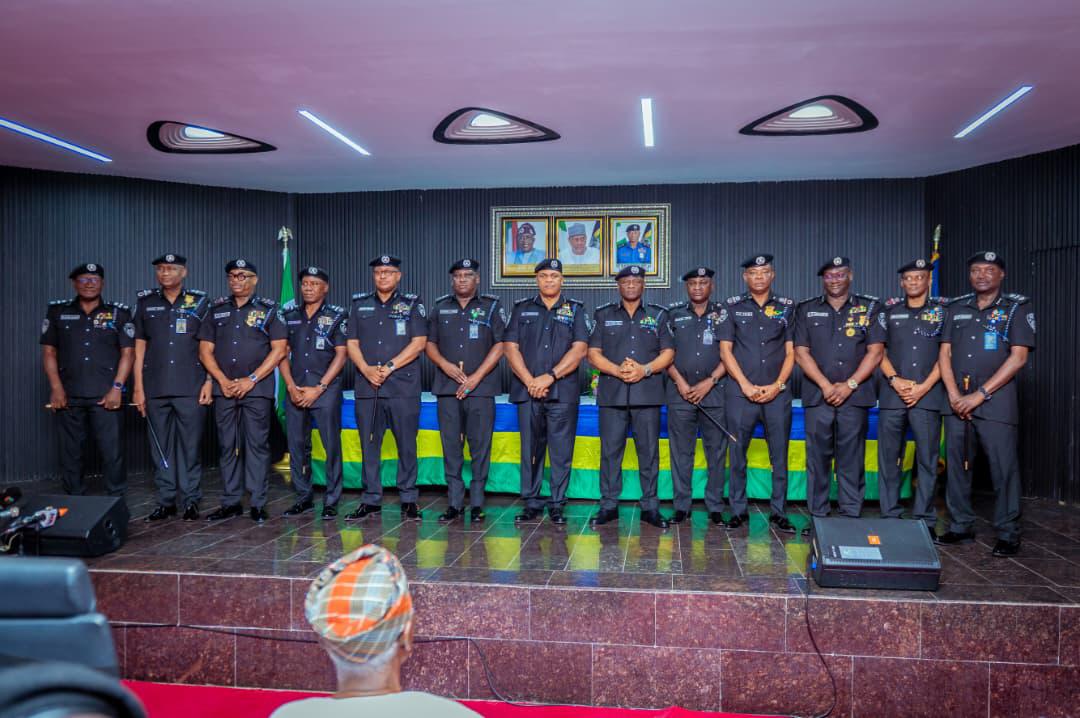
Two months is a short span in the life of any institution, particularly one as complex as the Nigeria Police Force. Even so, Disu’s tenure thus far has been marked by a combination of speed, visibility and a clear sense of direction. He has projected himself as a leader willing to be seen, both within headquarters and in the field, while pushing reforms that aim to alter both perception and practice. The obstacles are considerable. Corruption remains entrenched, and the economic realities facing rank-and-file officers are unlikely to shift overnight. Nevertheless, there is a discernible, if cautious, change in mood. For many Nigerians, the question is no longer whether reform is possible, but whether it can be sustained.
In that sense, the early phase of Disu’s leadership offers a tentative answer. He presents himself less as a distant administrator and more as a practitioner, a figure comfortable with both operational detail and institutional reform.
As his second month in office concludes, the message being conveyed is unambiguous: the police force is attempting to change, and the evidence, though still fragile, is beginning to show not just in policy documents but in everyday encounters on the street.
About the Author