 Odita Sunday

Africa’s Most Populous Nation’s Top Cop: Egbetokun Stays Focused on Security, Police Accountability
By EDITOR-IN-CHIEF
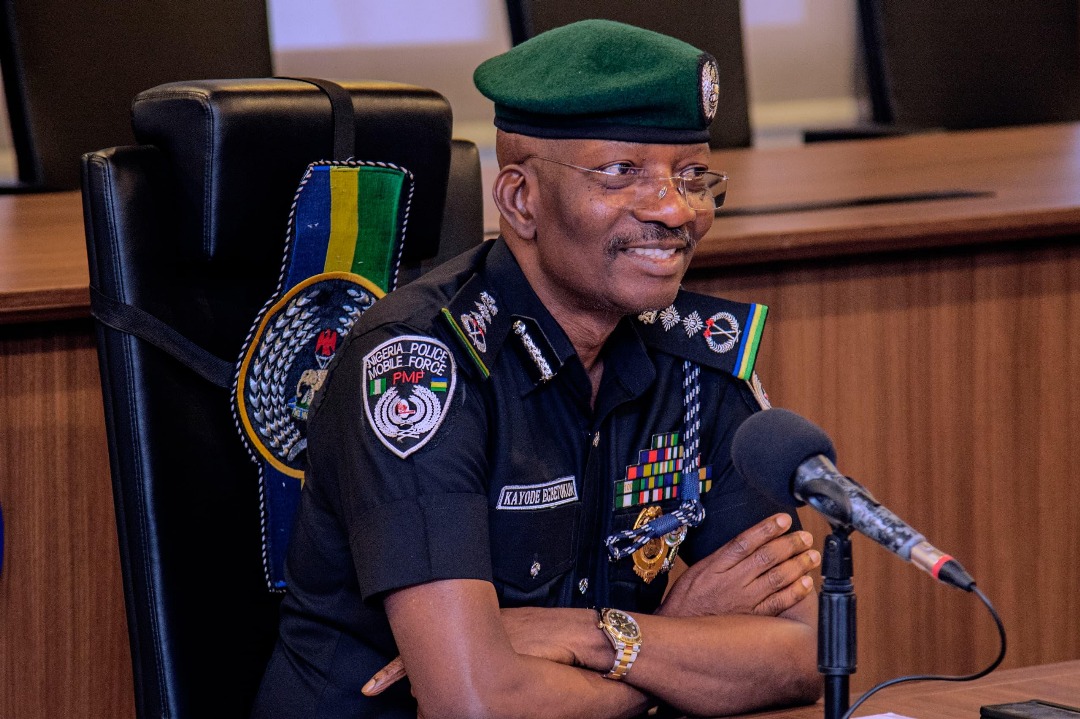
On September 26, 2025, the world took notice as the Inspector-General of Police commissioned 59 armoured Toyota Hilux vehicles in Abuja, the nation’s capital, to strengthen the operational capacity of the Nigeria Police Force. It marked the latest in an unbroken series of strides by the Force’s leadership, underscored by silent yet purposeful reforms.
As Nigeria grapples with the decades-old maelstrom of insecurity, the Police Force has begun to reinvent itself in order to rise to its responsibility. However, policing Africa’s most populous nation is no easy task, and the position of Inspector General is a particularly demanding one. Yet Nigeria’s Inspector General of Police, Kayode Egbetokun, has brought grit, finesse and uncommon resourcefulness to the role, rendering a daunting responsibility more manageable. Through his pragmatic approach to managing the country’s security challenges, he has demonstrated himself equal to the task, earning silent acknowledgement from those around him and nods of approval in high places.
To those acquainted with his background, the upward trajectory and positive leadership of IGP Egbetokun come as no surprise.
In the annals of Nigerian policing, few figures combine the academic, operational, and reformist credentials as IGP Kayode Adeolu Egbetokun.
Born on September 4, 1964 in Erinja, Yewa South LGA of Ogun State, Egbetokun earned a degree in Mathematics at the University of Lagos, then supplemented that with postgraduate studies in Engineering Analysis, an MBA, a Postgraduate Diploma in Petroleum Economics, and most recently a PhD in Peace and Security Studies from Al-Hikmah University, Ilorin. His doctoral thesis, “ENDSARS Protest Policing Strategies and Community Security in Lagos State, Nigeria,” marked him out not simply as a practitioner but as a thinker deeply invested in policing reform.
Since joining the Nigeria Police Force on March 3, 1990, as Cadet Assistant Superintendent of Police, Egbetokun has been on the frontline in command and investigative roles across the country. As Commander of the Rapid Response Squad (RRS) in Lagos from 2005 to 2007, he confronted urban crimes such as armed robbery, cultism, and street violence. He had also been Officer-in-Charge of Anti-Fraud in the FCT Command, as well as serving variously as Area Commander (in Oshogbo, Osun State and Gusau, Zamfara State), Commandant of the Police Training School, Ikeja, and Deputy Commandant of the Police College, Ikeja. Aside from other administrative and divisional assignments, Egbetokun, at various times, also served as Commissioner of Police for Kwara State, Servicom (at Force Headquarters, Abuja), and Explosive Ordnance Disposal. In those years, he successfully built for himself a solid reputation as a seasoned police administrator committed to peace and order.
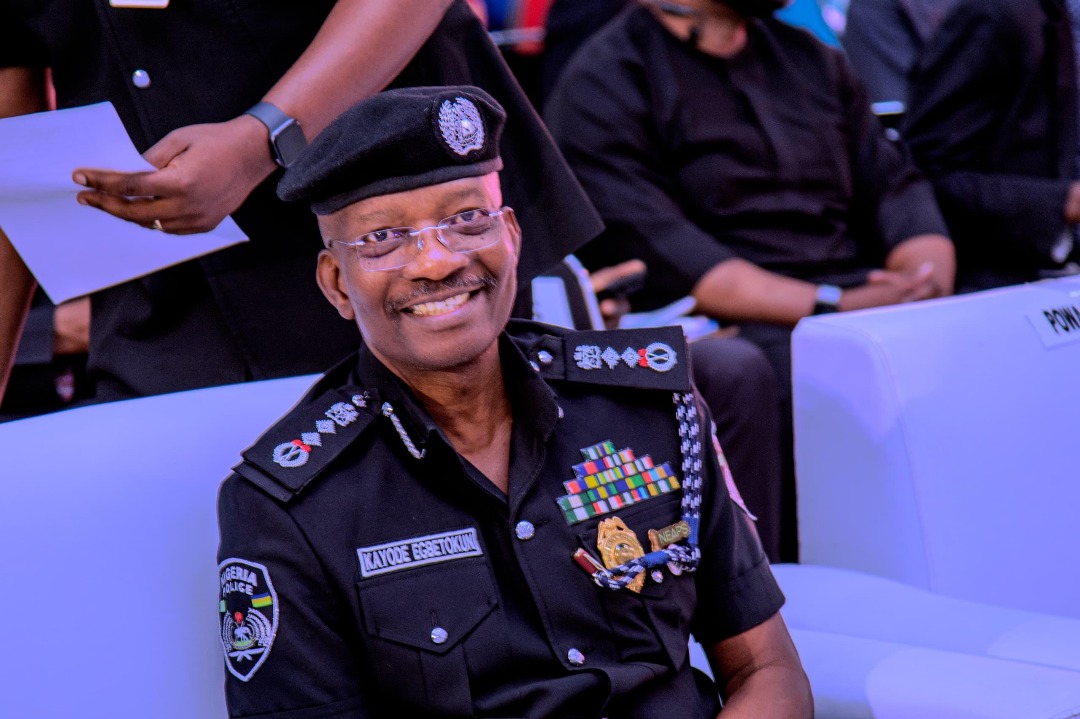
Thus, by the time of his appointment as Deputy Inspector-General of Police overseeing the Force Criminal Investigation Department (FCID) in April 2023, Egbetokun had already amassed extensive field experience in crisis hotspots and investigative units. In that capacity, he was responsible for supervising high-profile criminal investigations, upholding investigative standards, and guiding officers handling organised and financial crimes. This period provided the foundation for the broader operational and institutional reforms he would later pursue as the substantive Inspector-General of Police, the position he came into in June 2023.
As the saying goes, he hit the ground running. Without delay, IGP Egbetokun set about implementing a sweeping agenda of crime-fighting, internal reform, and modernisation from the very moment he was confirmed as Inspector-General of Police in June 2023.
His first 100 days in office marked a decisive shift towards intelligence-led policing, during which the Force recorded numerous arrests of suspects linked to kidnapping, armed robbery, homicide, rape, defilement, cultism, and other serious offences.
By and large, a police officer’s legacy is measured by the trajectory of crime under their command. In this regard, Egbetokun’s tenure stands out for its measurable and steadily progressive achievements. By mid-2025, two years into his leadership, the Nigeria Police Force had arrested over 30,300 suspects for serious crimes including kidnapping, armed robbery, murder, rape, cultism, and unlawful possession of firearms. In the same period, the Force recovered approximately 1,984 assorted firearms and 23,250 rounds of ammunition, seized 1,438 stolen vehicles, and rescued 1,581 kidnapped victims.
His reformist credentials came to the fore when he launched the Standard Operating Procedure manual for the Schools Protection Squad, making school safety a clear operational priority.
In strategic realignment with the pace and direction of his reforms, departments of the Nigeria Police Force were reorganised, and technology was introduced to strengthen operations. An example of this include the automation of the Central Motor Registry has streamlined vehicle registration and enhanced the recovery of stolen vehicles. Similarly, digital identification and data systems are now in use within certain commands, while situation rooms have been established across several formations to improve intelligence flow and ensure rapid response.
Earlier in May 2025, he commissioned 50 operational vehicles for the Explosive Ordnance Disposal Unit, alongside the delivery of seven Light Tactical Armoured Vehicles for national deployment. More recently, he inaugurated the Nigerian Police Resource Centre in Jabi, Abuja. These developments speak volumes about the modernisation of critical police departments.
In a demonstration of foresight, Egbetokun equally matched operational achievements with reforms to strengthen institutional capacity. Notably, he has pushed for meritocracy and professionalism. Under his leadership, police promotions were recalibrated to align formally with performance and integrity. This principle underpinned the revival of the Nigeria Police Awards and Commendation Ceremony, which honours officers demonstrating bravery, discipline, and integrity. In keeping with this approach, the Officers of the Year for 2023 and 2024 were selected through rigorous and transparent processes.
On manpower, Egbetokun has consistently called for increased recruitment to address longstanding shortfalls. Nigeria remains far from the global standard of 300 police officers per 100,000 people. In his budget engagements, the IGP took the bold step of proposing an expansion of the Force’s personnel strength to 650,000, up from the present figure of about 371,800. He has also been forthright in highlighting the deficits faced by many divisional headquarters, particularly the lack of functional vehicles and essential resources. In the meantime, within the limits of the Force’s capacity, he has nonetheless pursued welfare improvements, including housing scheme plans, barracks refurbishment, and the payment of family welfare insurance to the next of kin of fallen officers.
The Egbetokun era is also increasingly defined by functional community policing. Under his direction, the Nigeria Police Force has established or revitalised Community Policing Committees, expanded outreach engagements, and strengthened local intelligence partnerships. The Safe Schools Initiative, implemented through the Schools Protection Squad, has encompassed the training of school managers, the deployment of squads to safeguard educational institutions, and the development of clear protocols for coordinated responses to threats against schools.
Like his predecessors, though with greater resolve, Egbetokun has sought to professionalise the Nigeria Police Force by enforcing internal discipline and safeguarding human rights. Central to this effort are his now well-known “zero tolerance” directives, designed to restore public confidence by holding officers firmly accountable for misconduct and abuse of power. In this regard, he has repeatedly cautioned officers against interfering in civil disputes, particularly land matters, stressing that the police are not “enforcers for private interests.” Any officer found escorting parties for land recovery, disrupting legally occupied properties, or meddling in civil claims without a clear criminal element now faces strict disciplinary action.
Equally, the IGP has reinforced a zero-tolerance stance on extortion and corruption, warning that officers whose salaries are drawn from public funds will face severe consequences for any breach of trust. To strengthen transparency, disciplinary measures against erring officers are made public, encouraging citizens to report misconduct. He has also issued firm reminders on lawful detention and respect for human rights: arbitrary arrests are banned; suspects cannot be held beyond the legally stipulated period; family members may not be detained in lieu of offenders; and the public parading of suspects has been discontinued as a violation of the law.
He further tightened operational conduct by forbidding officers from carrying assault rifles while in mufti, mandating that tactical squads wear only approved uniforms, and outlawing the arbitrary searching of mobile phones. Collectively, these reforms reveal a leadership intent on dismantling abusive practices, drawing firm boundaries around the use of police powers, and reasserting the Force’s legitimacy in the eyes of the Nigerian people.
In his two years at the helm of the Force, IGP Egbetokun has maintained a leadership style grounded in visible achievement without resort to sensationalism. He has allowed measurable outcomes—rescues, arrests, recovered weapons, infrastructure upgrades, welfare disbursements—to define his profile.
The office of the IGP is constantly under public scrutiny; yet there is a growing acknowledgement that the country’s foremost police officer knows his craft. Likewise, optimism is building that his raft of reforms is steering the nation in the right direction—towards an effective police force long desired by its citizens.
About the Author