
 Odita Sunday



ARCN Moves to Institutionalise PR, Backs New Association to Drive Visibility, Professional Standards
By Odita Sunday
The Executive Secretary of the Agricultural Research Council of Nigeria, Adamu Abubakar Dabban, has thrown his weight behind the newly formed Association of Agricultural Research Institutes and Colleges Public Relations Officers (AARIC-PRO), in a move aimed at strengthening communication, visibility and professional standards across Nigeria’s agricultural research system.
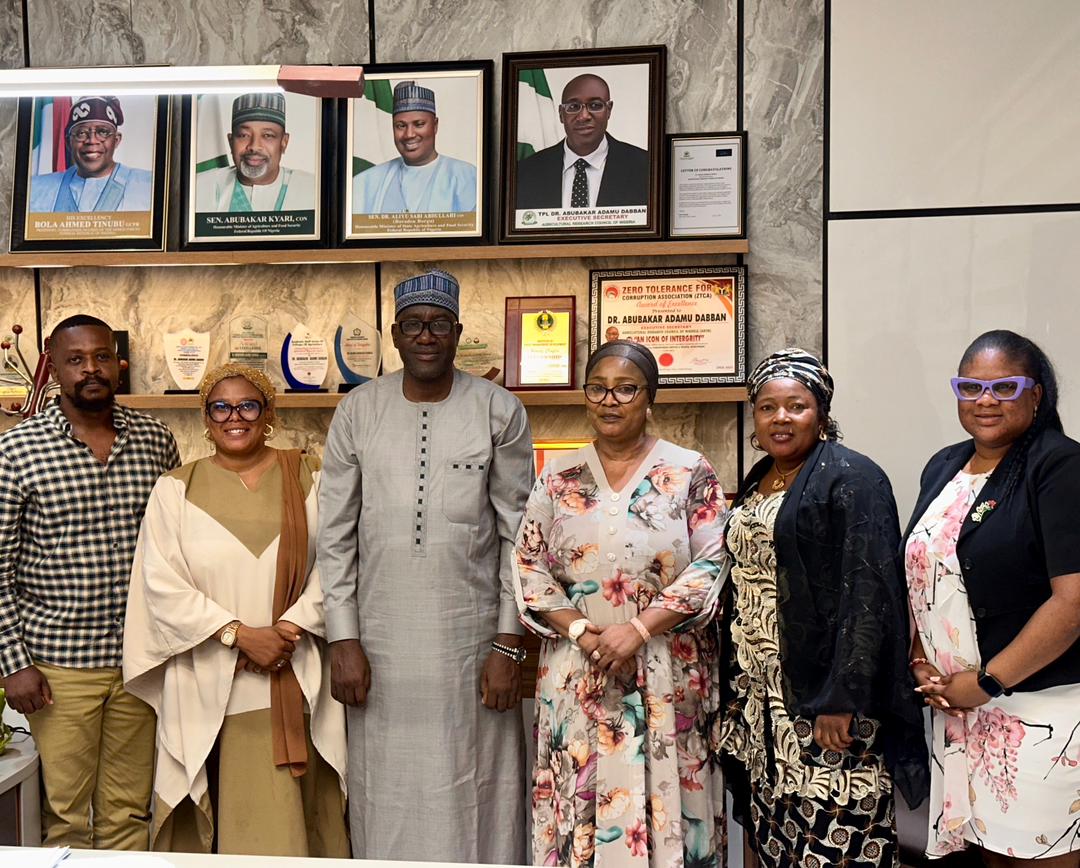
The endorsement came during a courtesy visit by the pioneer executive members of the association to the Executive Secretary in Abuja, where discussions centred on repositioning Public Relations as a strategic management function within research institutes and colleges under the ARCN.
The meeting, which followed a formal correspondence seeking institutional support, focused on the need for synergy, coordination and professional integration of Public Relations Officers (PROs) across the ARCN ecosystem.
In her presentation, the Founding National Coordinator of AARIC-PRO, Oluwatoyin Khadija Ameen, outlined the association’s vision to transform Public Relations from a routine information service unit into a strategic driver of institutional growth, stakeholder engagement and national development.
She explained that the initiative seeks to enhance the visibility of research outputs, strengthen public confidence in agricultural institutions, and support broader national priorities in food security and economic diversification.

“This initiative aligns with the Executive Secretary’s communication and visibility agenda, particularly as observed during his nationwide familiarisation tour of ARCN institutions,” she noted.
Other founding members present at the meeting included Asagunla Oluwafunke, Aishatu Samaila and Ogunderu Olugbenga Itunu.
Responding, Dr. Dabban described the initiative as both timely and strategic, noting that effective communication is critical to achieving institutional mandates and improving public understanding of agricultural research.
He urged the association to submit a formal proposal for consideration, supported by a memo from the Directorate of Administration, assuring that once approved, the Council would take concrete steps to institutionalise Public Relations structures across its network.
According to him, this would include directives to Provosts and Heads of Institutions to establish fully functional Public Relations offices, provide necessary tools, and prioritise capacity building for communication personnel.
Dr. Dabban further disclosed that Public Relations Officers across institutes and colleges would operate as outstation representatives of ARCN’s central communication system, ensuring coordinated messaging and strategic alignment with the Office of the Executive Secretary.
Emphasising professionalism, he stated that “professionalism has come to stay,” and advised all PROs within the system to obtain certification with the Nigerian Institute of Public Relations within six months to standardise practice across institutions.
Also speaking, the Director of Administration, Kalimat Balogun, commended the initiative, describing it as a critical step towards improving institutional visibility and communication effectiveness.
She stressed the importance of structured Public Relations units, drawing from her background in media and institutional communication, and encouraged all institutions to align with the AARIC-PRO framework.

As part of resolutions reached at the meeting, stakeholders agreed to institute quarterly coordination meetings for Public Relations Officers, alongside regular reporting of communication activities across institutions.
They also proposed sustained capacity-building initiatives, including training programmes, workshops and conferences, to enhance professional competence.
Institutions were further encouraged to produce quarterly publications showcasing research achievements and milestones, while a collaborative ecosystem-wide publication is also being planned.
The Executive Secretary expressed strong support for the maiden AARIC-PRO conference scheduled for October 2026, urging the association to commence preparations immediately.
The move marks a significant shift towards institutionalising strategic communication within Nigeria’s agricultural research sector, with potential implications for improved public engagement and policy impact.
About the Author