 Odita Sunday



China Moves to Cut Post-Harvest Losses, Boost Agricultural Trade Through BRI Training
By Odita Sunday
China has stepped up efforts to strengthen agricultural value chains in developing countries through training programmes focused on fruit processing, post-harvest preservation and cross-border e-commerce.
The initiative, being implemented under the Belt and Road Initiative (BRI) and the Global Development Initiative (GDI), is aimed at helping participating countries reduce post-harvest losses, modernise their agricultural sectors and increase household incomes.
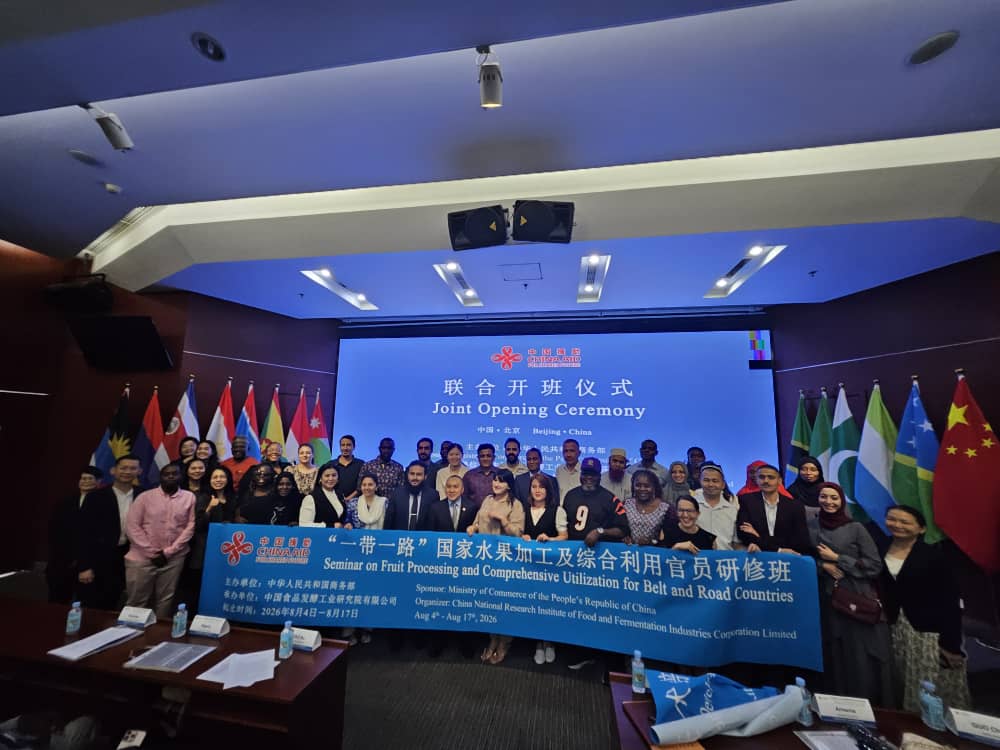
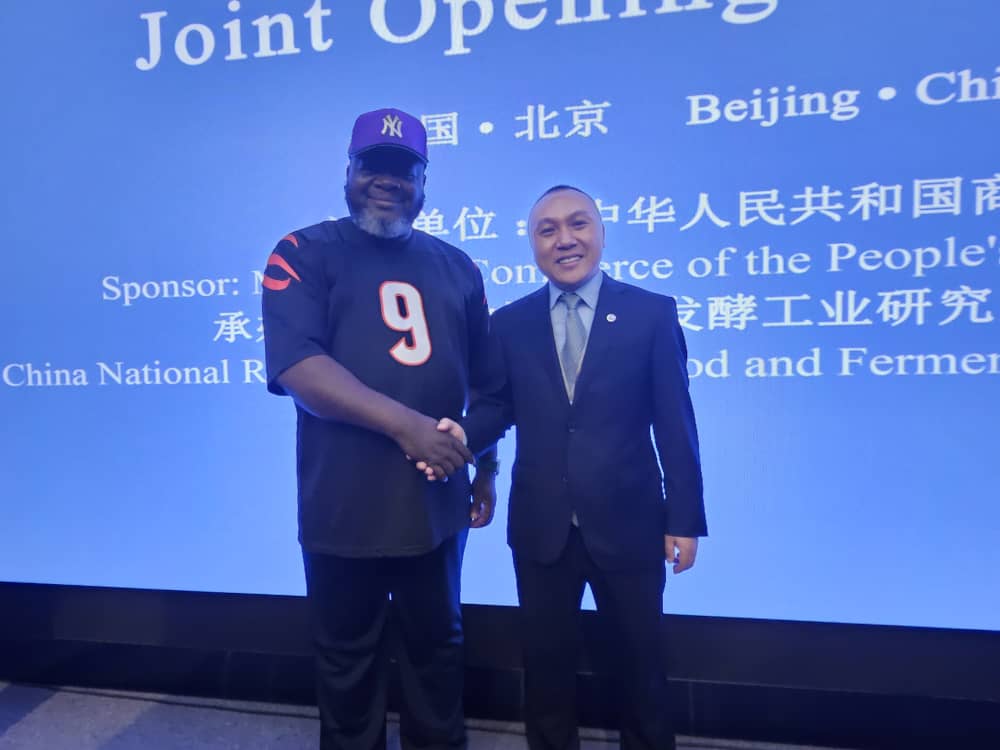
Deputy General Manager of the China National Research Institute of Food & Fermentation Industries (CNRIFFI), Ms Yao Su, disclosed this at the joint opening of three China-sponsored training programmes in Beijing on August 4, 2026.
According to her, the programmes were sponsored by the Ministry of Commerce of the People’s Republic of China and organised by CNRIFFI to strengthen international cooperation in food processing and agricultural trade.
The three programmes are the Seminar on Fruit Processing and Comprehensive Utilisation for Belt and Road Countries; Training Course on New Technologies for Storage, Preservation and Circulation of Fruits and Vegetables under the Global Development Initiative; and Seminar on High-Quality Development of Cross-Border E-Commerce in Food Circulation under the Global Development Initiative.
Yao said the focus on fruit and vegetable processing, storage and preservation, as well as cross-border e-commerce, was strategic because the sectors constitute critical links in global agricultural supply chains.
“Intensive processing of fruits and vegetables, post-harvest storage and preservation, and cross-border e-commerce for food circulation constitute the pivotal links that connect global supply and demand chains of agricultural products and cut post-harvest losses of fresh produce,” she said.
She added that the interventions were also designed to support agricultural modernisation and industrial upgrading in developing countries.
Yao explained that the training programmes cover the entire fruit and vegetable value chain, with participants expected to acquire practical knowledge that can be adapted to the realities of their respective countries.
She said the curriculum would combine technical lectures with practical industrial cases, policy discussions and operational models drawn from China’s experience.
“Curricula are designed to address industrial challenges faced by various countries and highlight replicable and implementable industrial practices,” she said.
The participants are also expected to undertake practical sessions in Beijing and a study tour to Zhangzhou in Fujian Province, where they will visit industrial platforms involved in food, fruit and vegetable circulation.
Yao said the field visits would enable participants to see first-hand how China’s agricultural and food circulation industries operate, while also providing opportunities for direct engagement with industry practitioners.
She said the initiative was consistent with the evolving focus of the BRI, which has shifted towards high-quality development and more targeted cooperation.
“The Belt and Road Initiative has entered a new phase of high-quality development featuring targeted priorities and intensive refinement,” Yao said.
According to her, the five major areas of BRI cooperation — policy coordination, facilities connectivity, unimpeded trade, financial integration and people-to-people bonds — have continued to produce tangible results.
Yao further stressed that the success of the training should ultimately be measured by how participants apply the knowledge gained in their home countries.
She urged participants to share their experiences, identify practical areas of cooperation and develop solutions based on their countries’ agricultural resources and trade conditions.
“We earnestly hope that after returning home, you will apply what you have learned, translate the achievements of this training into concrete actions to advance your domestic fruit and vegetable industries and expand cross-border agricultural product trade,” she said.
She said stronger cooperation could help facilitate the two-way movement of agricultural products, strengthen bilateral industrial partnerships and promote common economic development.
Highlighting CNRIFFI’s experience in international capacity building, Yao disclosed that the institute had organised more than 300 foreign-aid training programmes in agriculture and food-related sectors since 2005.
She described the institute as a longstanding professional research institution serving China’s food industry and a key technical support platform for the country’s food sector.
She said CNRIFFI remained committed to providing an open platform for international exchange and sharing China’s industrial development experience with developing countries.
“Though the training period will be brief, there is broad space for industrial cooperation and people-to-people bonds between all nations,” Yao said.
She expressed optimism that the programme would strengthen practical cooperation among participating countries and contribute to the development of more efficient agricultural supply chains.
The initiative comes as developing economies increasingly seek ways to reduce food losses, improve value addition and connect agricultural producers to expanding domestic and international markets.
Yao said the exchange of knowledge and experience would help countries develop approaches suited to their “local resource endowments and development foundations,” while creating opportunities for deeper cooperation in agriculture and food circulation.
She urged the participants to take advantage of the programme to build consensus around practical cooperation and return home prepared to translate the training into measurable improvements in their agricultural sectors.
The Chinese official concluded by expressing the hope that the programme would serve as a bridge for stronger cooperation in the fruit, vegetable and food circulation sectors and contribute to shared prosperity among participating countries.
About the Author