
 Odita Sunday



China’s Fruit Processing Model: Lessons Nigeria Must Not Ignore — Odita Sunday
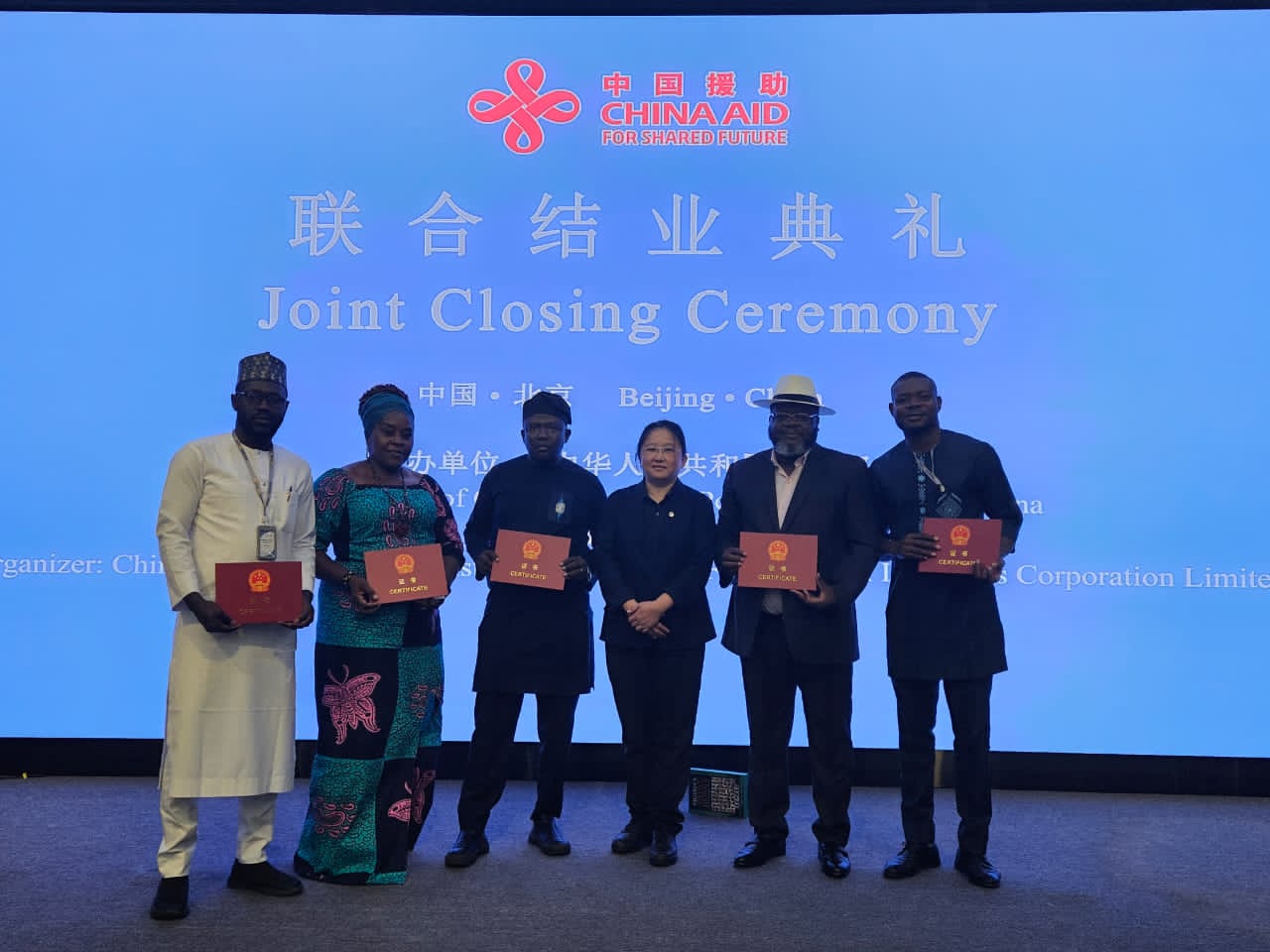
Participants at the Seminar on Fruit Processing and Comprehensive Utilisation for Belt and Road Countries have challenged developing countries, including Nigeria, to move beyond rhetoric and learn from China’s disciplined approach to industrialisation, food processing and economic development.
The participants, who completed a two-week seminar in Beijing, China, on August 17, 2026, said the experience had exposed them to practical lessons in industrial organisation, technology, discipline, food processing and comprehensive utilisation of agricultural produce.
Speaking on behalf of the participants at the closing ceremony, Nigerian participant, Mr Odita Sunday-Udemaguna, said the central lesson from the programme was not merely about fruit processing, but about what nations can achieve when vision is matched with discipline, continuity and purposeful execution.
“It stands today as a powerful example that any nation aspiring to prosper and thrive must be willing to emulate the patience to build and the discipline to sustain,”he said.
The seminar, organised by the China National Research Institute of Food & Fermentation Industries Corporation, brought together participants from nine countries — Jordan, Uzbekistan, Pakistan, Nigeria, Tanzania, Antigua and Barbuda, Costa Rica, Thailand and Bangladesh.
Describing the programme as a practical demonstration of the Belt and Road spirit, Sunday-Udemaguna said the participants came from different countries but were united by a common objective: acquiring knowledge that could be translated into development in their respective countries.
A major theme running through the closing remarks was the contrast between knowledge acquisition and the ability of countries to translate knowledge into tangible development.
Sunday-Udemaguna said the participants were particularly struck by the level of organisation, punctuality, innovation and discipline demonstrated throughout the programme.
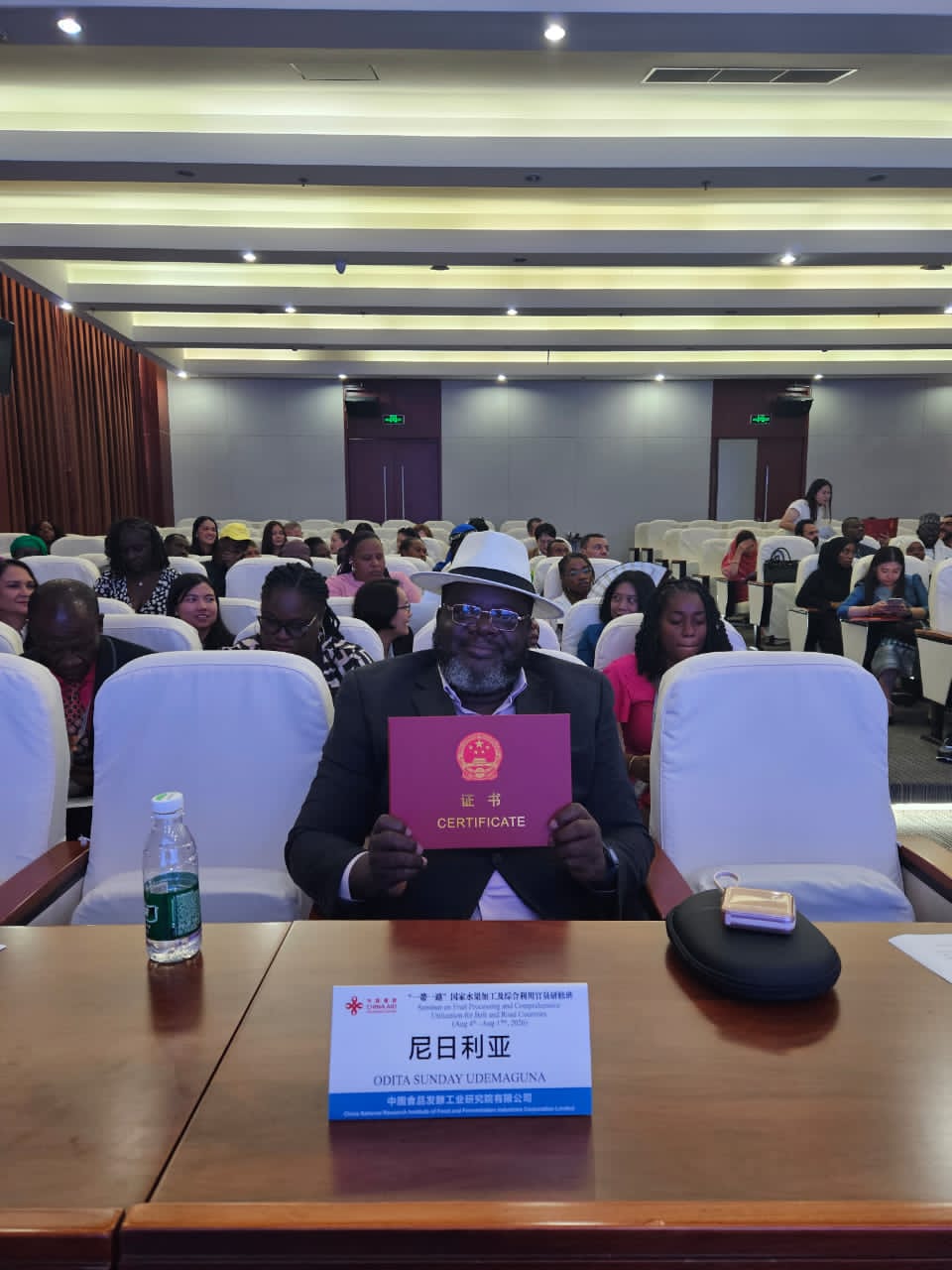
He said the experience offered a lesson that Nigeria and other developing countries could ill-afford to ignore.
“It is a lesson in structure and punctuality that we intend to carry back and apply in our own institutions and countries,” he noted.
The participants’ study tours to Damin Food Company Limited in Zhangzhou, Fujian Zishan Group Company Limited, Tianfu Tea Culture Industrial Park, Fujian Lixing Food Company Limited and the Ten Fu Tea Museum provided a practical dimension to the classroom lectures.
According to Sunday-Udemaguna, the visits demonstrated how agricultural products could be processed, diversified and commercialised rather than allowed to lose value through inadequate storage and processing.
“We witnessed first-hand the ingenuity, discipline and innovation of the Chinese people, and it left an indelible mark on all of us,” Sunday-udemagwa revealed.
The implication for countries such as Nigeria, he suggested, is significant: producing agricultural commodities without building the processing capacity to preserve, package and add value to them leaves enormous economic opportunities untapped.
The seminar’s focus on comprehensive utilisation of fruits also highlighted an area where developing countries have significant room for improvement.
Rather than treating agricultural produce as commodities for immediate consumption or export, the Chinese model presented to participants emphasised processing and the utilisation of different components of agricultural products to generate additional economic value.
For Nigeria, where agricultural production remains substantial but post-harvest losses and inadequate processing capacity continue to pose challenges, the lesson is particularly relevant.
The participants returned home with the understanding that agricultural development cannot be separated from industrial policy, technology, infrastructure, research and market access.
The real question, therefore, is not simply whether Nigeria can produce more fruits and other agricultural commodities, but whether it can build the systems required to convert those commodities into wealth, jobs and sustainable industries.
Beyond the technical knowledge, the seminar also created an international network among participants.
“In our class, we were fortunate to be a true reflection of the Belt and Road spirit: nine nations, one classroom, one purpose,” Sunday-Udemaguna said.
He noted that the diversity of the participants provided an opportunity for cultural exchange and professional networking, with relationships developed across Africa, Asia, Latin America and the Caribbean.
According to him, those relationships could prove as valuable as the technical knowledge acquired during the seminar.
The participants also praised the organisers for what they described as exceptional hospitality throughout their stay.
Sunday-Udemaguna commended the China National Research Institute of Food & Fermentation Industries Corporation, particularly the Chief Host, Mr Peng Hao, Director of the Department of International Cooperation, and his Deputy, Mrs Guo Chen.
He said,”You did not just organise a programme; you opened your hearts and your country to us.”
He also praised the professors and facilitators who delivered the technical sessions, describing the learning experience as demanding but rewarding.
The participants further commended their supervisors — Mr Xipo Wang (Vincent), popularly known as “Cheers Up”; Miss Ruixi Wang (Cecillia), known for her frequent reminder, “Don’t be late”; Miss Yuhan Wang (Nancy), and Mr Yuan Sheng Guan (Guan) — for their commitment throughout the programme.
The country group leaders were also recognised for their contributions to the success of the training.
The visit to the Great Wall of China provided perhaps the strongest metaphor in the participants’ reflection on their experience.
Sunday-Udemaguna said the historic structure represented more than a tourist attraction to the participants.
“Standing atop that ancient marvel, we could not help but see it as a fitting metaphor for China itself, a nation built brick by brick, generation by generation, through vision, resilience and unity,” he stressed.
For the participants, the lesson was unmistakable: national development is not an overnight project.
It requires patience, institutions, discipline, long-term planning and the determination to sustain policies beyond individual administrations.
That, they suggested, is one of the more difficult lessons for developing countries to absorb — the need to build patiently rather than constantly abandon existing structures in pursuit of quick results.
Sunday-Udemaguna commended the People’s Republic of China under President Xi Jinping, describing the country as a model of stability, discipline and purposeful progress at a time of global uncertainty.
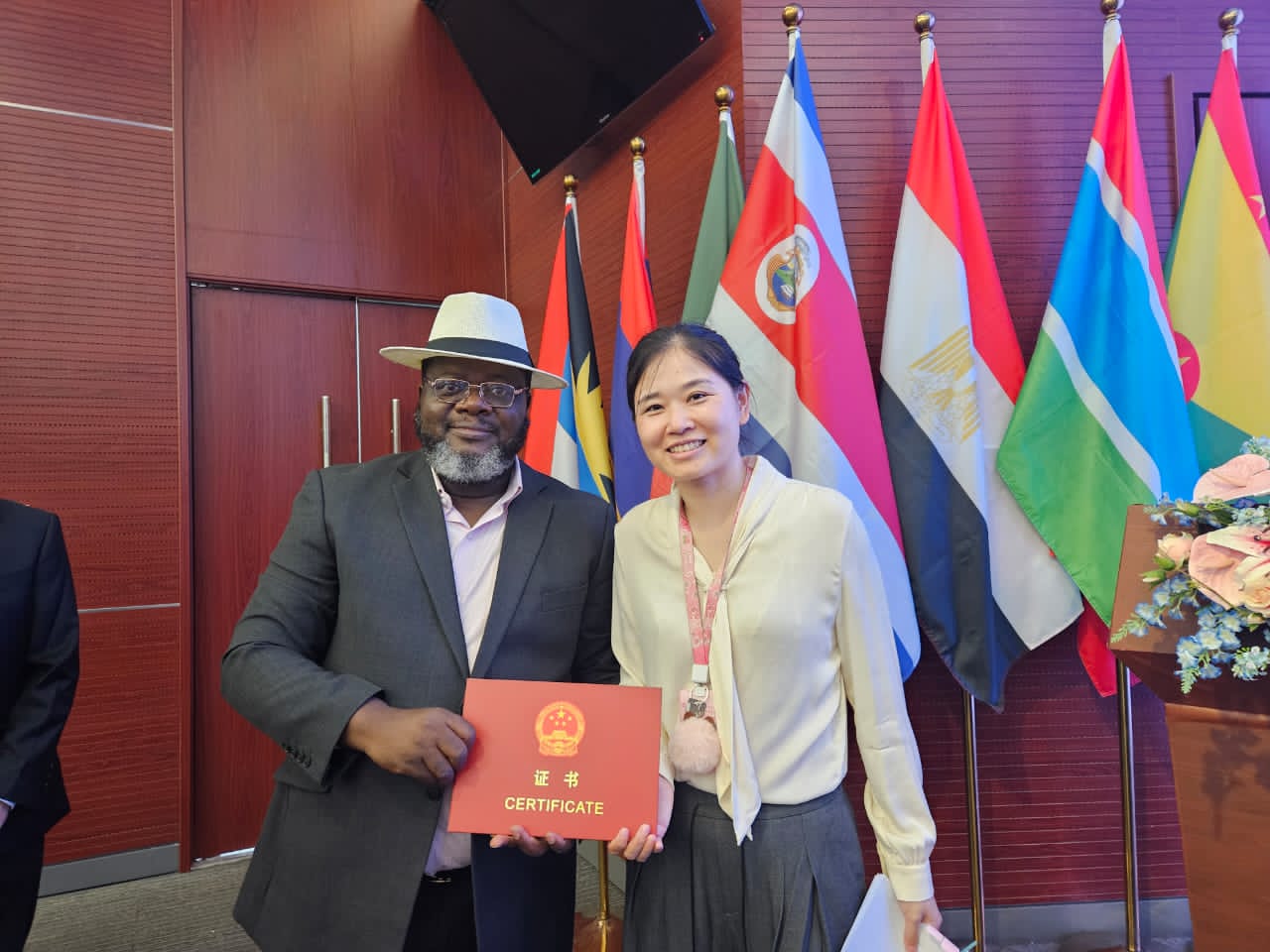
“We commend the People’s Republic of China for the giant strides it continues to make and for the example it offers of what focused, visionary leadership can achieve for a nation and its people,” he said.
While the seminar was formally focused on fruit processing and comprehensive utilisation, the participants’ reflections suggested that its larger lesson was about development itself — how technology, discipline, human capital and industrial policy can combine to transform agricultural resources into sustainable economic opportunities.
As the participants prepared to return to their respective countries, Sunday-Udemaguna said they were leaving Beijing with more than certificates and technical knowledge.
They were returning with new professional networks, cultural understanding and a deeper appreciation of the importance of international cooperation.
“As we prepare to return to our respective countries, we do so enriched, not only with technical knowledge on fruit processing and comprehensive utilisation, but with friendships that span continents and a renewed appreciation for what is possible when nations come together in the true spirit of cooperation,” he said.
He stressed that the real measure of the seminar would ultimately be what participants did with the knowledge acquired.
He said,”This seminar may be coming to a close, but the relationships we have built and the lessons we have learned will continue to bear fruit, quite literally, for many years to come.”
The seminar ended with appreciation to the Chinese hosts, facilitators, supervisors and participants, as the delegates departed with a shared responsibility to translate the experience into practical development outcomes in their respective countries.
About the Author