 Odita Sunday




Police Arrest Nine Suspects in Three Cybercrime Operations, Recover $15,900
By Odita Sunday
The Nigeria Police Force National Cybercrime Center (NPF-NCCC) has arrested nine suspects in three separate intelligence-led operations targeting alleged transnational cybercrime networks involved in online investment fraud, romance scams, identity theft, sextortion and money laundering.
The operations, conducted in Delta State and Lagos, followed intelligence shared by international law enforcement partners, including the United Kingdom’s National Crime Agency (NCA), the Royal Canadian Mounted Police (RCMP) and Germany’s Federal Criminal Police Office, Bundeskriminalamt (BKA).
The police also recovered cryptocurrency assets worth $15,900 in one of the operations, while investigations revealed that two victims in a suspected Canadian romance fraud network lost more than CA$417,000.
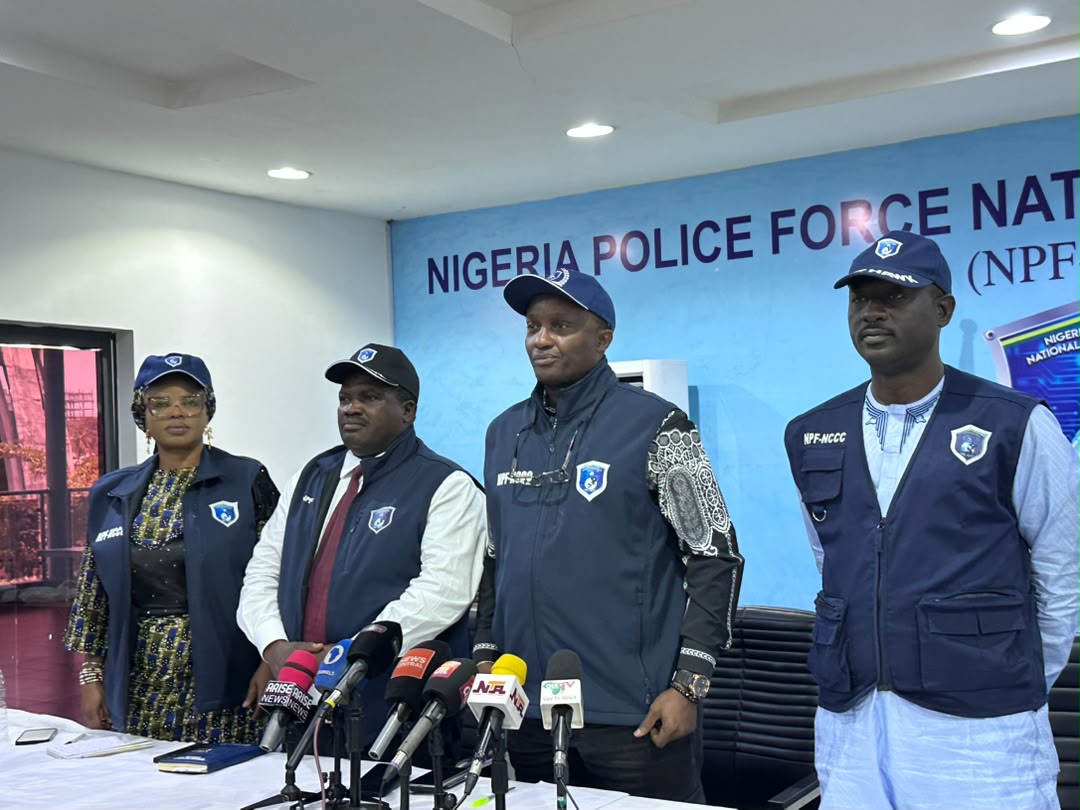
Assistant Inspector-General of Police (AIG) Akaninyene Ezima, Director of the NPF-NCCC, disclosed the developments during a press briefing at the Centre’s conference hall in Abuja on Friday.
Ezima said the operations underscored the growing sophistication of cybercriminal networks exploiting digital platforms, cryptocurrency and human vulnerabilities to defraud victims across international borders.
He said the Centre, in line with the vision of the Inspector-General of Police, IGP Olatunji Rilwan Disu, psc(+), NPM, was strengthening intelligence-led investigations, digital forensic capabilities and international collaboration to combat emerging cyber threats.
In the first operation, four suspects were arrested in Agbor and Okpanam, Delta State, in October following intelligence shared by the UK National Crime Agency concerning a suspected transnational criminal network operating fraudulent investment schemes.
The suspects were identified as Ojei Divine, Godwin Umerin, Edema Bright and Peter Kpamichukwu Okoh.
According to Ezima, preliminary investigations indicated that the suspects allegedly used synthetic identities on social media and messaging platforms to target victims in the United States, United Kingdom, Canada, Australia and other jurisdictions.
He said Ojei allegedly impersonated professional investment traders through Facebook accounts bearing different identities, including Mariana Coman, and redirected victims from chat groups to fraudulent investment websites.
The websites, identified as andescapitalgrouplc.com, navidargroupllc.com and stockbase.com, allegedly presented themselves as investment and trading platforms dealing in forex, cryptocurrency and oil and gas.
Ezima said the platforms were used to persuade victims to deposit funds into wallets allegedly controlled by the suspect and his associates.
The suspect reportedly admitted moving proceeds from different wallet addresses created for victims in various countries, including through Revolut Trust Wallet for European victims and Coinbase for victims in the United States.
Cryptocurrency analysis of one wallet allegedly controlled by the suspect revealed 21 approved transaction receipts amounting to $21,150.
The police recovered cryptocurrency assets valued at $15,900, which have been secured in a custodial wallet.
Another suspect, Godwin Umerin, allegedly created several Facebook accounts which he admitted using to defraud an Indonesian citizen who paid 7 million Indonesian Rupiah through an account provided by a money mule.
Ezima said Edema Bright, a 300-level student of Delta State University, allegedly engaged in sextortion and cryptocurrency fraud targeting victims in Australia, the UK, the US, Canada and other countries.
The suspect reportedly posted online hookup advertisements and communicated with unsuspecting victims through a WhatsApp account registered with a United States telephone number.
Investigations also allegedly linked Bright to an online platform, Clubhouse, where he persuaded victims to invest in Bitcoin, claiming he would buy at lower prices and sell at higher rates.
He allegedly impersonated Michael Novogratz, the chief executive officer of Galaxy Digital, using photographs obtained from Pinterest to conceal his identity.
The fourth suspect, Peter Kpamichukwu Okoh, 27, was described as a website developer and owner of 360 Web Tech, an unregistered web development company.
He allegedly advertised his services on Instagram and TikTok through the usernames 360_webtech and 360_webtech02.
According to the police, preliminary investigations revealed that Okoh developed websites for healthcare, investment and online banking services, including platforms designed to allow administrators to control deposits, withdrawals and other functions.
The suspect allegedly admitted developing six websites used by scammers to perpetrate fraudulent activities.
Exhibits recovered during the operation include 36 mobile devices, three routers and other items undergoing forensic examination.
The suspects, the police said, would be arraigned before a court of competent jurisdiction after the conclusion of the necessary investigative and prosecutorial processes.
In the second operation, two suspects were arrested in Delta State over an alleged romance fraud and money laundering network targeting elderly Canadian residents between 2020 and 2024.
The suspects were identified as Uka Chidiebere Gerald, 32, and Kenneth Ufuophu, 30.
Ezima said intelligence received from the RCMP indicated that members of the suspected network allegedly used fictitious identities on social media and messaging platforms to establish deceptive romantic relationships with victims.
After gaining their trust, the suspects allegedly solicited money under various pretences, including purported business investments, financial assistance and loans with promises of repayment.
In one instance, a victim was allegedly deceived by a suspect impersonating a United States military physician, William Barabash.
The suspect reportedly sent the victim login details to a fake bank website identified as ‘CB Reserve’ Bank, which displayed a substantial bank balance under the name of the purported physician.
The victim subsequently transferred more than CA$200,000 between 2020 and 2022.
Further investigations allegedly linked the transactions to Uka Chidiebere Gerald, who, with the consent of his wife, Evelyn Ayabare, used her email address and telephone number to open a Binance wallet through which USDT 1,684,441 was allegedly laundered.
Another victim was reportedly induced to transfer cryptocurrency worth CA$214,000 and make a wire transfer of CA$3,000.
The digital assets were allegedly deposited into two Bitcoin wallet addresses traced to Ufuophu.
Ezima said the assets were subsequently laundered through money mules and entities identified as Tears of Joy LTD in the United Kingdom, Henryford Services Inc. and other channels across Canada, the United States, Nigeria, Turkey and Kenya.
So far, five victims have been identified, with documented financial losses involving two victims alone exceeding CA$417,000.
The police recovered two mobile devices and two laptops during the operation, which are undergoing forensic examination.
The NPF-NCCC, in collaboration with its international partners, is continuing efforts to identify and arrest other members of the suspected network, trace illicit funds and facilitate the recovery of proceeds of crime.
In the third operation, three suspects were arrested in Lekki, Lagos State, on October 14, following cyber threat intelligence shared by the UK National Crime Agency.
The suspects were identified as Adebayo Adewale Basit, Omoregie Christian and Adebayo Ibrahim.
Ezima said the operation was conducted following approval by the Inspector-General of Police and targeted suspected cyber actors allegedly involved in online impersonation, computer-related fraud, investment fraud and money laundering.
Preliminary investigations indicated that the suspects allegedly operated fictitious social media accounts to impersonate prominent personalities and deceive unsuspecting victims into transferring funds.
One of the suspects, Adebayo Adewale Basit, 23, allegedly created email accounts identified as elonmuskkit214@gmail.com and elonmusk07588@gmail.com.
He reportedly used Facebook, WhatsApp, Zangi, Telegram and X accounts, alongside artificial intelligence voice cloning and deepfake technology, to impersonate Tesla chief executive Elon Musk.
The alleged activities reportedly targeted victims in the United States and the United Kingdom.
The suspects were also allegedly involved in fraudulent cryptocurrency investment representations through a platform identified as Bitcoin Trading Hub, using the website bitcointradinghub.org and the email address support@bitcointradinghub.org.
The police said the suspects confessed to their alleged involvement in the fraudulent activities during investigations.
Items recovered included five iPhones, a Samsung Galaxy mobile phone, an iPad, a Microsoft Surface Pro tablet, three internet routers, a webcam, a PlayStation 5 console with two controllers, a portable UPS, a charging adapter and two MTN SIM cards.
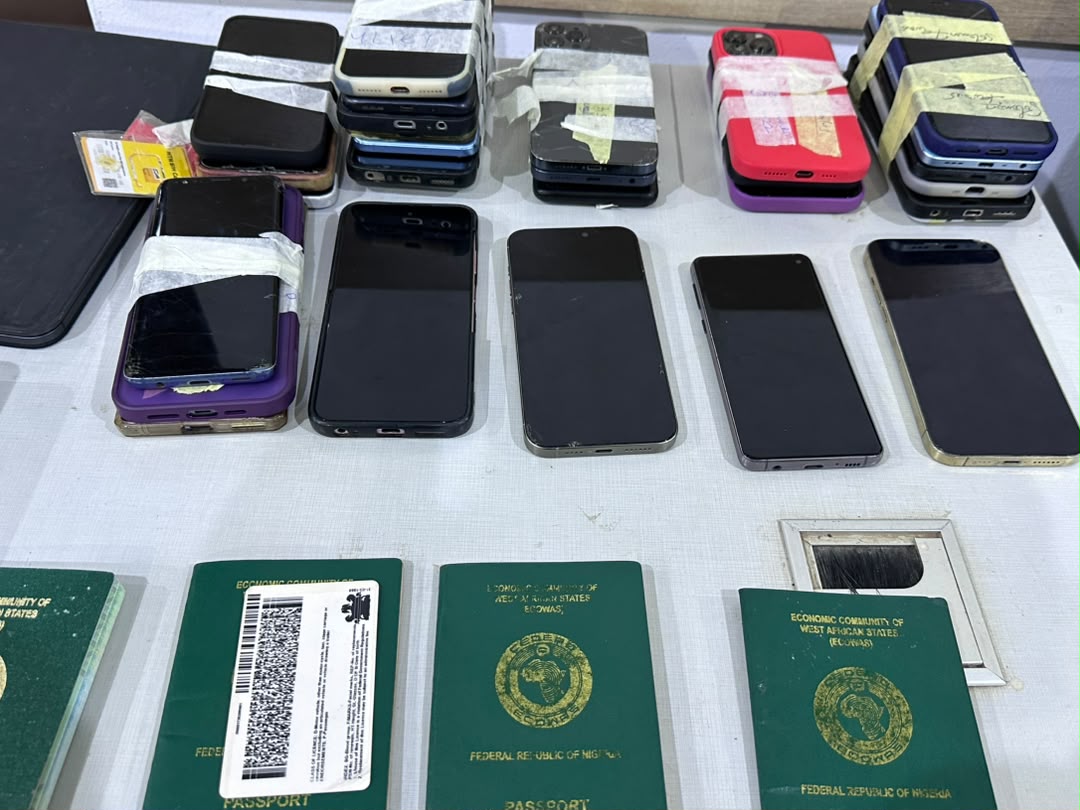
Other exhibits included three gold-plated necklaces, two wristwatches, two vehicle registration plates, two suspected cannabis crushers, a digital precision scale and rolling papers.
The recovered digital devices are undergoing forensic examination at the NPF-NCCC Cybercrime Laboratory to establish the extent of the alleged activities, identify victims, trace suspected proceeds of crime and determine whether other accomplices were involved.
The three suspects remain in custody as investigations continue.
Ezima said the cases demonstrated the evolving nature of cybercrime and the increasing sophistication of criminal networks exploiting digital technologies and international financial systems.
He said the deliberate exploitation of public trust through fraudulent investment schemes, deceptive online relationships, identity impersonation and cryptocurrency transactions remained a major concern.
According to him, effectively addressing the threats required proactive intelligence-led policing, advanced digital forensic capabilities, timely intelligence sharing and sustained international cooperation.
The NPF-NCCC, he said, would continue to strengthen its investigative and forensic capabilities, deepen strategic partnerships and deploy technology to identify, disrupt and dismantle criminal networks operating within and beyond Nigeria’s borders.
The police director urged members of the public to exercise caution when engaging in online investment opportunities, particularly those promising unrealistic returns or requiring payments through unverified platforms.
He also advised elderly persons and their families to remain vigilant against deceptive online relationships involving repeated financial demands, gift cards, cryptocurrency transfers or purported delivery charges.
Financial institutions, cryptocurrency service providers and other stakeholders were urged to strengthen customer due diligence, transaction monitoring and compliance with anti-money laundering regulations.
Ezima particularly cautioned youths against cybercrime and technology-enabled fraud, urging them to deploy digital skills for legitimate innovation, entrepreneurship and national development.
He also commended members of the media, international partners and stakeholders for their contributions to the recently concluded Cybersecurity Awareness Week, saying their participation helped extend responsible digital practices to the wider public.
The NPF-NCCC, he said, would continue working with international law enforcement partners to ensure that individuals who exploit digital platforms to perpetrate crimes are identified, investigated and brought before the law.
Members of the public were encouraged to promptly report suspected cybercrime and fraudulent financial transactions to the appropriate authorities, noting that timely reporting was critical to preserving digital evidence, facilitating investigations and preventing further victimisation.
Ezima said investigations into the cases remained ongoing, adding that the Nigeria Police Force remained committed to protecting citizens, safeguarding the country’s digital and financial ecosystem and ensuring that all persons found culpable were brought to justice.
About the Author