 Odita Sunday


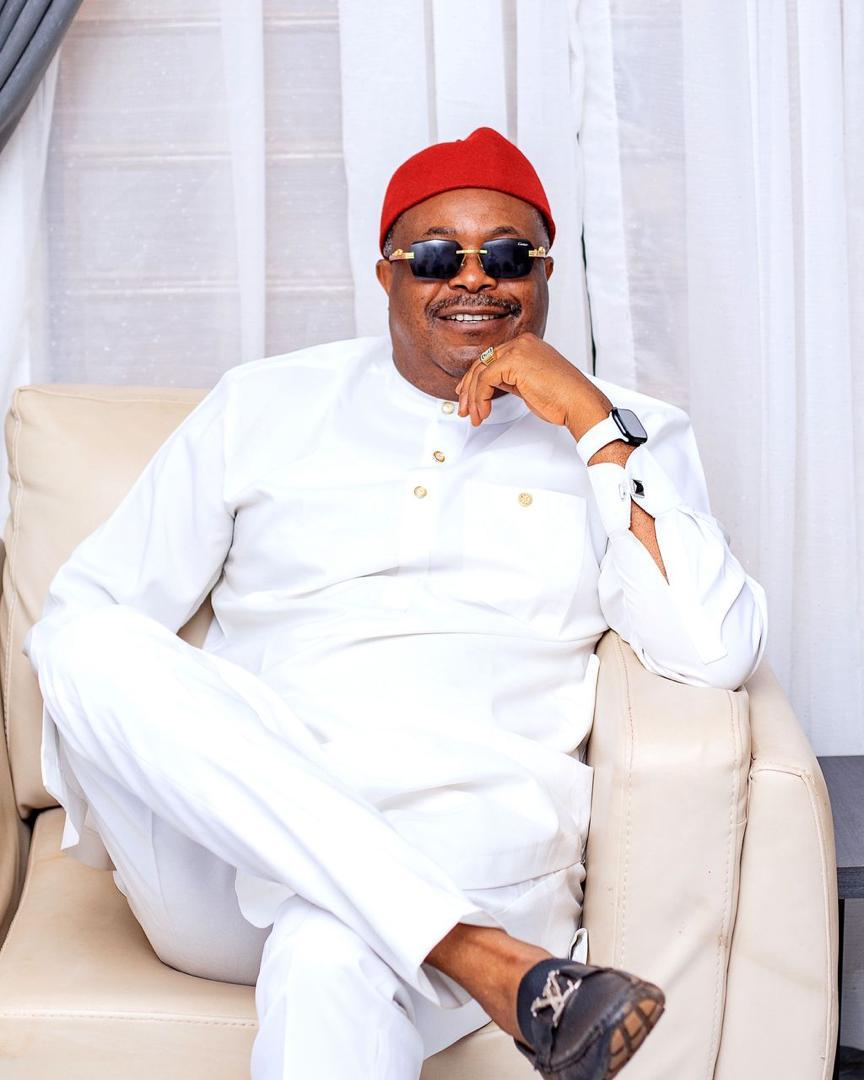
Nigeria Must Not Become a Civilian Dictatorship Disguised as Democracy
By. Chris Okobah, PhD
In every genuine democracy, one of the unmistakable signs that an election is approaching is the flourishing of political activities. Billboards appear along major roads. Political advertisements fill television screens and radio stations. Candidates travel across cities and communities, addressing citizens, presenting their manifestos, defending their records and explaining why they deserve to govern.
That is democracy. That is political competition. That is the beauty of allowing citizens to choose their leaders freely.
Even in the United States, where some television networks are identified with conservative or liberal political tendencies, competing political messages remain part of the democratic landscape. Political disagreement is not supposed to be a criminal offence, and political opposition is not an enemy of the state.
But what are we witnessing in Nigeria today?
We are witnessing increasingly disturbing signs of a political culture in which those exercising governmental authority appear determined to monopolise political space, intimidate opposition voices and create conditions that may discourage genuine electoral competition.
We are gradually moving towards a situation where democracy exists in name while the freedoms that give democracy its meaning are being systematically threatened.
And I ask a simple question:
How can a government claim to be democratic when it appears afraid of opposition billboards, political advertisements and ordinary political competition?
Across Nigeria, controversies have erupted over the removal of opposition billboards and the imposition of enormous political advertising fees. In Abia State, presidential campaign advertising permits were fixed at ₦200 million, while Kogi State announced charges of ₦150 million for presidential candidates.
These developments raise a fundamental question: At what point does legitimate regulation become an instrument for restricting political participation?
A state government has the authority to regulate outdoor advertising. But that regulatory power must never become a weapon for protecting incumbents against political competition.
If a political advertisement complies with the law, why should any government be afraid of it?
Why should a television station, radio station or newspaper fear official retaliation merely for publishing lawful advertisements from an opposition party?
The media must never be converted into the private publicity department of the government in power.
The disturbing controversy surrounding the suspension of a traditional ruler in Enugu State further illustrates the atmosphere of political suspicion.
The traditional ruler of Ibagwa Opi Ogbozalla Autonomous Community was suspended after receiving opposition presidential candidate Peter Obi. Although the Enugu State Government attributed the suspension to alleged violations of traditional rulers’ regulations and denied political retaliation, opposition figures questioned the timing and circumstances.
Whether those allegations are ultimately substantiated or not, one principle must remain inviolable: no traditional ruler should be punished merely for receiving a lawful political visitor.
Traditional institutions belong to the people, not to whichever political party happens to control the government.
A traditional ruler is not the property of a governor. A television station is not the property of a president. And Nigeria is not the private estate of any political party.
What makes these developments particularly disturbing is the growing use of threatening language in our political discourse.
Recently, the Chairman of the APC in Edo State, Jarrett Tenebe, invoked the expression “AK-47 fire” while speaking about those who might obstruct his party’s ambition to deliver millions of votes for President Bola Ahmed Tinubu in the 2027 presidential election.
Such rhetoric is profoundly troubling.
What business does an AK-47 have in a discussion about democratic elections?
Are Nigerians now expected to choose their leaders with rifles pointed at their heads?
Are voters supposed to surrender their consciences because a political leader has announced a predetermined electoral target?
A ballot paper is not a death warrant. A polling unit is not a battlefield. And a voter’s disagreement with the ruling party is not a criminal offence.
Any suggestion that electoral success can be secured through intimidation, violence or threats must be unequivocally condemned.
The police and other security agencies must understand that their constitutional responsibility is to protect every Nigerian, irrespective of political affiliation.
Their obligation is to the Constitution, not to the political ambition of any individual.
I am particularly concerned about statements made by the Minister of the Federal Capital Territory, Nyesom Wike, expressing certainty that President Tinubu will win Rivers State and pledging to deliver both Rivers State and the FCT.
There is nothing unlawful about predicting electoral victory or campaigning vigorously for a preferred candidate.
But there is a dangerous distinction between expressing political confidence and speaking as though the democratic choices of millions of citizens have already been settled.
No minister, governor, president or political godfather has the authority to determine an election result before the people have voted.
Rivers State does not belong to Nyesom Wike. The Federal Capital Territory does not belong to any minister. Nigeria belongs to Nigerians.
The people must decide.
And their decision must be respected.
What I find particularly astonishing is the apparent failure of some political leaders to recognise that suppressing opposition publicity does not automatically translate into electoral support.
You can remove a thousand billboards, but you cannot remove the hunger from people’s stomachs.
You can prevent an opposition advertisement from appearing on television, but you cannot prevent a mother from knowing that she can no longer afford food for her children.
You can dominate radio stations, but you cannot silence the suffering of unemployed graduates.
You can plaster the entire country with the photograph of a president, but those photographs cannot restore the purchasing power of a depreciated currency.
You can purchase political loyalty, but you cannot purchase genuine public confidence indefinitely.
The most powerful political advertisement is not a billboard. It is the quality of life of the citizens.
When the economy improves, citizens will know.
When hospitals function, citizens will know.
When roads become safe, electricity becomes reliable, corruption is punished and employment opportunities expand, citizens will know.
But when insecurity persists, prices rise beyond the reach of ordinary families and allegations of corruption continue to undermine public confidence, no amount of political advertising can permanently conceal those realities.
The suffering of the people is already campaigning inside their homes.
It requires no billboard, no television station and no political rally.
A hungry citizen does not need an opposition politician to explain hunger.
An unemployed graduate does not need a radio advertisement to understand unemployment.
A family that has lost a loved one to insecurity does not need a campaign poster to understand the failure of public protection.
These are experiences that citizens carry into polling booths.
And those kexperiences can be more persuasive than the most expensive political campaign in the world. The
I want to remind those exercising political authority today of one elementary truth: Power is temporary.
The political party in government today may become the opposition tomorrow.
The governor who restricts political advertising today may find his own campaign billboards removed when another political party assumes office.
The minister who believes political power confers permanent control over a territory may discover tomorrow that the same powers are being exercised against him.
Therefore, before introducing or defending any oppressive political practice, every public official should ask:
Would I consider this acceptable if my political opponent were exercising the same power against me?
If the answer is no, then that practice has no place in a genuine democracy.
Nigeria cannot afford to normalise political intimidation.
The country already faces serious challenges involving poverty, unemployment, insecurity, institutional distrust and economic hardship. We must not compound these difficulties by turning electoral competition into an atmosphere of fear. My
History teaches us that when lawful political participation is systematically frustrated, resentment grows, public confidence deteriorates and political disagreements become more dangerous.
We must never allow Nigeria to reach a point where opposition supporters believe that violence is their only means of political protection.
That would represent a catastrophic failure of democratic governance.
I have always maintained that the military and civilian dictatorships share one troubling characteristic: the concentration of political power without meaningful accountability.
Under military rule, citizens understand that their democratic rights have been suspended or severely restricted.
But under a government that calls itself democratic, citizens are entitled to expect something fundamentally different.
They may enjoy the freedom to speak, associate, organise, campaign, advertise and vote in accordance with the law.
A civilian administration that suppresses legitimate political competition risks reproducing the very authoritarianism democracy was established to prevent.
The Nigerian Constitution guarantees freedom of expression and association. The Electoral Act 2026 also provides safeguards against the discriminatory use of state machinery and requires equitable media access for political parties and candidates.
These protections must not exist merely as decorations in our statute books.
They must be respected and enforced.
Political advertising regulations must be transparent and applied equally. Security agencies must protect rallies regardless of party affiliation. Threats of electoral violence must be investigated, and offenders must face lawful consequences.
Above all, INEC must ensure that the 2027 general elections are conducted in an atmosphere where Nigerians can freely exercise their franchise without intimidation, manipulation or fear.
Let every political party campaign.
Let every candidate explain what he or she intends to do.
Let the government defend its record.
Let the opposition present its alternatives.
Let the media discharge its responsibility without unlawful interference.
And ultimately, let Nigerians decide who deserves their votes.
We do not want an election in which the ruling party competes against itself.
We do not want an election whose outcome appears predetermined by political declarations.
We do not want a country where citizens are frightened into political submission.
We want an election in which the winner emerges through the freely expressed will of the people.
My message to the government and political leaders across Nigeria is simple:
You cannot intimidate people into loving you. You cannot force citizens to appreciate policies that have not improved their lives. And you cannot manufacture genuine democratic legitimacy through fear.
Good governance is the most effective campaign strategy.
Accountability is the strongest political advertisement.
Justice is the foundation of national stability.
And the freely expressed will of the electorate remains the ultimate source of democratic authority.
Nigeria belongs to Nigerians, not to the political party in power.
Let us protect that principle before the damage becomes irreversible.
Because the day political leaders become more powerful than the people’s right to choose them is the day democracy begins to die.
And we must never allow that day to arrive.
Chris Okobah, PhD
Award winning Author | Legal Practitioner | Human Rights Advocate
IF YOU BELIEVE IN FREE, FAIR AND CREDIBLE ELECTIONS, IF YOU BELIEVE THAT EVERY NIGERIAN DESERVES THE RIGHT TO CHOOSE THEIR LEADERS WITHOUT INTIMIDATION, AND IF YOU BELIEVE THAT A BETTER NIGERIA IS POSSIBLE, PLEASE SHARE THIS ARTICLE.
DEMOCRACY MUST NOT DIE IN OUR HANDS.
About the Author