
 Odita Sunday



Beyond the Badge: How Nigeria Police Games is Showcasing Egbetokun’s Reforms, Welfare, Excellence

By Odita Sunday
The sun rises gently over the Stephen Keshi Stadium, and before the city fully awakens, hundreds of uniformed athletes are already stretching, jogging and preparing for competition. Some will sprint for seconds, others will wrestle for minutes, and a few will battle for endurance across long distances. Yet the most significant contest unfolding in Asaba, Delta State, is not about medals, it is about sterling institutional transformation spearheaded by Nigeria’s Chief law enforcer, IGP Kayode Adeolu Egbetokun.
The ongoing Nigeria Police Games have become a powerful metaphor for a changing law enforcement philosophy: a police organisation that invests in the physical and mental wellbeing of its personnel as a strategy for professionalism, discipline and public trust.
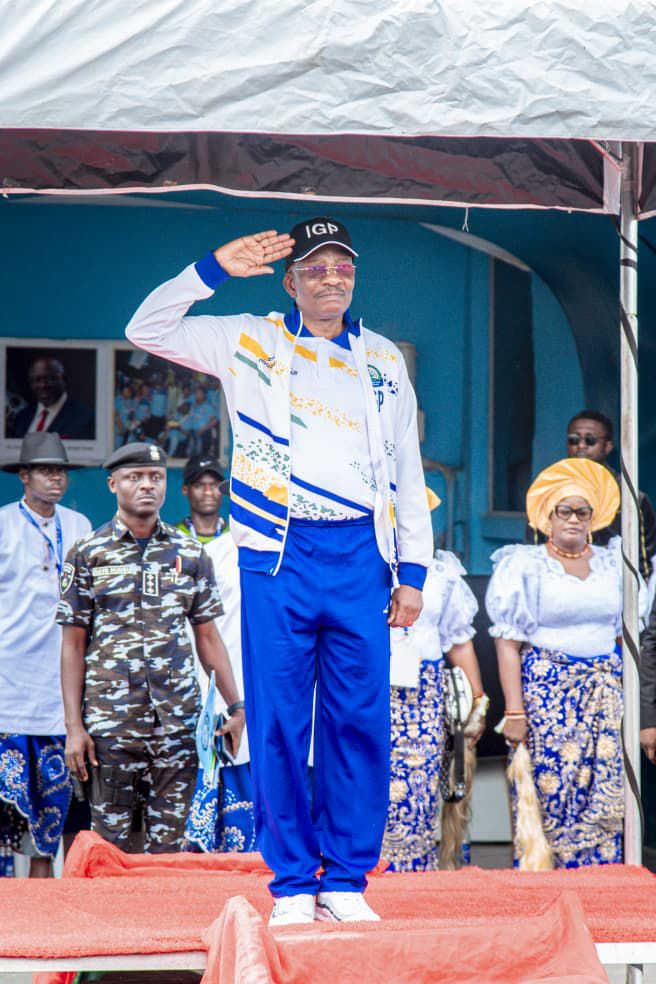
At the centre of this shift is the Inspector-General of Police, Kayode Egbetokun, whose leadership approach increasingly links policing effectiveness to officer welfare and organisational unity.
The biennial games have historically existed within the Force as recreational competitions, but the Asaba edition reflects something deeper, an administrative doctrine that views sports as part of operational readiness.
Over 6,000 officers drawn from commands across the federation are competing in athletics, football, swimming, boxing, shooting, taekwondo and other events. For spectators, it looks like a national sports festival. For police leadership, it functions as a national training laboratory.
Every sprint tests endurance required during patrol.
Every combat sport mirrors restraint under confrontation.
Every team sport reinforces coordinated tactical response.
The philosophy is simple: a physically prepared officer makes clearer decisions under pressure.
Traditionally, police welfare discussions in Nigeria have focused on equipment, barracks and allowances. The Asaba games expand that definition.
Under the current leadership of IGP Egbetokun, welfare is being approached holistically, encompassing health, morale, pride and belonging. Sports are used to address all four simultaneously. A police officer who trains regularly is healthier, one who competes nationally feels valued, one who represents a command develops pride, and one who bonds with colleagues builds trust”. This strategy reduces internal friction, improves discipline and strengthens operational cooperation. In effect, the games serve as preventative policing, improving behaviour within the Force before addressing behaviour outside it.
The Nigeria Police Force under this administration, stands as one of the most culturally diverse institutions in the country, drawing personnel from every ethnic and regional background. Managing cohesion at that scale requires more than command structure, it requires shared experience.
On the football field in Asaba, a sergeant from Sokoto passes to a corporal from Bayelsa while a superintendent from Enugu shouts encouragement from the touchline. Rank temporarily fades into teamwork.
Officers who trust each other in competition coordinate better in crisis. Familiarity reduces hesitation during joint operations. Shared victories foster institutional loyalty stronger than directives alone can achieve.
The games therefore serve as a national integration programme within the Force, unity forged not in conference halls but on the track.
Policing depends on discipline, yet discipline imposed externally rarely lasts. Discipline internalised does.
Sports create voluntary compliance with rules, respect for referees, adherence to time limits, acceptance of defeat and controlled aggression. These behaviours mirror professional conduct required in law enforcement.
An officer who respects sporting rules is more likely to respect operational protocols. One who learns restraint in boxing understands measured force in the field. The games thus function as behavioural training, embedding values that formal lectures cannot instil.
Large public events often raise questions about expenditure. However, the Police Games are structured around existing sporting facilities, inter-agency collaboration and host-state support, minimising cost while maximising impact.
Instead of funding separate morale programmes, training workshops and public image campaigns, the Force integrates all three into one initiative.
It is administrative efficiency, a single budget line delivering multiple institutional outcomes: training, welfare and public relations.
Such multi-purpose investment reflects a leadership style that prioritises value over spectacle.
Perhaps the most visible change around the games is digital. Short videos of police athletes, live updates from competitions, interviews and behind-the-scenes moments now circulate widely on social media platforms. The cost is minimal compared to traditional campaigns, yet the impact is profound.
Citizens who once saw the police only during enforcement encounters now see them as disciplined athletes, teammates and national competitors.
This subtle narrative shift strengthens legitimacy. Public cooperation with law enforcement depends heavily on perception, and perception improves when the institution appears human, professional and transparent.
By leveraging cost-effective digital engagement, the Force projects a modern identity without heavy publicity spending.
The Police have historically produced elite athletes who represented Nigeria internationally. The Asaba games revive that legacy by identifying new talents within the ranks.
For young officers, sports now represent an additional career pathway, an opportunity for recognition beyond rank progression.
This improves morale and retention. Officers who feel valued are more committed, and committed personnel perform better operationally.
Observers note that the Inspector-General’s emphasis on sports is not symbolic but strategic. His messaging consistently links physical fitness to professionalism and unity to operational efficiency.
The approach aligns with global policing trends where wellness programmes are recognised as crime-prevention tools. An officer under less stress, in better health and supported by colleagues is less likely to act impulsively and more likely to exercise judgment.
Thus, welfare becomes a security investment. For decades, policing narratives in Nigeria have centred on enforcement and response. The Asaba games introduce a different storyline, prevention through preparation.
The Force is presenting itself as disciplined, coordinated, community-oriented and modern. The transformation is subtle but significant: from authority-based legitimacy to trust-based legitimacy.
When the closing ceremony eventually arrives, medals will be awarded and champions celebrated. Yet the most important outcome will not appear on the medal table.
It will appear in improved morale at commands, smoother cooperation during operations and a public increasingly comfortable interacting with officers.
The Nigeria Police Games demonstrate that effective policing is not only about patrol vehicles and investigations. It is also about healthy officers, strong teamwork and institutional pride.
In Asaba, the races are timed in seconds and the matches decided in minutes. But the impact on professionalism and unity may last years.
The message is unmistakable: a modern police force is built not just with authority, but with welfare, discipline and shared purpose.
About the Author