
 Odita Sunday




By Odita Sunday
Health authorities in Nigeria have begun tracing people who may have been exposed to Ebola after the Federal Government confirmed an infection in Abuja, raising the need for heightened vigilance across the country.
The Coordinating Minister of Health and Social Welfare, Professor Muhammad Ali Pate, announced the case on Tuesday, October 20, following laboratory tests that confirmed the infection.
According to the report, the patient is a woman who recently travelled to Nigeria from Uganda on an international flight. She was admitted to a private hospital in the Federal Capital Territory, where she received treatment before the infection was confirmed.
The woman is now in isolation and receiving medical care as health officials work to prevent the virus from spreading.
So far, 44 people who may have had close contact with her have been identified. They include healthcare workers, patients, caregivers and others who may have been exposed during her journey or treatment.
Contact tracing is continuing as public health teams seek to identify anyone else who may have come into contact with the patient.
The response involves the Federal Ministry of Health and Social Welfare, the Nigeria Centre for Disease Control and Prevention (NCDC), the FCT Health Services Secretariat and other relevant agencies.
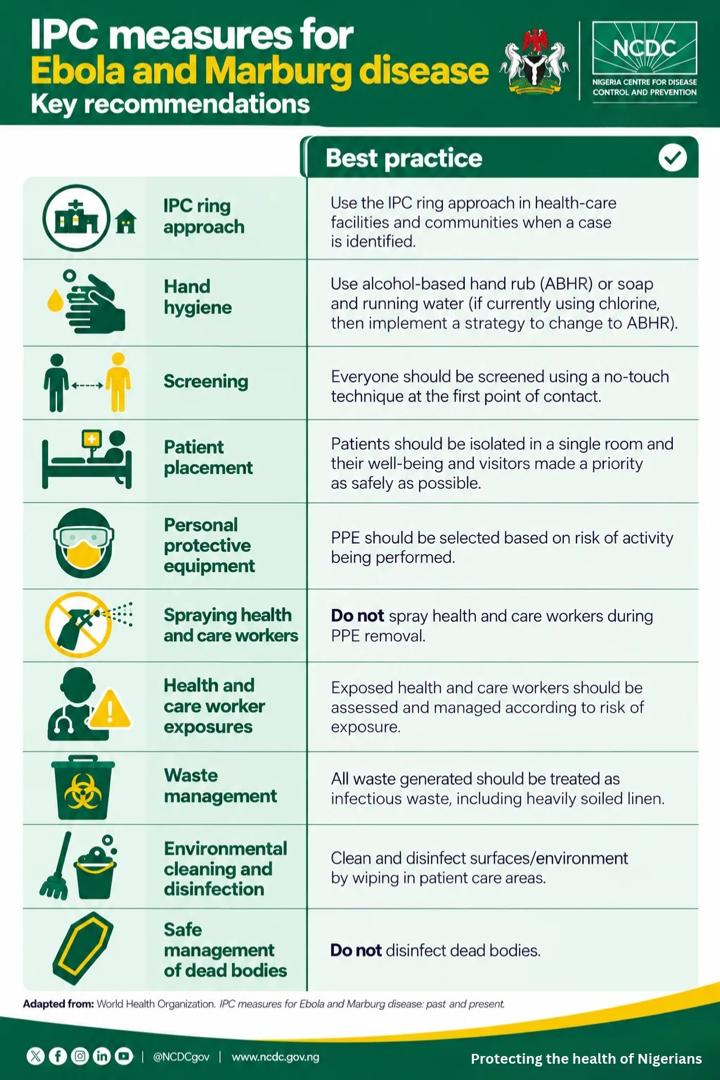
Authorities are also strengthening surveillance and supporting the hospital where the woman was treated to ensure that appropriate infection prevention and control measures are in place.
Hospitals and other healthcare facilities across the country have been asked to remain alert, watch for suspected cases and promptly isolate and report anyone showing symptoms that could indicate Ebola.
The government has urged Nigerians to remain calm and rely on verified information from health authorities rather than rumours or unconfirmed reports.
Ebola spreads through direct contact with the blood or other body fluids of an infected person who is showing symptoms, or with contaminated materials. It does not spread simply because people share the same airspace.
Anyone who believes they may have been exposed and develops symptoms should avoid close contact with others and seek guidance from public health authorities before visiting a healthcare facility.
For now, health officials are focusing on tracing contacts, monitoring possible exposure and detecting any additional cases early.
The success of these measures will depend on timely reporting, cooperation with health workers and the public’s access to accurate information.
About the Author