
 Odita Sunday



From Street Begging to Skilled Enterprise: Foundation Sparks Hope for Persons With Disabilities
Maryam Aminu
In a bold move to rewrite the narrative of vulnerability and dependence, the Emerald Humanitarian Foundation has ignited a wave of empowerment in Enugu, equipping persons living with disabilities (PLWDs) and indigent students with practical, income-generating skills that could lift them off the streets and into sustainable livelihoods.
The non-profit organisation launched the first phase of its hands-on training programme on April 19–20, 2026, drawing participants from the disability community into an intensive, two-day workshop focused on soap, bleach, and disinfectant production, alongside shoe-making. The initiative marks a significant step toward addressing unemployment and social exclusion among some of Nigeria’s most marginalised groups.
Speaking at the opening session, the programme coordinator, Kingsley Mba, underscored the urgency of the intervention, describing it as a pathway to dignity and independence.

He lamented the alarming rate of street begging among persons with disabilities, warning that it exposes them to grave dangers, including accidents, abuse, and exploitation.
According to him, the foundation’s goal is to replace vulnerability with opportunity by equipping beneficiaries with skills that can generate steady income.
Mba further revealed that the initiative goes beyond training, noting that participants would be supported with production materials and access to market channels to help them commercialise their products. He added that the foundation is already setting its sights on establishing empowerment hubs across Nigeria’s six geopolitical zones, with the South-East as the starting point.
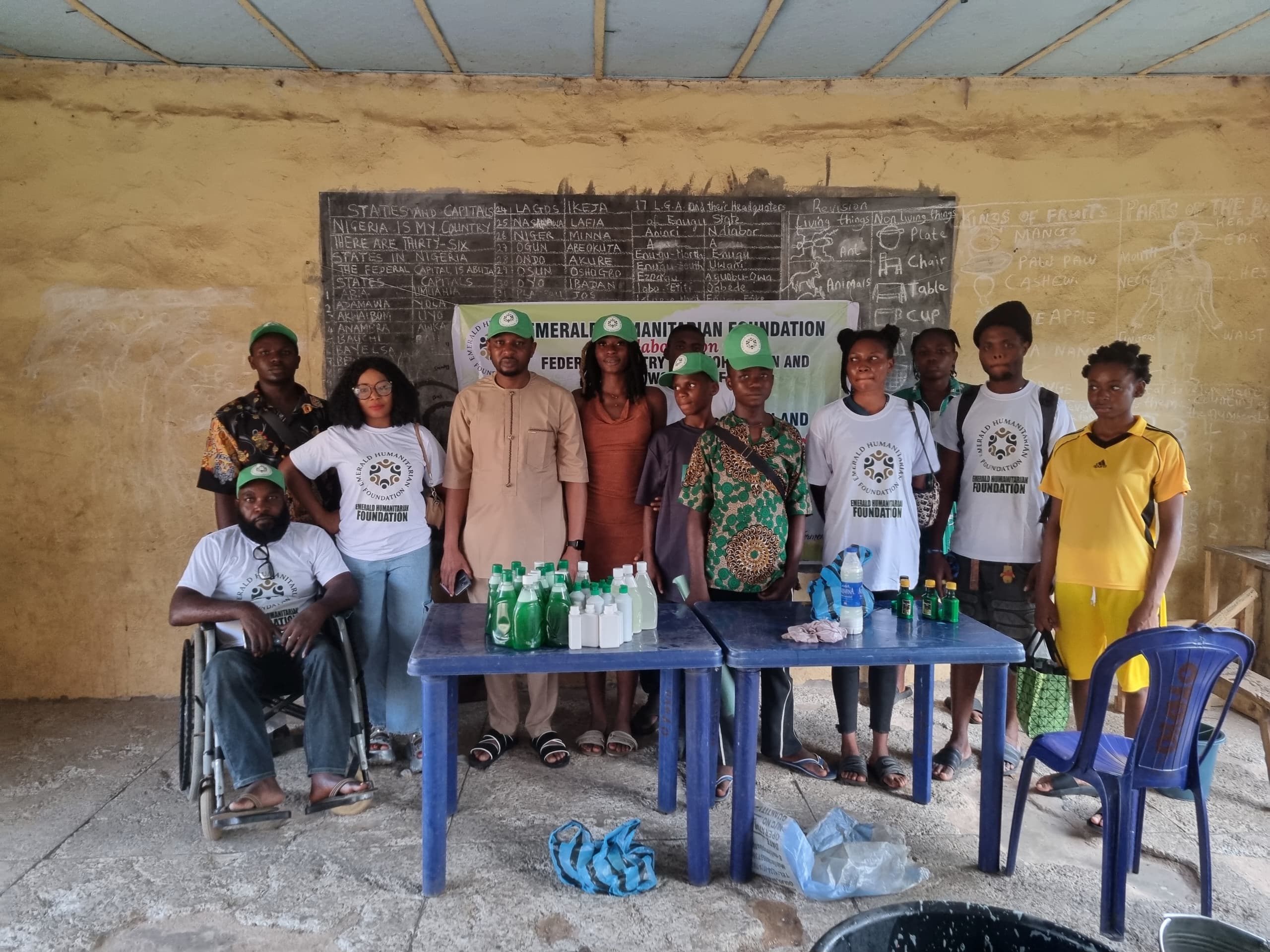
For many participants, the programme is already proving transformative. One of the beneficiaries, Jennifer Ezeme, expressed gratitude for being part of the pioneering batch, describing the initiative as both timely and impactful.
She voiced hope that the programme would be sustained to benefit more people in similar circumstances.
Another participant, Chukwuebuka Emeka, echoed similar sentiments, noting that the training comes at a critical time when many persons with disabilities are struggling to survive.
He emphasised that such initiatives could significantly reduce dependence on street begging by providing viable alternatives for earning a living.
Also lending his voice was Anthony Chukwu, a shoe-making entrepreneur and owner of Golden Boy Ventures, who facilitated part of the training. Living with a disability himself, Chukwu described the programme as a powerful intervention that resonates deeply with his personal journey.
He highlighted the importance of economic independence for PLWDs, stressing that empowerment through skills is far more sustainable than charity.
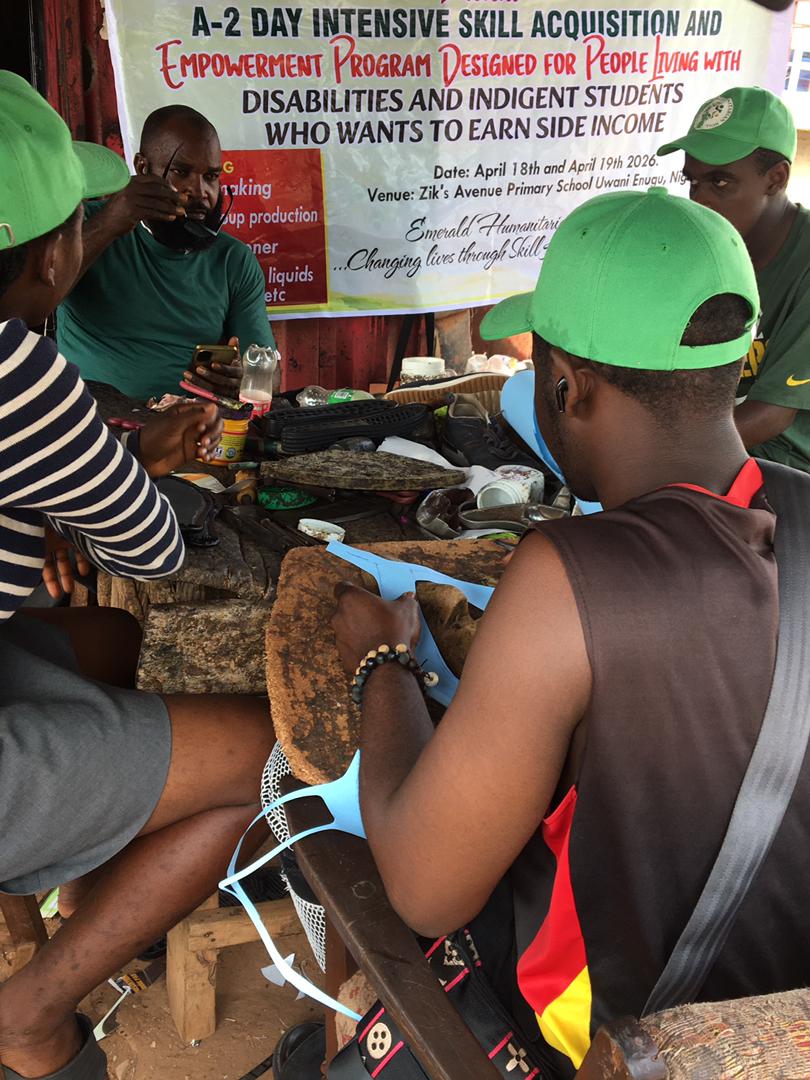
Chukwu’s story stands as a testament to resilience and possibility. Despite navigating daily challenges, including travelling long distances in a wheelchair to run his business, he has built a thriving enterprise in Enugu, mentoring over 15 apprentices many of whom are also persons with disabilities. His success underscores the potential within the community when given the right support.
Across Nigeria, persons with disabilities often face systemic neglect, forcing many into street begging in high-risk environments such as traffic intersections and marketplaces. Reports of abuse, exploitation, and even violent crimes targeting this vulnerable population have continued to raise concerns among advocates.
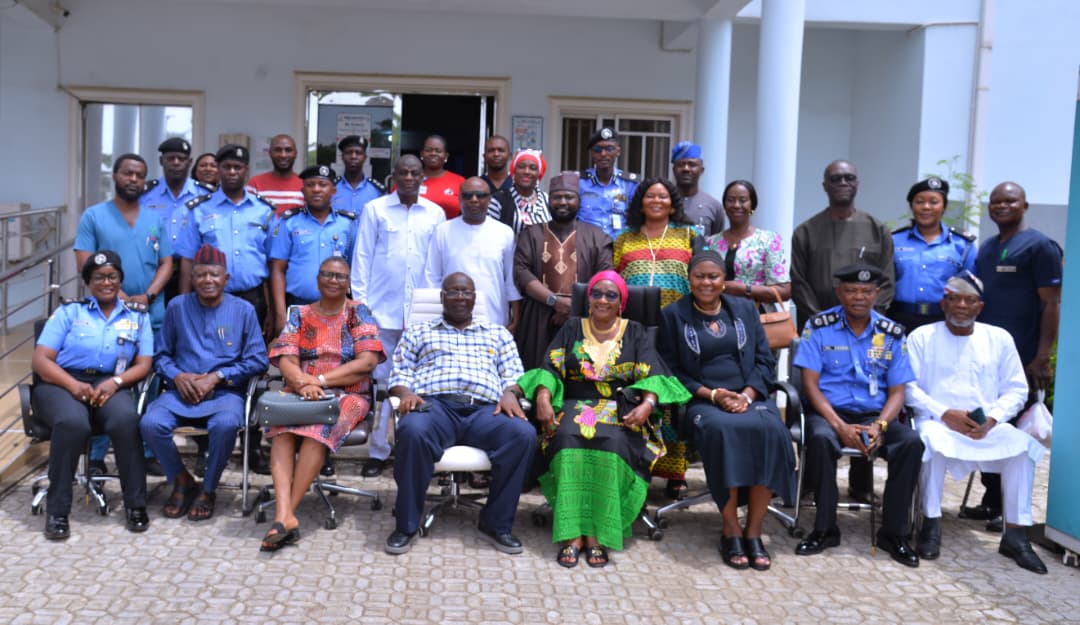
Against this backdrop, the Emerald Humanitarian Foundation’s initiative is not just a training programme it is a strategic intervention aimed at breaking cycles of poverty and restoring dignity. By fostering skills, enabling entrepreneurship, and promoting inclusion, the foundation is charting a new course for PLWDs one where ability triumphs over limitation.
About the Author