 Odita Sunday

By Odita Sunday
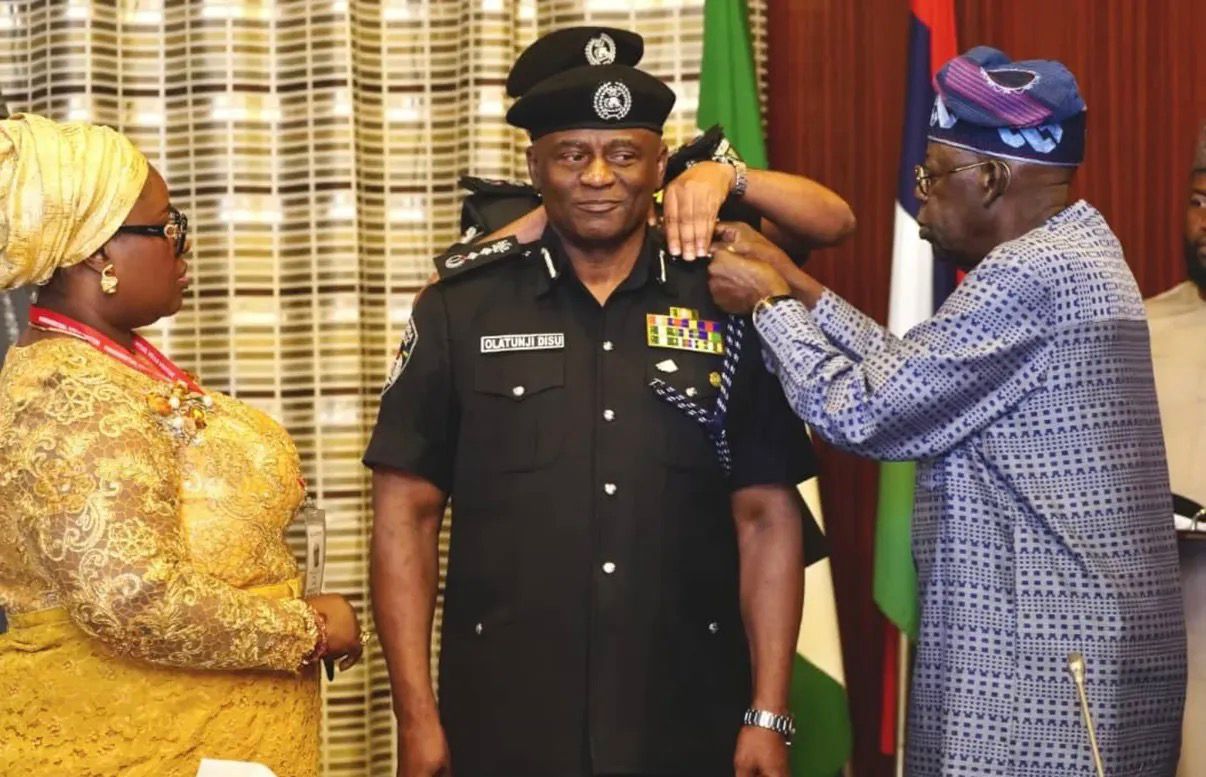
The new Inspector-General of Police is indeed a fortunate leader, surrounded by a strong network of mentors, colleagues, and professional allies who are well positioned to support him in delivering on his policing mandate to the people of Nigeria.
To set the record straight, the IGP position has eluded Lagos for over two decade since the tenure of Musiliu Smith.
Lagos, often described as the melting pot of Nigeria, has produced countless national leaders and influencers, including this writer. It is therefore not misplaced to argue that the Centre of Excellence deserves renewed consideration in the national leadership equation.
The closest a Lagosian came to clinching the position of IGP in recent years was when DIG Taiwo Lakanu, now the Akogun of Lagos, served as Deputy Inspector-General. Yet, the office remained out of reach.
Today, however, destiny appears aligned. The new IGP steps into office at a defining moment, an era where the press is firmly in the hands of citizens through social media, demanding transparency, accountability, and results. He possesses the administrative skill, operational depth, and strategic temperament required to navigate bureaucratic complexities and reposition the Force for greater effectiveness.
At the level of the Police Service Commission, where he will frequently engage with leadership and oversight authorities, he will benefit from the presence of respected figures such as DIG Taiwo Lakanu (Rtd), another fellow Lagosian who serves as a Commissioner and remains both a mentor and trusted confidant.
Similarly, the Chairman, DIG Alhaji Argungu (Rtd), brings seasoned experience and institutional wisdom that can only strengthen strategic direction. Their combined knowledge of the policing system will provide invaluable counsel as the IGP assumes national leadership responsibilities.
Within the Office of the National Security Adviser, DIG Kokumo (Rtd), another long-standing mentor, will offer strategic insight, ensuring synergy between the Police and the broader national security architecture.
Across other critical agencies, collaboration remains key. His working relationship with Wale Adeniyi of the Nigeria Customs Service will reflect the spirit of inter-agency cooperation necessary to confront modern security challenges.
Beyond networks and alliances, the new IGP is widely regarded as an inclusive and detribalized leader. Throughout his career, he has consistently demonstrated that merit, diligence, and professionalism, not ethnicity or background, are the standards guiding his decisions.
Notably, many of his aides, including Personal Assistants and Orderlies, have come from diverse ethnic backgrounds, with a significant number being Igbo. His approach underscores a commitment to national unity and fairness within the Force.
During his tenure as Commander of the Rapid Response Squad (RRS) in Lagos, he earned a reputation as a dependable and operationally effective officer.
Under Commissioners of Police such as Fatai Owoseni and Imohimi Edgal, he was frequently entrusted with critical and high-risk assignments, particularly in volatile areas like Ikorodu and other parts of Lagos.
His operational achievements in Rivers State and the Federal Capital Territory further cemented his profile as a hands-on, results-driven officer. These accomplishments remain widely acknowledged within security circles and in the public domain.
Ultimately, his leadership success will depend not only on his personal experience and strong mentorship network but also on the level of institutional support provided by the Federal Government.
With adequate funding, modern equipment, improved welfare for officers, and sustained political will, the Nigeria Police Force can significantly enhance its capacity to protect lives and property.
If the necessary reforms and resources are prioritized, Nigeria may indeed be entering a promising new chapter in policing and national security.
-Odita Sunday is the
Former President, Crime Reporters Association of Nigeria (CRAN).
About the Author