 Odita Sunday


NAFOWA Consoles Families of Igbokoda Air Crash Victims, Pledges Continued Support
By Odita Sunday
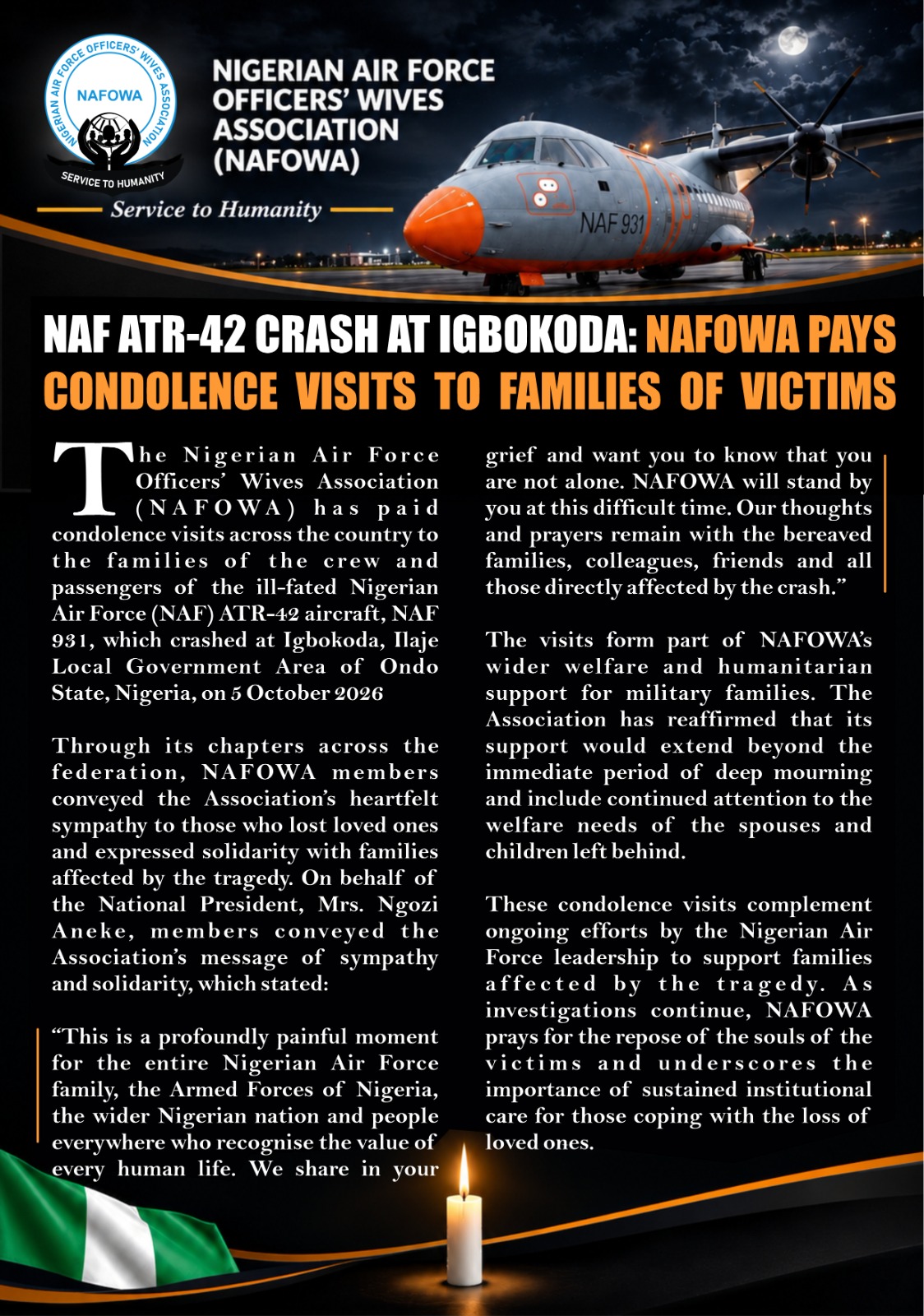
The Nigerian Air Force Officers’ Wives Association (NAFOWA) has visited the families of crew members and passengers who died in the Nigerian Air Force (NAF) ATR-42 aircraft crash at Igbokoda, Ilaje Local Government Area of Ondo State, pledging sustained support for the bereaved families.
The aircraft, with registration number NAF 931, crashed on October 5, 2026, leaving the Nigerian Air Force community and the affected families mourning the loss of their loved ones.
NAFOWA, through its chapters across the country, paid condolence visits to the affected families, expressing sympathy and solidarity with those grappling with the painful loss.
Speaking on behalf of the National President of NAFOWA, Mrs Ngozi Aneke, members conveyed the association’s heartfelt message of condolence, describing the incident as a painful loss to the military community and the nation.
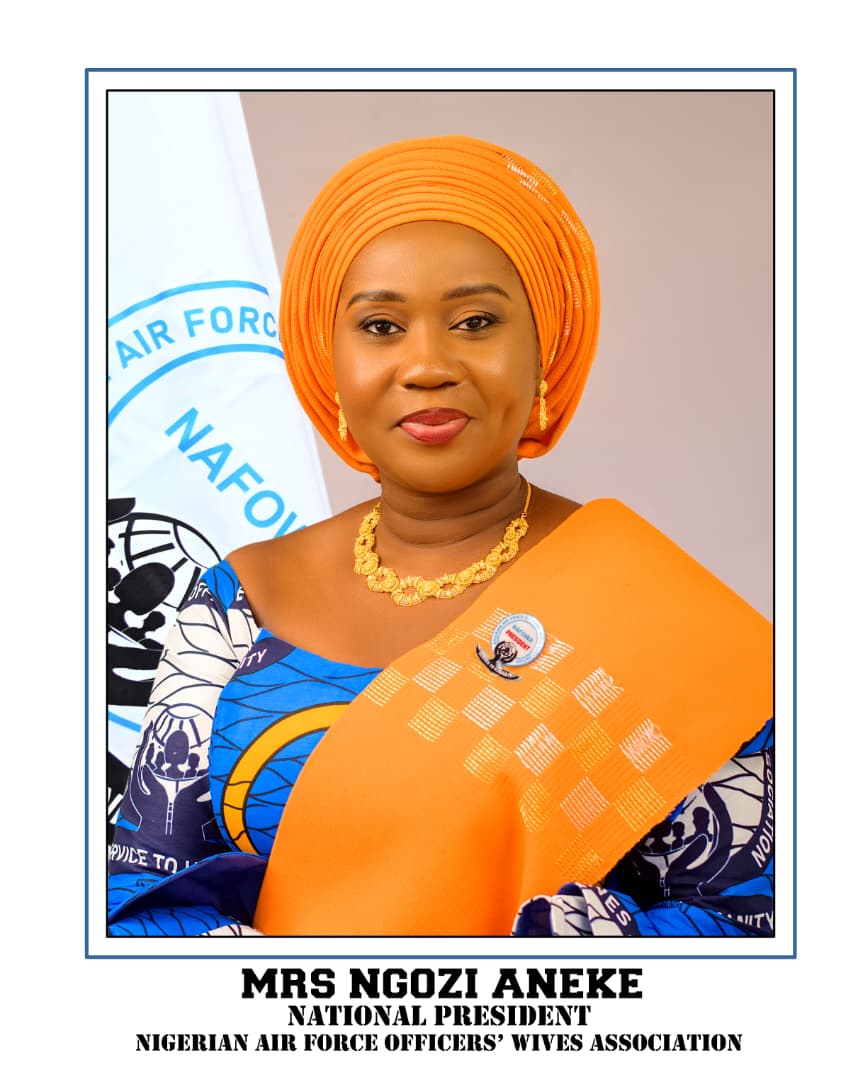
“This is a profoundly painful moment for the entire Nigerian Air Force family, the Armed Forces of Nigeria, the wider Nigerian nation and people everywhere who recognise the value of every human life. We share in your grief and want you to know that you are not alone. NAFOWA will stand by you at this difficult time. Our thoughts and prayers remain with the bereaved families, colleagues, friends and all those directly affected by the crash,” the association said.
The association said the condolence visits were part of its broader welfare and humanitarian efforts aimed at supporting military families, particularly those facing the devastating consequences of losing their loved ones.
It stressed that its commitment to the affected families would not end with the immediate period of mourning, promising continued attention to the welfare needs of the spouses and children left behind.
The association’s intervention complements ongoing efforts by the Nigerian Air Force leadership to provide support and assistance to families affected by the tragedy.
As investigations into the crash continue, NAFOWA prayed for the peaceful repose of the souls of the victims, while emphasising the need for sustained institutional care and compassion for families struggling to come to terms with their loss.
About the Author