 Odita Sunday


THE OPPRESSED AND THE OPPRESSORS: HUNGER AS A WEAPON, CASH AS A TOKEN FOR VOTES, WITH POLITICIANS WIDENING THEIR NET OF ELECTORAL MANIPULATION
By Charles Edet Esq., FCR
Nigeria is witnessing an alarming metamorphosis of political oppression, where hunger is no longer merely a consequence of economic hardship but is increasingly being exploited as a formidable weapon of electoral subjugation. The political predators are widening their dragnet, converting poverty into political merchandise and transforming desperate citizens into electoral commodities.
What a tragic spectacle! A nation abundantly endowed with human and natural resources now witnesses politicians exploiting the empty stomachs of the electorate to perpetuate their dominance.
The oppressed are compelled by deprivation to embrace the very oppressors whose leadership they should be scrutinising.
Across the political landscape, the emerging electoral bazaar is deeply disturbing.
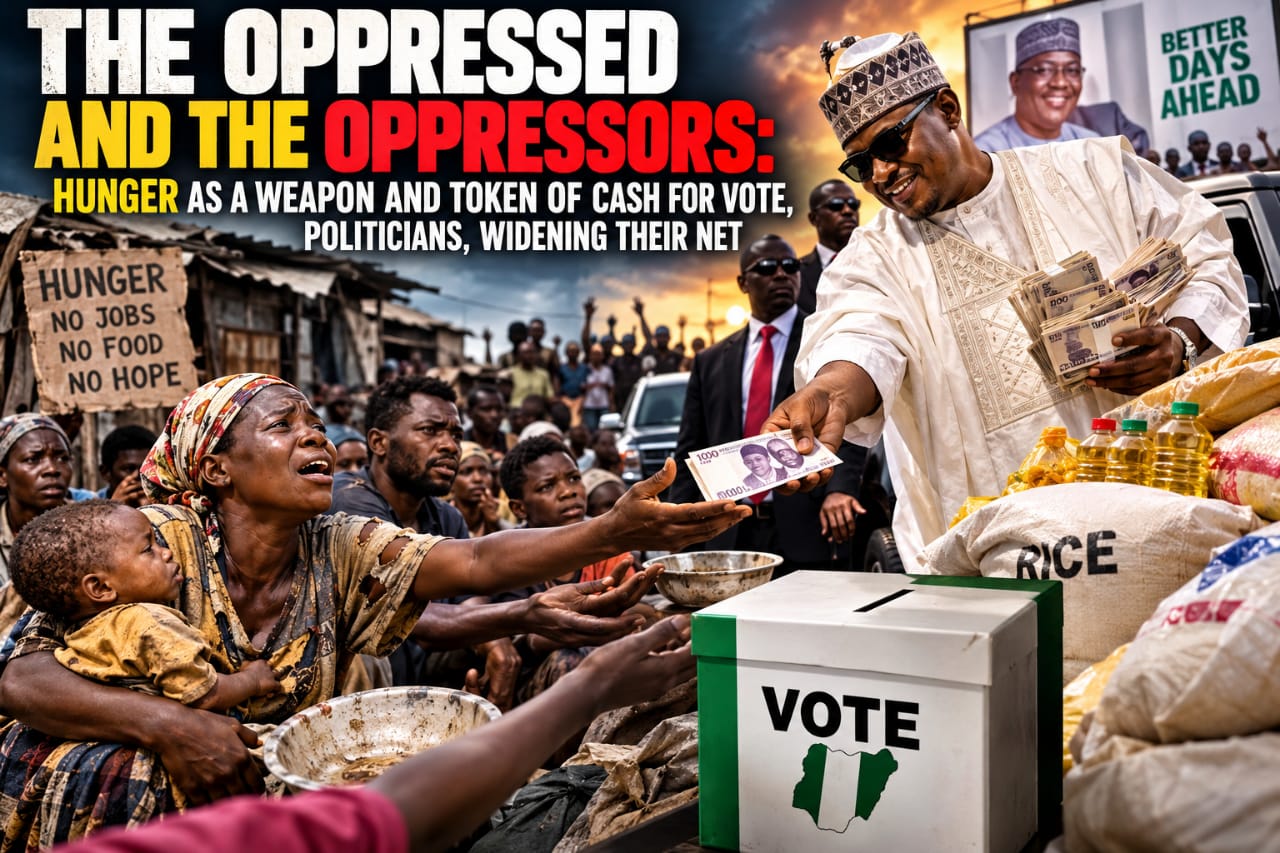
Politicians who disappear after elections suddenly rediscover the poor, distributing cash, foodstuffs and other inducements with calculated generosity. Their benevolence is often neither humanitarian nor philanthropic; it is an investment in political survival.
What manner of democracy celebrates the purchase of conscience while millions struggle for survival?
Nigerians saw dazed people struggling; they see the anguish of mothers unable to feed their children, unemployed graduates wandering through the wilderness of hopelessness, pensioners battling deprivation, and vulnerable citizens whose economic desperation makes them susceptible to electoral inducements, not today but running amid the republic.
This has become a pattern since the beginning of the Fourth Republic with fully grown deep roots.
Then come the political merchants, brandishing currency notes as instruments of persuasion, exploiting the hunger they should be working to eradicate.
The tragedy becomes more reprehensible when beneficiaries mistake temporary handouts for enduring empowerment. A few thousand naira cannot replace functional hospitals, affordable education, employment, security, electricity or accountable governance.
Indeed, a politician who deliberately exploits hunger to purchase votes is not alleviating poverty; he is commercialising human suffering.
Nigeria’s democracy must never degenerate into an auction where the highest bidder purchases the destiny of generations.
The Electoral Act prohibits vote buying, yet enforcement must become more decisive. INEC, security agencies, anti-corruption institutions, civil society organisations and the media must confront this insidious electoral corruption.
Political parties must equally recognise that distributing inducements to impoverished citizens is no substitute for presenting credible programmes and demonstrable achievements.
Nigerians must interrogate every political gift, scrutinise every promise and reject the commodification of their constitutional franchise.
The ballot is not a commodity. It is the sacred instrument through which citizens determine their collective destiny.
Let the oppressed rise above the manipulations of their oppressors!
For when hunger determines electoral choices, democracy becomes hostage to poverty, leadership becomes an investment for political profiteers, and the nation’s future is mortgaged for a miserable token.
A hungry electorate deserves food, dignity and opportunity, not exploitation disguised as generosity.
About the Author