 Odita Sunday

By Odita Sunday
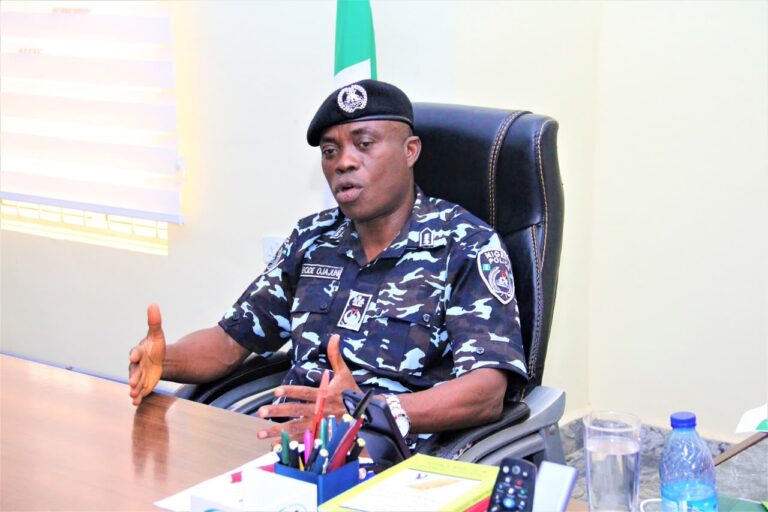
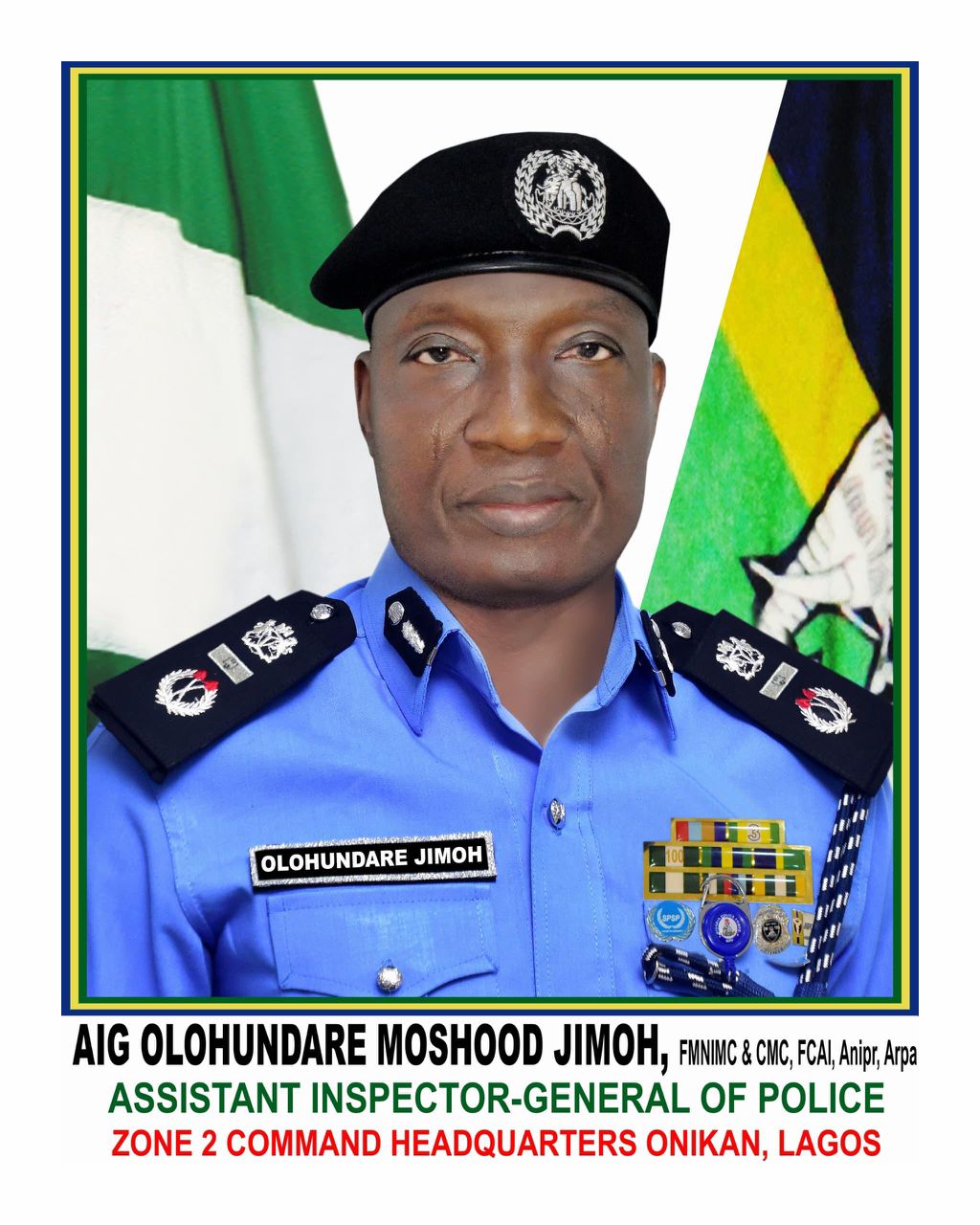
Policing in Nigeria has long demanded more than the ability to apprehend criminals. It requires an instinct for crisis management, an understanding of public psychology and the administrative discipline to steer one of the country’s largest institutions through periods of political tension and social change. Olohundare Jimoh Moshood, elevated to the rank of Assistant Inspector-General of Police (AIG) in March 2026, has built his career around precisely that combination.
His rise from a Cadet Assistant Superintendent of Police in 2000 to the leadership of Zone 2, covering Lagos and Ogun States, mirrors the transformation of the Nigeria Police Force itself. Over more than two decades, he has moved between frontline policing, strategic administration and public communications, demonstrating that modern law enforcement is as much about legitimacy and public confidence as it is about coercive authority.
His appointment as Assistant Inspector-General comes at a pivotal moment. Lagos and Ogun constitute Nigeria’s most economically dynamic corridor, accounting for a significant share of industrial production, maritime commerce and population growth. Supervising security across this zone requires not merely operational competence but the ability to coordinate intelligence, infrastructure protection and community engagement on an unprecedented scale.
Moshood arrives at the task with an unusually broad professional foundation. Born on August 10, 1971, in Ilorin, Kwara State, he grew up in a household shaped by discipline and enterprise. His father’s military background and his mother’s commercial pursuits exposed him early to the values of structure, resilience and public responsibility. Those influences would later define his approach to policing. Moshood entered the profession with an academic grounding in political science from Ahmadu Bello University, Zaria. After completing the National Youth Service Corps at the Federal Ministry of Industry in Abuja, he joined the Nigeria Police Force through the Cadet Assistant Superintendent programme at the Police Academy in Wudil, Kano. Domestic instruction in tactical operations at the Police Mobile Training College in Maiduguri was complemented by specialised courses abroad. He undertook counter-weapons-of-mass-destruction responder training supported by the United States Embassy, advanced crime-prevention studies in South Korea, and executive programmes in China covering anti-hijacking operations, social management, and governance innovation.
His progression through the force has been marked by unusual versatility. Assignments across Katsina, Cross River, Anambra, Oyo, Gombe, Rivers and the Federal Capital Territory exposed him to the diversity of Nigeria’s security environment, from communal conflicts and urban crime to administrative leadership and infrastructure protection.
One of his early command appointments as Divisional Police Officer for Abuja’s Central Area illustrated a preference for preventive policing over reactive enforcement. Rather than relying solely on visible patrols, he promoted closer engagement with residents and local stakeholders, recognising that intelligence gathered through community relationships often proves more effective than force alone.
That philosophy became even more evident during his tenure as Deputy Force Public Relations Officer and, subsequently, as Force Public Relations Officer between 2016 and 2019.
The position traditionally involved issuing official statements and responding to media enquiries. Under Moshood, however, it evolved into something more strategic. He became one of the most recognisable public faces of the Nigeria Police Force, using regular briefings and structured communication to improve transparency and explain operational decisions during periods of heightened public scrutiny.
Subsequent appointments further broadened his experience. As Deputy Commissioner overseeing administration in Oyo State and later criminal investigation responsibilities at the airport command, he managed personnel, logistics and complex investigations linked to aviation security and organised crime.
His leadership of the Ports Authority Police in the eastern maritime corridor brought another dimension to his career. Nigeria’s ports represent critical economic gateways vulnerable to smuggling, organised criminal activity and revenue leakage. Strengthening security within these facilities contributed not only to public safety but also to economic governance and investor confidence.
Perhaps his most demanding operational assignment came with his appointment as Commissioner of Police for Lagos State. Few policing environments on the African continent rival Lagos in complexity. Home to more than 20 million people, the city combines sprawling informal settlements with financial districts, ports, industrial estates and major transport corridors. Security management requires balancing rapid urbanisation with commercial activity and political expression.
Rather than emphasising static checkpoints and routine visibility, Moshood favoured intelligence-led operations directed at organised criminal groups. Resources were concentrated on dismantling armed robbery syndicates, disrupting criminal networks targeting motorists and confronting land-grabbing organisations that undermined property rights and commercial development.
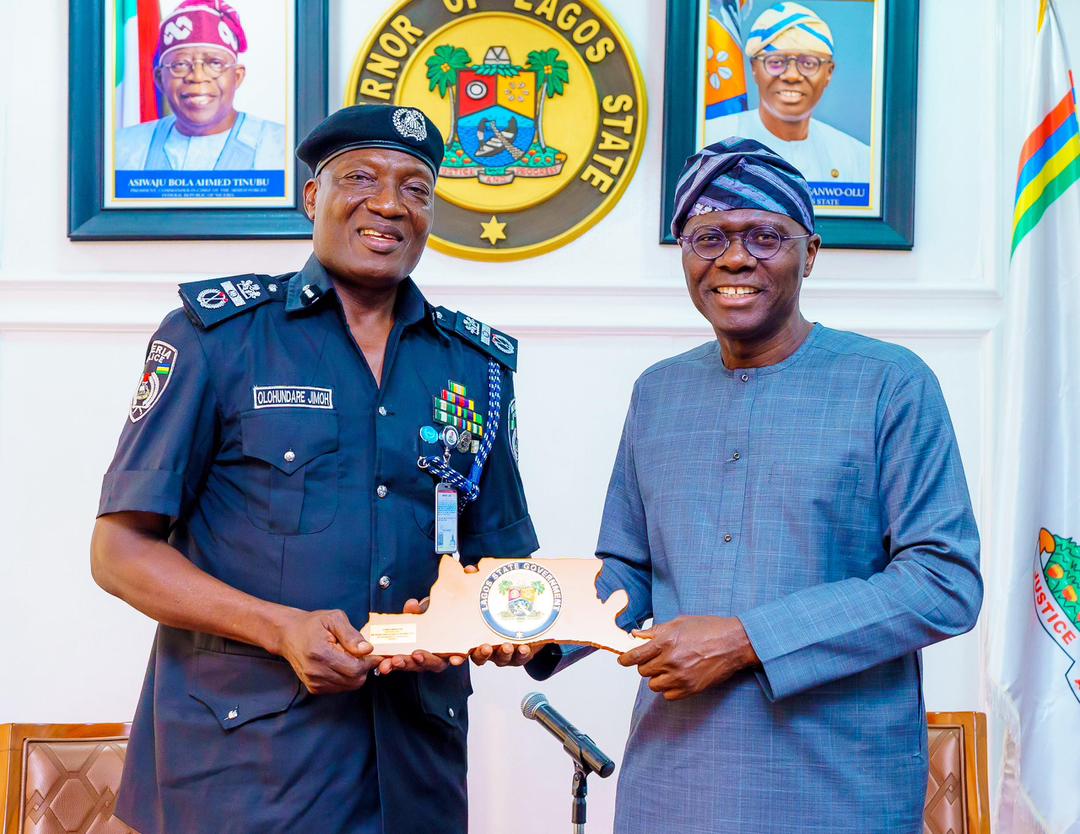
Lagos frequently hosts demonstrations reflecting its position as Nigeria’s political and commercial capital. During significant public protests, including large gatherings around the State House of Assembly complex, Moshood’s command sought to preserve constitutional freedoms while preventing escalation into violence or the destruction of property.
His previous experience in institutional communication proved valuable in maintaining dialogue with civil society organisations, community associations and youth groups, reinforcing the principle that negotiation often succeeds where confrontation fails.
Recognition of his contributions has come from both professional and international institutions. His tenure as Force Public Relations Officer earned the Presidential Public Relations Personality of the Year Award from the Nigerian Institute of Public Relations, acknowledging efforts to modernise official police communication and strengthen public accountability.
Internationally, service with the African Union peacekeeping mission in Darfur exposed him to multinational security operations under demanding humanitarian conditions. Commendations received during that deployment reflected professionalism and restraint in a complex conflict environment where success depended as much upon diplomacy as tactical capability.
His commitment to continuous professional development is equally evident in affiliations with corporate governance and management institutions, reflecting an understanding that policing increasingly intersects with organisational leadership and public administration.
Such experiences have shaped an officer whose career defies conventional categorisation. He is neither solely an operational commander nor exclusively an administrator. Instead, he represents a generation of police leaders seeking to integrate strategic communication, institutional reform and field operations into a coherent model of public service.
His promotion to Assistant Inspector-General of Police, therefore, reflects confidence in a leadership style that combines operational discipline with intellectual preparation and public engagement.
As AIG overseeing Zone 2, Moshood inherits responsibility for securing Nigeria’s principal economic corridor at a time of rapid urban expansion and evolving security threats. Success will depend upon intelligence coordination, technological adaptation and sustained cooperation between law enforcement agencies and the communities they serve.
His career suggests an appreciation that policing cannot rely indefinitely on force alone. Effective law enforcement rests equally upon legitimacy, professionalism and public trust.
In a country where security institutions are often judged by moments of crisis, Olohundare Jimoh Moshood’s record points to a quieter but equally important achievement: demonstrating that communication, administration and operational competence are not competing virtues but complementary pillars of modern policing.
That may prove his most enduring contribution—not simply enforcing the law, but helping redefine how the law is enforced in one of Africa’s most complex democracies.
About the Author