
 Odita Sunday


ALIFIKEDE: THE OKRA CAPITAL OF NIGERIA CRYING FOR GOVERNMENT ATTENTION
By Ewere Okonta
08037383019
eobnewsmedia@gmail.com
eob.org.ng
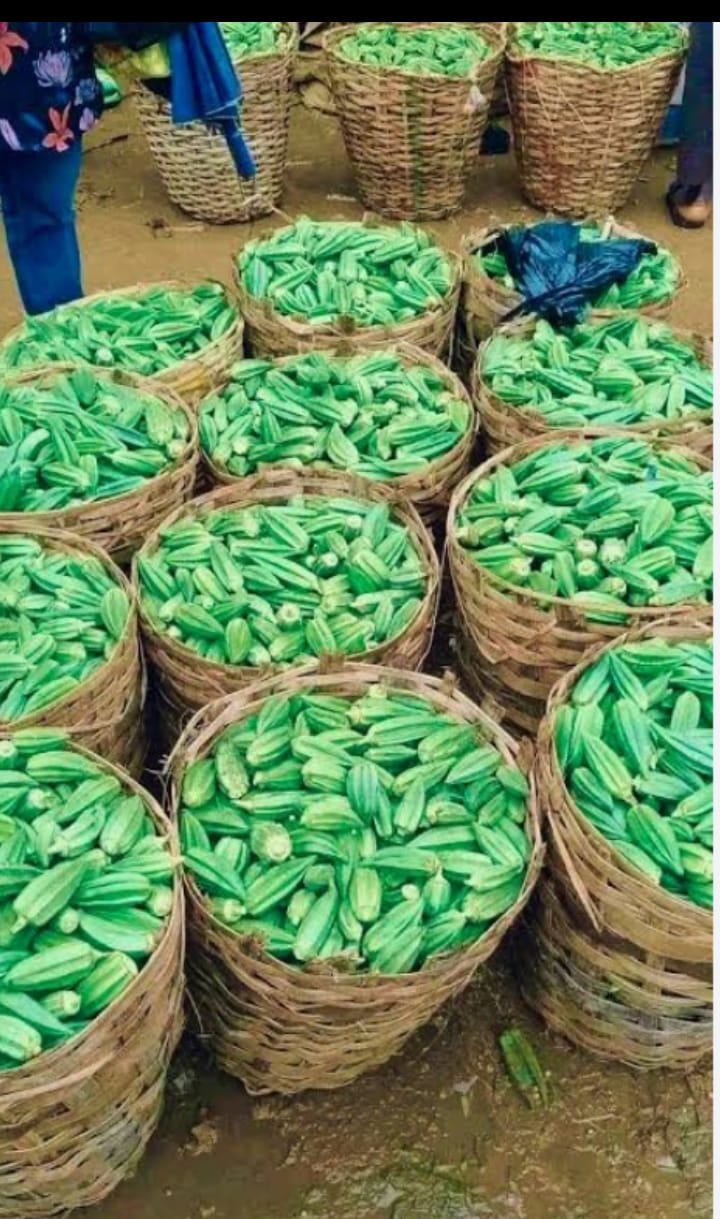
There is a quiet farming community tucked away in the fertile plains of Ika South Local Government Area of Delta State that deserves far more national and global attention than it currently receives. That community is Alifikede, a rustic agrarian settlement whose people have, through sheer resilience, determination, and communal cooperation, transformed themselves into one of the most remarkable indigenous okra-producing communities in Nigeria.
In a country where oil often overshadows agriculture, and where rural communities are frequently forgotten by policymakers, the people of Alifikede have continued to rise every planting season with hoes on their shoulders, baskets in their hands, and hope in their hearts. They plant not just crops, but survival. They cultivate not merely vegetables, but dignity.
Today, many proudly describe Alifikede as “the Okra Basket of the Nation.” And truthfully, that description is not exaggerated.
A COMMUNITY BURIED IN THE SOIL OF HARD WORK
Alifikede is one of the indigenous communities in the Agbor axis of Ika South Local Government Area of Delta State. Surrounded by thick vegetation, rich rainforest soil, and interconnected rural pathways, the community sits quietly along the agricultural belt of Ika land.
The people are predominantly farmers, traders, artisans, and hardworking rural dwellers whose lives revolve around the land. Farming here is not merely an occupation. It is identity. It is heritage. It is survival.
From dawn till dusk, one encounters women carrying harvested vegetables in large basins, elderly men returning from farms with cutlasses hanging across their shoulders, and youths transporting sacks of produce on motorcycles heading toward markets in Agbor and neighboring communities.
The beauty of Alifikede lies not in skyscrapers or luxury estates, but in the dignity of labor that radiates from its people.
HOW ALIFIKEDE BUILT AN OKRA EMPIRE WITHOUT GOVERNMENT SUPPORT
Perhaps the most astonishing aspect of the Alifikede story is that this agricultural success happened largely without structured government support.
No sophisticated irrigation systems.
No modern storage facilities.
No major agricultural grants.
No internationally funded mechanized programs.
Yet, year after year, the people continue to produce massive quantities of okra that feed households and markets across parts of Delta State and beyond.
This is not accidental.
It is the result of:
• Indigenous farming knowledge
• Family labor systems
• Community cooperation
• Strong work ethic
• Fertile agricultural land
• Generational farming experience
In Alifikede, virtually every household understands okra cultivation. Children grow up learning planting patterns, harvesting techniques, soil preparation, and local preservation methods.
The community practically organized itself into a silent agricultural movement long before anyone thought of calling it agribusiness.
WHY OKRA FARMING THRIVES IN ALIFIKEDE
There are several reasons okra farming flourishes naturally in Alifikede:
Fertile Soil
The rich loamy soil of the area supports rapid germination and healthy crop yield.
Favorable Rainfall
The rainfall pattern in Ika land provides natural irrigation for vegetable cultivation.
Warm Tropical Climate
Okra thrives in warm temperatures, making Alifikede climatically suitable for year-round cultivation.
Strong Farming Tradition
The people possess inherited agricultural knowledge passed from generation to generation.
Availability of Family Labor
Most farming activities are community and family-driven, reducing labor costs.
OKRA: MORE THAN FOOD, A CULTURE
In Alifikede, okra is not just a crop.
It is culture.
It is identity.
It is economy.
It is food security.
Okra soup remains one of the most beloved delicacies among the people. Prepared with fish, stockfish, meat, crayfish, palm oil, and local spices, it is eaten with:
• Pounded yam
• Garri (eba)
• Fufu
• Starch
In many homes, no major family gathering is complete without okra soup appearing on the menu.
The crop also symbolizes hospitality. Visitors are often welcomed with rich local meals centered around freshly harvested okra.
THE ECONOMIC POWER OF OKRA FARMING IN ALIFIKEDE
For many families in Alifikede, okra farming pays:
• School fees
• Hospital bills
• House rents
• Feeding expenses
• Community levies
Women dominate much of the harvesting and local marketing process, making okra farming a critical tool for women empowerment in the community.
Beyond household income, the farming chain supports:
• Transporters
• Traders
• Food vendors
• Local markets
• Rural laborers
In truth, okra is one of the invisible economic engines keeping the community alive.
THE CHALLENGES BREAKING THE BACK OF FARMERS
Despite their success, Alifikede farmers face enormous challenges that continue to threaten productivity.
Poor Rural Roads
Transporting produce to markets becomes extremely difficult during rainy seasons.
Pest Infestation
Insects and plant diseases regularly destroy large portions of farms.
Lack of Storage Facilities
Fresh okra spoils quickly, forcing farmers into distress sales.
High Cost of Fertilizer
Most farmers cannot afford adequate farm inputs.
Absence of Mechanized Farming
The majority still rely on hoes and cutlasses.
Lack of Government Presence
Many farmers complain they have never benefited meaningfully from agricultural intervention programs.
This is the painful contradiction:
A community feeding many people still struggles to feed itself adequately.
WHY GOVERNMENT MUST INTERVENE NOW
If properly supported, Alifikede could become one of Nigeria’s leading vegetable production hubs.
Government intervention is urgently needed in the following areas:
Pest Control Programs
Farmers need modern pest management support and agricultural extension services.
Improved Seed Varieties
High-yield and disease-resistant okra seedlings would significantly improve output.
Fertilizer Distribution
Affordable fertilizer access would boost productivity enormously.
Storage and Processing Facilities
Cold storage and preservation systems would reduce waste and increase profits.
Rural Road Construction
Good roads would connect farmers to larger commercial markets.
Agricultural Grants and Loans
Smallholder farmers need access to soft loans and grants.
Modern Farming Equipment
Mechanization would reduce labor stress and increase efficiency.
ALIFIKEDE DESERVES GLOBAL AGRICULTURAL RECOGNITION
At a time when Nigeria seeks economic diversification beyond crude oil, communities like Alifikede should not remain hidden in silence.
Their story deserves:
• National recognition
• Agricultural investment
• Research attention
• International partnerships
• Media visibility
This is a community that has already demonstrated what grassroots agricultural resilience looks like.
Imagine what Alifikede could become with genuine institutional support.
Imagine a modernized Alifikede exporting processed okra products nationally and internationally.
Imagine youths returning to agriculture because farming finally became profitable and dignified.
Imagine Delta State proudly showcasing Alifikede as a model agrarian community in Nigeria.
That future is possible.
But only if government acts.
A FINAL WORD
Alifikede is not asking for charity.
The people are asking for partnership.
They have already done the hardest part; organizing themselves, preserving their farming culture, and sustaining production under difficult conditions.
What they now need is visibility, infrastructure, and support.
For too long, rural farmers have remained the unsung heroes of Nigeria’s food system.
Perhaps it is time the government, investors, and development agencies turned their attention toward this hardworking boundary community in Delta State.
Because somewhere in the fertile soil of Alifikede lies not just okra, but the untapped future of Nigerian agriculture.
Ewere Okonta is the CEO of EOB Media. He writes from the Department of Business Administration, University of Delta, Agbor.
#EOB #Alifikede #okra
About the Author