
 Odita Sunday

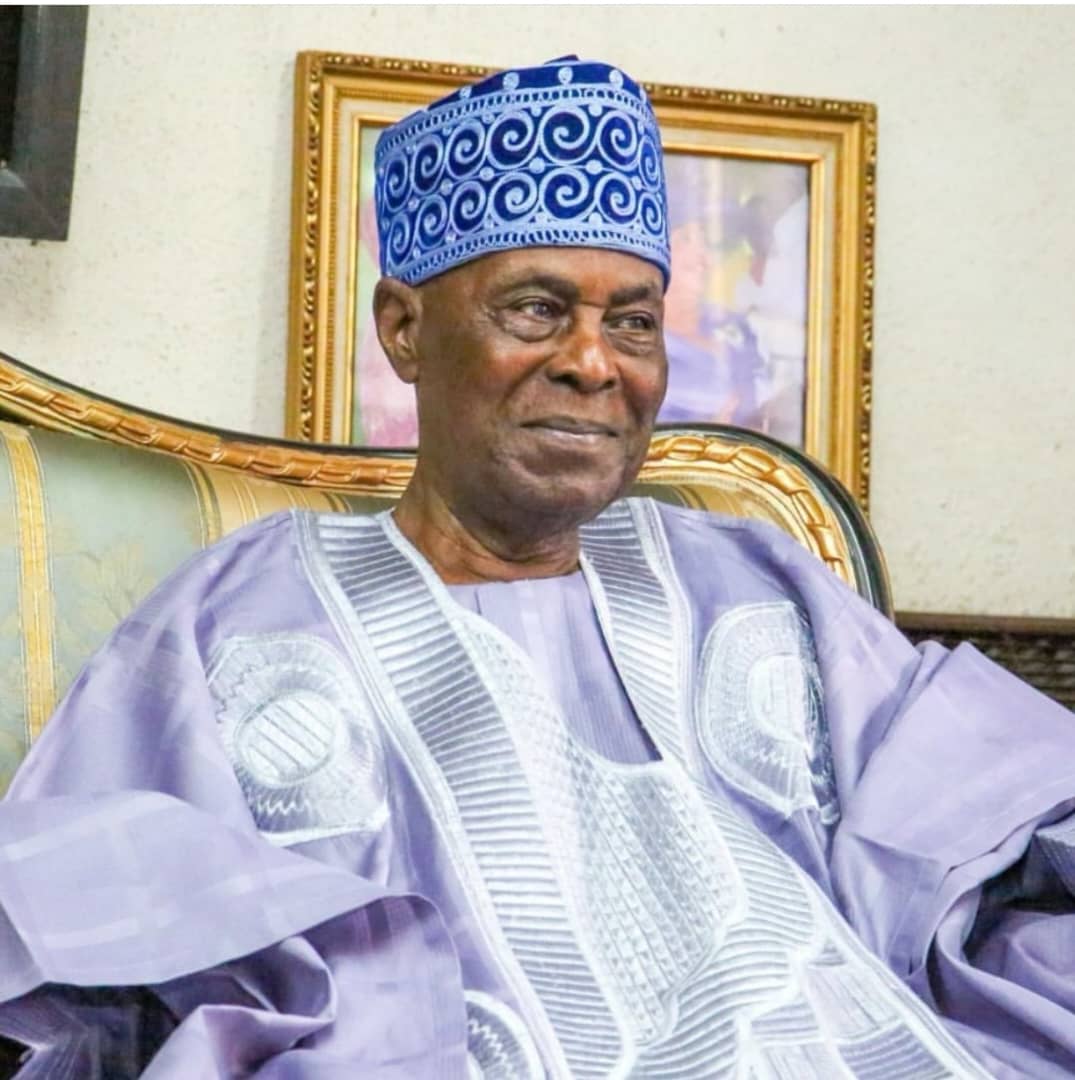
Nigeria has lost one of its most formidable boardroom strategists and corporate pathfinders as Otunba Adekunle Ojora, the Otunba of Lagos and Lisa of Ile-Ife, has passed away at the age of 93.
Ojora, widely regarded as a pioneer of modern corporate leadership in Nigeria, reportedly died on Tuesday, January 27, 2026, after a brief illness at his residence in Ikoyi, Lagos.
A towering figure whose influence cut across journalism, business, public service and traditional institutions, Ojora’s legacy is deeply woven into the fabric of Nigeria’s corporate and economic evolution, particularly in the oil, shipping, finance and real estate sectors.
Born with an early passion for journalism, Ojora studied the profession at Regent Street Polytechnic, London, before joining the British Broadcasting Corporation (BBC), where he rose to the position of assistant editor. He later returned to Nigeria in 1955 to join the Nigerian Broadcasting Corporation (NBC) as a reporter and was subsequently deployed to Ibadan as an information officer in the office of the then regional premier.
His career took a decisive turn in 1961 when he joined the United African Company (UAC) as public relations manager. The role exposed him to the corporate world at a critical moment in Nigeria’s economic history, and within a year, he was appointed an executive director of the multinational conglomerate.
Ojora’s blend of corporate acumen and public service saw him appointed to the Lagos City Council in 1966, offering him grassroots governance experience. In 1967, he assumed dual leadership roles as Managing Director of Wemabod Estates Limited and Chairman of the Nigerian National Shipping Line (NNSL), further cementing his status as a trusted national economic manager.
Over the decades, he emerged as a major investor and boardroom leader, with stakes and leadership roles in companies such as AGIP Petroleum Marketing, NCR Nigeria, and several other multinational and indigenous firms.
He notably served as Chairman of AGIP Nigeria Limited from 1971 until its acquisition by Unipetrol in 2002.
He also founded private enterprises including Nigerlink Industries, Unital Builders, and Lagos Investments, and expanded aggressively following the enactment of the Nigerian Enterprise Promotion Act, acquiring equity interests in firms such as Bowring Group, Inchcape, Schlumberger, Phoenix Assurance, UTC Nigeria, Evans Brothers and Seven-Up.
Ojora’s vast business footprint spanned oil and gas, food and beverages, insurance, pharmaceuticals, ICT, office equipment, real estate and financial services, both within Nigeria and internationally.
Beyond commerce, his influence extended through generations, with members of his family contributing significantly to governance, healthcare delivery and social advocacy in Nigeria.
With his passing, Nigeria loses not just a businessman, but a statesman of enterprise whose life mirrored the country’s post-independence economic journey and whose legacy will endure in boardrooms and institutions long after him.
About the Author