
 Odita Sunday



One Acre Fund Moves to Bridge Nigeria’s Food Supply Gap With 9,000-Tonne Input Rollout
Maryam Aminu
With food inflation continuing to pressure households across Nigeria, efforts to improve access to farm inputs are taking centre stage as a key strategy for boosting local food production and protecting national food security.
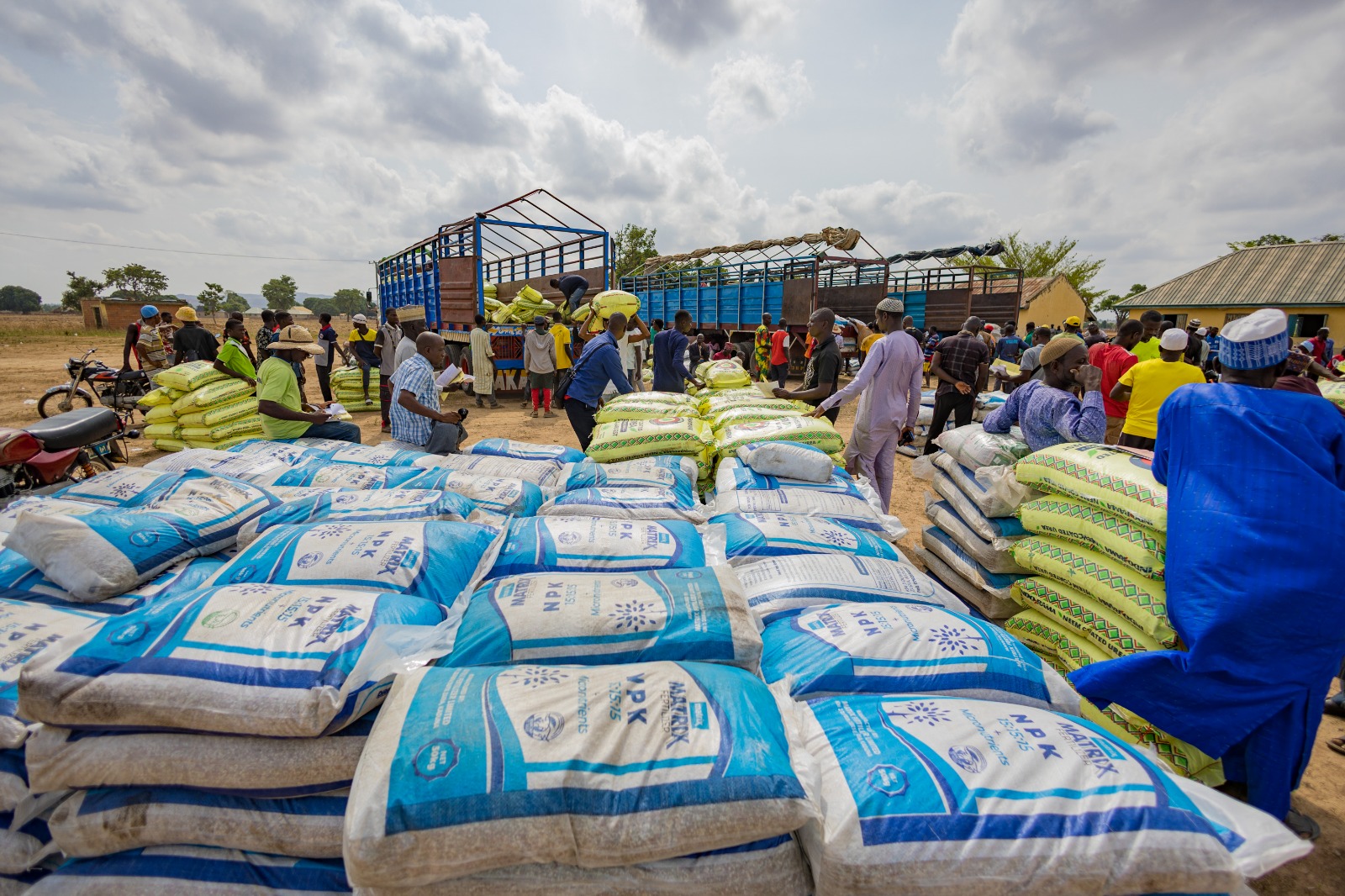
One Acre Fund Nigeria has begun the distribution of 9,000 tonnes of agricultural inputs to 88,000 smallholder farmers across Kwara, Nasarawa, Niger and Plateau states ahead of the 2026 planting season, in what experts describe as a critical intervention aimed at closing the persistent “last-mile” gap in Nigeria’s agricultural supply chain.
The initiative, according to the organisation’s Communications Lead, Kazi Nanyah, seeks to tackle long-standing barriers confronting rural farmers, including high input costs, poor access to agricultural financing, and delays in the delivery of improved seeds and fertilisers.
For millions of smallholder farmers who account for the bulk of Nigeria’s food production, these structural challenges have continued to limit productivity and deepen economic vulnerability, particularly during peak planting periods.
Industry analysts say the timing of input delivery remains one of the most critical factors influencing crop yields in Nigeria, where many rural farmers still struggle with unreliable supply chains and dependence on multiple intermediaries.
To address this, One Acre Fund Nigeria said its intervention combines input financing, agronomic training, advisory services, and digital support under a community-based distribution model designed to ensure farmers receive inputs directly within their communities and before peak planting deadlines.
The organisation noted that data from previous interventions showed participating farmers frequently recorded near doubling of maize yields, alongside average income increases estimated at about 328 dollars per household per season.
Beyond improving productivity, the programme also places strong emphasis on inclusion, with women and youth accounting for more than 35 per cent of beneficiaries.
Agricultural development experts have repeatedly identified improved access for women and young farmers as a major driver of higher food output and rural economic growth.
The intervention also integrates climate-smart farming practices, tree planting initiatives, and market linkage support aimed at improving farmers’ resilience against environmental and economic shocks.
Since launching operations in Nigeria in 2018, One Acre Fund Nigeria said it has expanded its reach to more than 600,000 farmers across several states, providing financing, extension services, market access, and improved agricultural inputs.
Observers say the initiative offers important lessons for policymakers as Nigeria continues to confront rising food insecurity and seeks sustainable pathways to strengthen domestic agricultural production.
For farmers like Keziah Danjuma in Niger State, the impact is already visible through improved harvests, higher incomes, and easier access to essential farm supplies.
Stakeholders believe that scaling similar community-based agricultural support systems nationwide could significantly improve productivity and narrow the widening gap between food demand and supply across the country.
About the Author